Iran, Bangladesh stress stronger ties, joint cooperation
Iran's President Masoud Pezeshkian and Bangladesh Prime Minister Tarique Rahman met on the sidelines of the UN General Assembly, calling for deeper bilateral relations and expanded economic cooperation.
Intelligence analysis by Gemini 2.5 Flash
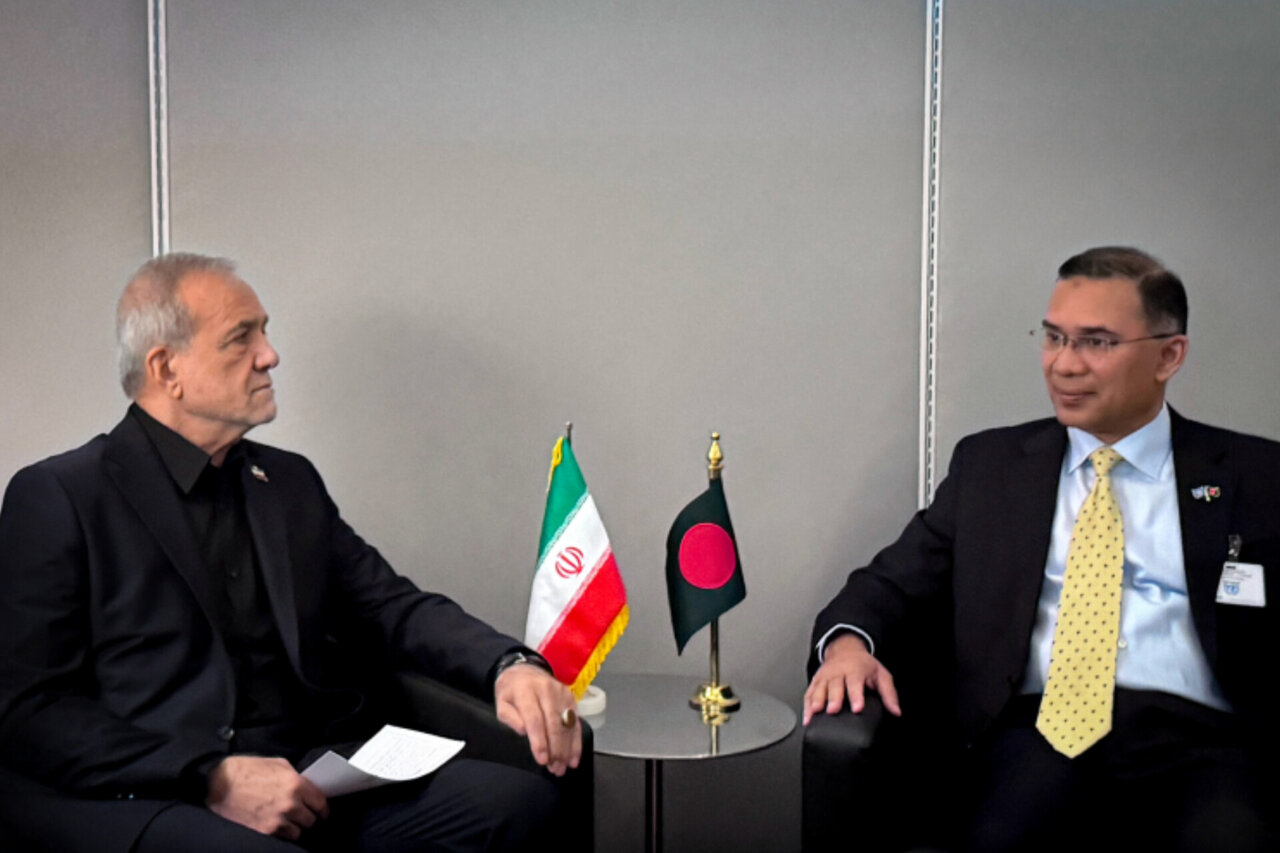
The leaders of Iran and Bangladesh discussed strengthening ties, economic collaboration, and regional issues during their meeting in New York. They emphasized mutual respect, condemned recent attacks against Iran, and agreed to convene their Joint Economic Commission soon.
Imagine two friends, Iran and Bangladesh, meeting at a big school assembly (the UN). They talked about how they can be even better friends and help each other with things like trading toys and snacks. Iran's leader thanked Bangladesh for being kind during a tough time, and Bangladesh's leader said they want everyone to be peaceful. They decided to have another meeting soon to plan how to work together more, like setting up a lemonade stand together.
Analysis
The recent meeting between Iranian President Masoud Pezeshkian and Bangladesh Prime Minister Tarique Rahman on the sidelines of the 81st United Nations General Assembly underscores Iran's strategic focus on diversifying its international partnerships. This engagement is particularly significant as Iran navigates complex regional dynamics and seeks to project an image of constructive engagement despite external pressures. The emphasis on expanding economic cooperation and convening the Joint Economic Commission signals a tangible pathway for deepening these bilateral ties beyond mere diplomatic pleasantries.
Masoud Pezeshkian
President Pezeshkian utilized the platform to reiterate Iran's long-standing friendly relations with Bangladesh, highlighting the considerable untapped potential for cooperation across various sectors. His remarks underscored Iran's commitment to engaging with all countries based on mutual respect, even as he addressed the consequences of recent US and Israeli acts of aggression against Iran. Pezeshkian's assertion that the Islamic Republic would not bow to force or pressure reflects a consistent stance in Iran's foreign policy, aiming to project resilience and sovereignty on the global stage.
His diplomatic outreach to Bangladesh can be seen as part of a broader strategy to build a network of supportive nations, particularly within Asia, which can offer economic and political leverage. By stressing the importance of constructive relations, Iran seeks to counter narratives that portray it as isolated, instead emphasizing its willingness to engage with diverse partners.
Tarique Rahman
Prime Minister Tarique Rahman's response was notably positive, expressing satisfaction with the meeting and describing bilateral relations as favorable. His commendation of Iran for supporting Bangladeshi nationals during a recent crisis and his condolences over the martyrdom of the Leader of the Islamic Revolution demonstrate a strong sense of solidarity. This gesture is crucial for Iran, as it signifies international recognition and support, particularly from a fellow Muslim-majority nation.
Rahman's condemnation of recent attacks against Iran and his emphasis on peace, stability, and respect for national sovereignty align with Iran's own diplomatic messaging. Such statements from international partners help to legitimize Iran's position on regional security and its calls for non-interference. The reciprocal expressions of goodwill lay a solid foundation for future collaborative endeavors.
Joint Economic Commission
The agreement to hold the sixth Iran-Bangladesh Joint Economic Commission in the near future is a critical outcome of this high-level meeting. This commission serves as a practical mechanism for translating diplomatic goodwill into concrete economic benefits, facilitating trade, investment, and sectoral cooperation. Such commissions are vital for identifying specific areas of collaboration, resolving trade barriers, and setting targets for bilateral economic growth.
Convening this commission will allow both nations to explore opportunities in areas like energy, infrastructure, agriculture, and technology, leveraging their respective strengths. For Iran, expanding economic ties with Bangladesh offers a pathway to diversify its trade partners and potentially mitigate the impact of international sanctions. For Bangladesh, it opens doors to new markets and resources, contributing to its own economic development goals.
Key points
- Iran's President Masoud Pezeshkian and Bangladesh Prime Minister Tarique Rahman met at the 81st UN General Assembly.
- Both leaders stressed the importance of stronger bilateral relations and expanded economic cooperation.
- President Pezeshkian thanked Bangladesh for its solidarity and condemned recent US and Israeli aggression against Iran.
- Prime Minister Rahman expressed condolences for Iran's martyred Leader and condemned attacks against Iran, emphasizing peace and sovereignty.
- The two sides agreed to hold the sixth Iran-Bangladesh Joint Economic Commission soon to boost economic ties.
The agreement to convene the Joint Economic Commission could lead to significant expansion in trade and investment between Iran and Bangladesh, fostering economic growth for both nations. Stronger diplomatic ties could also enhance regional stability and provide Iran with a valuable ally in international forums.
Despite the positive rhetoric, regional geopolitical tensions and external pressures on Iran could complicate the practical implementation of expanded cooperation. Economic initiatives might face hurdles if international sanctions or political instability in the broader Middle East escalate.