Iran chairs event at UN headquarters on Intl. Day of Combating Sand and Dust Storms
Iran's ambassador to the UN chaired an event at the UN headquarters to mark the International Day for Combating Sand and Dust Storms. The event brought together member states, UN entities, and experts to strengthen international cooperation and address the impacts of sand…
Intelligence analysis by Llama
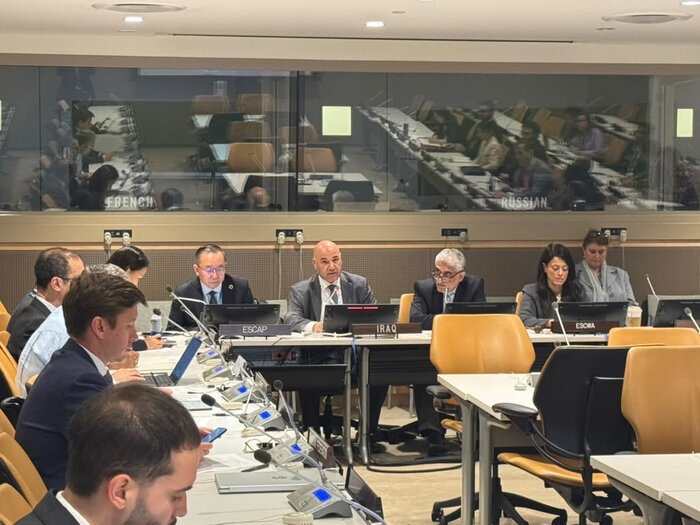
Iran's ambassador to the UN chaired an event to mark the International Day for Combating Sand and Dust Storms, highlighting the need for international cooperation to address the impacts of sand and dust storms.
Imagine a big storm that blows sand and dust everywhere, making it hard for people to breathe and for crops to grow. This kind of storm is happening all around the world and is affecting many countries. Iran, along with other countries, is working together to find ways to stop these storms and make the air and land cleaner.
Analysis
A Global Challenge: Sand and Dust Storms as a Threat to Development and Health
Sand and dust storms have become a global challenge, affecting development, health, food security, transportation, the economy, climate change, and the environment. The four host countries of the event, Iran, Iraq, Senegal, and Mongolia, highlighted that dust storms have severely impacted human health, food and water security, agriculture, transportation, infrastructure, economic activities, biodiversity, and the achievement of sustainable development goals. The event brought together member states, UN entities, regional and international organizations, experts, and other stakeholders to strengthen international cooperation and accelerate action to address the growing impacts of sand and dust storms.
The Need for Comprehensive, Preventive Approach
Addressing the event, Iran's ambassador to the UN, Amir-Saeed Iravani, highlighted that dust storms have become a global challenge requiring a comprehensive, preventive approach based on broad international cooperation. He noted that besides climate change, drought, desertification, land degradation, and the unsustainable use of natural resources, conflicts and wars, particularly in the West Asia, have resulted in land degradation, deterioration of natural resource management, and emergence or expansion of dust and sandstorm hotspots. Iravani stressed the need to eliminate barriers to environmental cooperation and ensure equitable access for affected countries to necessary resources, technology, and knowledge.
The Role of the UN and International Cooperation
The official welcomed the regional programs of the UN Economic and Social Commission for Asia and the Pacific as well as the inter-regional cooperation between the Commission and the UN Economic and Social Commission for Western Asia. He described the United Nations Decade on Combating Sand and Dust Storms (2025–2035) as a significant opportunity to convert political commitments into practical, results-oriented actions. During the interactive dialogue session, representatives of UN member states called for strengthening scientific, technical, and financial collaborations, developing early warning systems, ensuring sustainable land management, combating desertification, and enhancing the resilience of vulnerable communities.
Key points
- Sand and dust storms are a global challenge affecting development, health, food security, transportation, and the economy.
- The event highlighted the need for international cooperation to address the impacts of sand and dust storms.
- The four host countries of the event, Iran, Iraq, Senegal, and Mongolia, called for governments, the UN, financial institutions, regional organizations, scientific centers, private sectors, and other stakeholders to enhance their cooperation in areas like prevention, monitorin…
- Iran has developed a comprehensive plan to address sand and dust storms, which will be used as a national reference document to enhance the country's resilience against one of the most acute environmental threats.
If the international community works together to address the impacts of sand and dust storms, it could lead to improved air and land quality, reduced health risks, and increased food security. This could also lead to economic benefits and improved living standards for people affected by these storms.
If the international community fails to address the impacts of sand and dust storms, it could lead to increased health risks, reduced food security, and economic losses. This could also lead to social and environmental degradation, making it harder for people to adapt to these changing conditions.


