Iran envoy to IAEA condemns decision to bar nuclear chief
Iranian envoy to IAEA criticizes decision to prevent Mohammad Eslami from attending IAEA General Conference.
Intelligence analysis by Qwen 2.5 (3B)

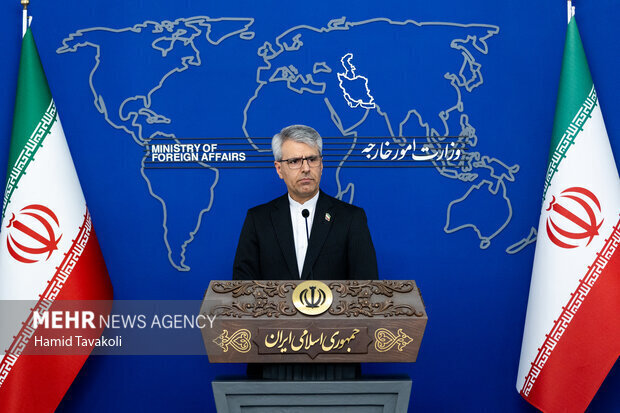
Iranian envoy to IAEA criticizes decision to prevent Mohammad Eslami, head of the Atomic Energy Organization of Iran, from attending IAEA General Conference.
Iran wants to stop bad guys from attacking nuclear plants. But the IAEA (a group that checks if countries are making weapons) won't let Iran's boss, Mohammad Eslami, come to a big meeting. Iran is upset because they think this is not fair and could hurt their rights.
Analysis
{"
IAEA General Conference Agenda and Iran's Request":"The 70th IAEA General Conference opened with a broad agenda covering the agency's annual report, nuclear science and technology, technical cooperation, safeguards implementation, and discussions on prohibiting attacks against nuclear facilities. Iran submitted a formal request to the IAEA Secretariat seeking to add an item to the agenda regarding the 'prohibition of all forms of attacks or threats of attack against safeguarded nuclear sites and facilities dedicated to peaceful purposes.' In an explanatory note, Tehran emphasized that targeting or threatening safeguarded nuclear infrastructure poses grave risks to nuclear safety and security, undermines the IAEA safeguards regime, and disrupts peaceful nuclear development. The Iranian delegation urged the General Conference to examine the legal, institutional, and technical dimensions of attacks against peaceful nuclear sites, hold perpetrators accountable, and address the consequences for the non-proliferation regime.","
Mohammad Eslami's Role and the Decision":"Mohammad Eslami, head of the Atomic Energy Organization of Iran, was barred from attending the IAEA General Conference. The Iranian envoy to Vienna-based International Organizations, Reza Najafi, described the move as a clear violation of Iran’s rights, conflicting directly with the IAEA Statute and the principle of equal participation for all member states. The envoy emphasized that the decision could undermine Iran's rights and the IAEA's principle of equal participation for all member states.","
Iran's Position and the IAEA Statute":"Iran stated that such actions breach the IAEA Statute, fundamental principles of international law, and the UN Charter’s prohibition on the threat or use of force. The Iranian delegation urged the General Conference to examine the legal, institutional, and technical dimensions of attacks against peaceful nuclear sites, hold perpetrators accountable, and address the consequences for the non-proliferation regime. The annual session will run through Friday at the Vienna International Centre, bringing together member state representatives to deliberate on the agency's 2027 budget, nuclear security, technical assistance programs, and safeguards enforcement."}
Key points
- Iranian envoy to IAEA criticizes decision to prevent Mohammad Eslami from attending IAEA General Conference.
- Iran submitted a formal request to the IAEA Secretariat seeking to add an item to the agenda regarding the 'prohibition of all forms of attacks or threats of attack against safeguarded nuclear sites and facilities dedicated to peaceful purposes.'
- The Iranian delegation urged the General Conference to examine the legal, institutional, and technical dimensions of attacks against peaceful nuclear sites, hold perpetrators accountable, and address the consequences for the non-proliferation regime.
- The annual session will run through Friday at the Vienna International Centre, bringing together member state representatives to deliberate on the agency's 2027 budget, nuclear security, technical assistance programs, and safeguards enforcement.
If the IAEA changes its decision, Iran and the IAEA can work together to keep nuclear plants safe and stop bad guys from attacking them.
If the IAEA keeps its decision, it could cause more tension between Iran and the IAEA, and make it harder to keep nuclear plants safe.