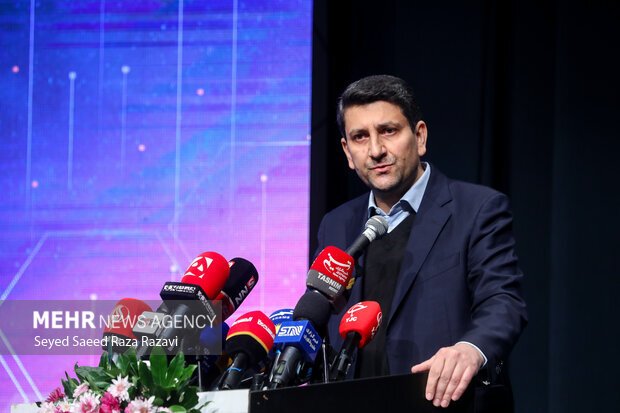
Iran not to give up on Hormuz Strait by any means
Iran's Expediency Council Chairman Ayatollah Sadegh Amoli Larijani has stated that the Strait of Hormuz will not return to its pre-war status. He emphasized that the Iranian nation and armed forces are standing at the Strait of Hormuz, and the sovereignty of this waterway…
Intelligence analysis by Llama

Iran's Expediency Council Chairman Ayatollah Sadegh Amoli Larijani has declared that the Strait of Hormuz will not return to its pre-war status, emphasizing Iran's sovereignty over the waterway.
Iran is saying that it will not give up control over the Strait of Hormuz, a waterway that is important for oil exports. This means that Iran will continue to have a strong presence in the region and will be able to influence the flow of oil and other goods.
Analysis
Ayatollah Larijani's Statement on the Strait of Hormuz
Ayatollah Sadegh Amoli Larijani, the Chairman of Iran's Expediency Council, has made a significant statement regarding the Strait of Hormuz. He emphasized that the Iranian nation and armed forces are standing at the Strait of Hormuz, and the sovereignty of this waterway is with the Islamic Republic. This statement is a clear indication of Iran's determination to maintain control over the Strait of Hormuz, which is a vital waterway for international trade and commerce.
Implications of Iran's Stance
Iran's stance on the Strait of Hormuz has significant implications for regional and global politics. The Strait of Hormuz is a critical waterway that connects the Persian Gulf to the Gulf of Oman, and it is a major route for oil exports. Iran's control over the Strait of Hormuz gives it significant leverage in the region, and it is a key factor in the country's foreign policy.
Regional and Global Reactions
The international community has been watching Iran's actions closely, and there have been various reactions to Iran's stance on the Strait of Hormuz. Some countries have expressed concern over Iran's actions, while others have welcomed Iran's determination to maintain control over the waterway. The United States, in particular, has been critical of Iran's actions, and it has imposed sanctions on the country in an attempt to curb its nuclear program.
Conclusion
In conclusion, Iran's stance on the Strait of Hormuz is a significant development in regional and global politics. The country's determination to maintain control over the waterway has significant implications for international trade and commerce, and it is a key factor in the country's foreign policy. As the situation continues to unfold, it is essential to monitor the developments closely and understand the implications of Iran's actions.
Key points
- Iran's Expediency Council Chairman Ayatollah Sadegh Amoli Larijani has stated that the Strait of Hormuz will not return to its pre-war status.
- Iran's sovereignty over the Strait of Hormuz is with the Islamic Republic.
- The international community has been watching Iran's actions closely, and there have been various reactions to Iran's stance on the Strait of Hormuz.
If Iran's stance on the Strait of Hormuz is successful, it could lead to increased stability in the region and a reduction in tensions between Iran and other countries. This could also lead to increased economic cooperation and trade between Iran and other countries.
If Iran's actions are met with resistance from other countries, it could lead to increased tensions and conflict in the region. This could also lead to economic sanctions and a decline in trade between Iran and other countries.