Iran says Spain's 2026 World Cup triumph is a victory for free nations
Iran congratulated Spain on its World Cup win and cast the result as a victory for “free and independent nations.”
Intelligence analysis by GPT-5.4 Mini
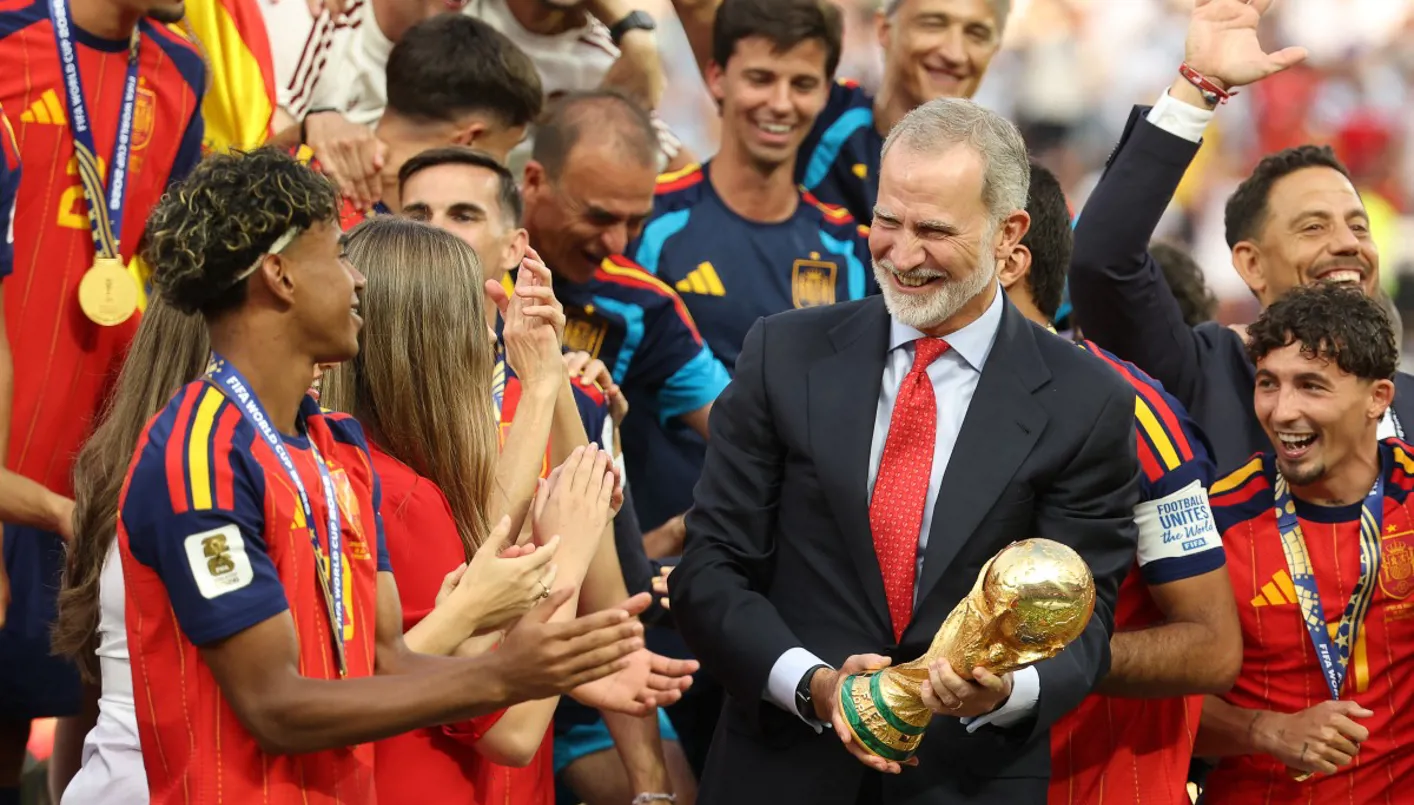
The article says Iranian officials and online supporters turned Spain’s 2026 World Cup title into a political symbol, praising Madrid’s criticism of Israel’s war in Gaza and its stance toward the U.S. The football result quickly became part of a wider regional narrative.
Iran treated Spain’s soccer win like more than a game. It was like seeing a favorite team win and then saying the team also stands for your side in a big argument between countries.
Analysis
A Football Result Turned Into Ideology
Iran’s reaction to Spain’s World Cup win shows how quickly a sporting moment can be converted into political language. The Iranian news agency IRNA quoted senior officials framing the victory as something that pleased “free and independent” nations, not just football fans.
That framing matters because it shifts the story away from the pitch and toward Iran’s wider diplomatic narrative. In the article, the win is presented as evidence of courage, freedom, and solidarity with the Palestinian cause, which makes the result useful as a political symbol.
Why Spain Became a Useful Symbol in Tehran
Spain was not praised only for winning the tournament. Iranian officials and online commenters also pointed to Madrid’s criticism of Israel’s war in Gaza and its condemnation of the U.S. and Israeli strikes on Iran.
That gives Tehran a rare chance to highlight a European government that can be described, in its own telling, as standing against Washington and Tel Aviv. The article also notes that some Israelis backed Argentina because its president, Javier Milei, is a strong supporter of Israel, showing how even a football final can be mapped onto regional alliances.
The Politics Hidden Inside the Trophy
The bigger lesson is that major sports events often become projection screens for political identity. A World Cup title is normally about goals, tactics, and talent, but here it is also used to signal who belongs in one camp and who belongs in another.
That can be powerful for governments and audiences looking for symbols, but it also narrows the meaning of the event. When every trophy is read through the lens of conflict, sport stops being a temporary escape and becomes another arena for regional rivalry.
For Iran, that may be a feature rather than a bug. The article suggests that officials are comfortable using football to reinforce a broader anti-U.S. and anti-Israel message, while presenting Spain as an ally of “free” nations.
Key points
- Iran congratulated Spain on winning the 2026 World Cup and called the result a victory for free and independent nations.
- Senior Iranian figures linked Spain’s win to Madrid’s criticism of Israel’s war in Gaza and its stance toward the United States.
- The article says social media users and officials turned the match into a political symbol rather than treating it as a purely sporting event.
- Iranian officials contrasted Spain’s stance with support in Israel for Argentina, whose president is a strong backer of Israel.
- Spain won the final 1-0 after extra time and claimed its second World Cup title.
If this kind of messaging stays limited to symbolism, football can still create rare moments of shared attention across political divides. Spain’s win also gave Iranian officials a way to praise anti-war and pro-Palestinian positions without a formal diplomatic clash.
The downside is that sports can get dragged deeper into regional conflict narratives. That can make even a World Cup final feel like another front in the dispute between Iran, the United States, Israel, and their supporters.