Iran targeted tanker, says UAE, as Tehran says Hormuz deal with Oman close
The UAE accused Iran of targeting a state-owned ADNOC tanker in the Strait of Hormuz, while Iran announced that talks with Oman regarding the strait's management are nearing their final stages.
Intelligence analysis by Gemini 2.5 Flash
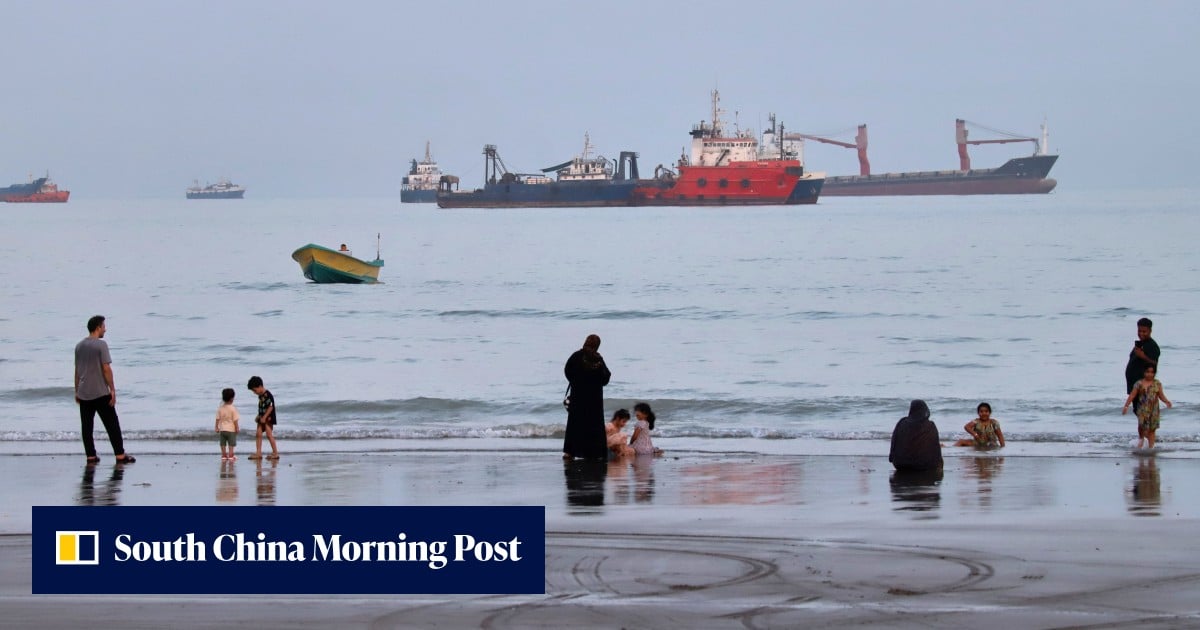
Tensions are escalating in the critical Strait of Hormuz, a vital global oil transit route, following the UAE's accusation that Iran launched a missile attack on one of its tankers. Concurrently, Iran is in advanced discussions with Oman to establish new management arrangements for the strait, a move that the US views as an attempt by Tehran to impose a blockade and charge for passage.
Imagine a super important water highway where big ships carry lots of oil, like a gas station for the whole world. One country, the UAE, says another country, Iran, shot a missile at one of its oil ships on this highway. At the same time, Iran is talking to its neighbor, Oman, about how to manage this water highway, which might mean they want to charge ships to pass through, like a toll road for oil.
Analysis
The recent accusations by the United Arab Emirates against Iran, alleging a missile attack on an ADNOC tanker in the Strait of Hormuz, underscore the volatile geopolitical landscape of the Middle East. This incident follows a pattern of reported attacks, with ADNOC stating that 15 of its vessels have been targeted in Hormuz since the start of the regional conflict, including three in the preceding week alone. While the UAE condemned the "hostile Iranian attack," it noted that no casualties resulted from the alleged incident.
Strait of Hormuz
The Strait of Hormuz is a choke point of immense global strategic importance, historically facilitating the passage of approximately one-fifth of the world's oil and liquefied natural gas. Iran's long-standing desire to impose an effective blockade and charge for passage through this waterway has been a significant point of contention, drawing strong opposition from the United States. The potential for such a move to disrupt global energy markets and escalate regional tensions is a primary concern for international powers.
ADNOC
The Abu Dhabi National Oil Company (ADNOC), a state-owned entity of the UAE, finds itself at the center of these escalating maritime security concerns. The company's public statement detailing multiple attacks on its vessels highlights the direct impact of regional instability on commercial shipping and energy supply chains. The targeting of an ADNOC tanker, regardless of whether it caused casualties, serves as a stark reminder of the risks faced by maritime traffic in this critical region, potentially influencing insurance premiums and operational costs for all vessels.
Abbas Araghchi
Amidst these tensions, Iranian Foreign Minister Abbas Araghchi announced that talks with Oman regarding the future management arrangements for the Strait of Hormuz are "approaching the final stages." However, Araghchi was careful to clarify that this development does not signal a "reopening of the Strait of Hormuz," implying that Iran's objective remains to establish a new framework for passage, potentially including charges. These negotiations with Oman, a neighboring country with historical ties to both Iran and Western powers, represent a diplomatic effort to formalize Iran's control or influence over the strait, a move that could fundamentally alter the dynamics of global energy transit.
Key points
- The UAE accused Iran of targeting a state-owned ADNOC tanker with a missile in the Strait of Hormuz.
- ADNOC reported 15 of its vessels have been attacked in Hormuz since the war began, with three occurring this week.
- Iran's Foreign Minister stated that talks with Oman regarding the management of the Strait of Hormuz are nearing completion.
- Iran aims to impose charges for passage through the strait, a move fiercely opposed by the United States.
- The Strait of Hormuz is a critical waterway, previously carrying about a fifth of the world's oil and liquefied natural gas.
If the ongoing talks between Iran and Oman successfully lead to a mutually agreeable and internationally recognized framework for managing the Strait of Hormuz, it could establish a more predictable and stable environment for maritime passage. Such an agreement might de-escalate current tensions, reduce the risk of military confrontations, and ensure the continued flow of global energy supplies without further disruption.
The persistent accusations of tanker attacks, coupled with Iran's stated intention to charge for passage through the Strait of Hormuz and strong US opposition, could lead to a dangerous escalation of military actions in the region. This scenario risks severe disruptions to global oil and gas supplies, potentially triggering a broader regional conflict with significant international economic and political repercussions.
Market signals
- OIL Increased geopolitical tension and supply route risks in the critical Strait of Hormuz typically drive oil prices higher due to potential disruptions.
- XAU Escalating regional conflict and uncertainty in the Middle East often lead investors to seek safe-haven assets like gold.
AI-generated analysis of potential market relevance. Not financial advice.