Iran to never surrender to pressures: Acting defense minister
Iran's acting defense minister, Brigadier General Seyyed Majid Ibn Reza, declared that Iran will never yield to foreign pressures, attributing a strategic defeat to the United States and Zionist regime through indigenous capabilities.
Intelligence analysis by Gemini 2.5 Flash
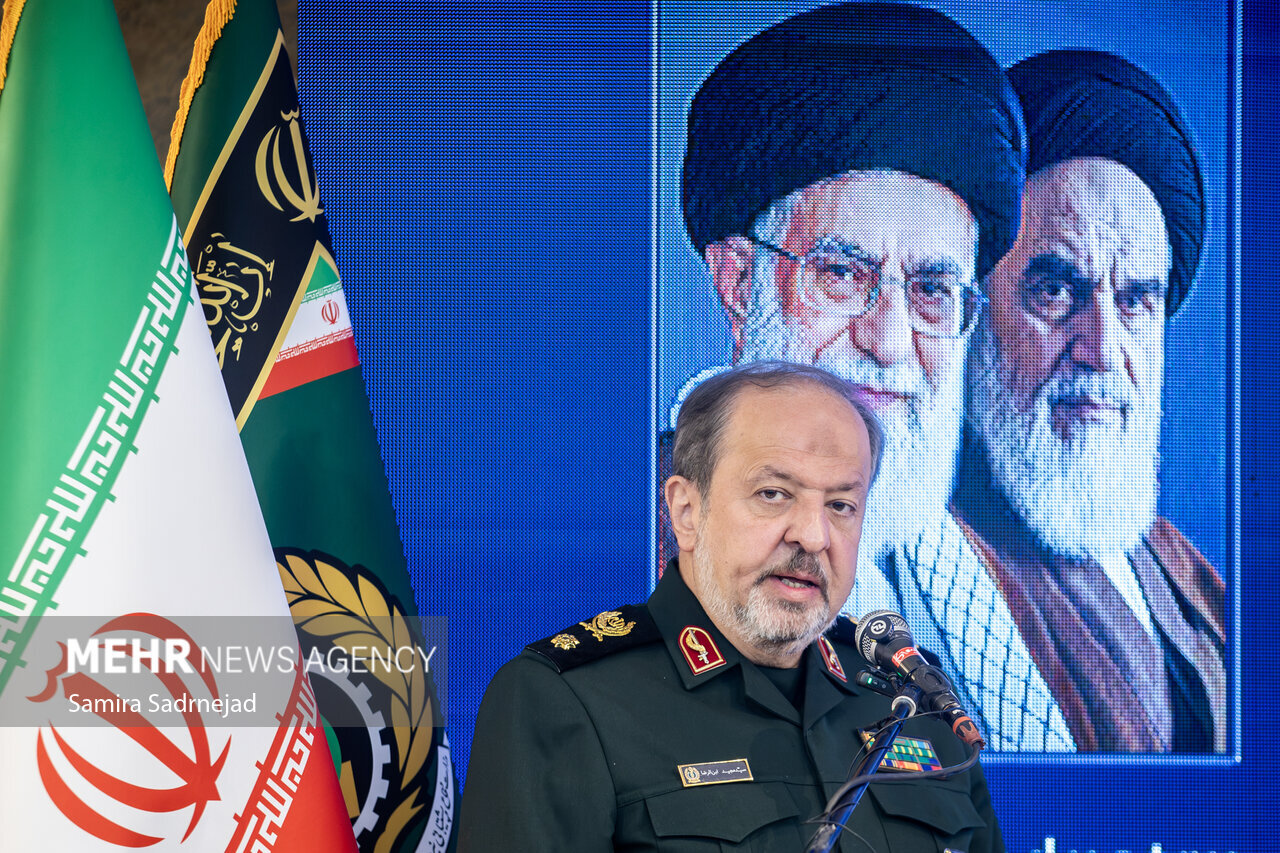
Speaking on National Defense Industry Day, the acting defense minister emphasized Iran's self-reliance in developing its defense capabilities despite decades of sanctions. He highlighted the nation's determination to maintain peace, stability, and national independence by enhancing deterrence and imposing costs on aggressors, while also thanking countries that condemned recent US and …
Imagine Iran is like a kid who wants to build cool, strong toys, but other kids keep trying to stop them and take their tools away. Instead of giving up, Iran learned to make its own tools and build even stronger toys all by itself. Now, their acting defense minister says they're so good at it, they won't let anyone boss them around, and they've even shown the other kids that trying to stop them didn't work.
Analysis
Iran's acting defense minister, Brigadier General Seyyed Majid Ibn Reza, delivered a resolute message on National Defense Industry Day, underscoring the nation's unwavering commitment to self-reliance and resistance against external pressures. His remarks, made during a meeting with foreign military attachés in Tehran, framed Iran's defense advancements as a strategic victory over its adversaries, particularly the United States and the Zionist regime. This declaration is not merely rhetorical; it reflects a deeply ingrained national policy forged over decades of sanctions and geopolitical isolation.
National Defense Industry Day
Mordad 31, corresponding to August 22, is observed as "National Defense Industry Day" in Iran, a designation that goes beyond mere symbolism. This day serves as a profound acknowledgment of the relentless efforts and innovative spirit of Iranian scientists and defense experts. Despite facing severe international sanctions, these individuals have been instrumental in cultivating indigenous capabilities, thereby bolstering national power and enhancing Iran's deterrent posture. The celebration of this day reinforces the narrative of a nation that has transformed adversity into opportunity, building a robust defense infrastructure from within.
The emphasis on local and domestic capabilities highlights a core tenet of Iran's defense doctrine: self-sufficiency. This approach is presented as a direct response to external restrictions, demonstrating Iran's capacity to innovate and produce essential military hardware without foreign assistance. The acting minister's comments suggest that this self-reliance is not just about manufacturing weapons but about fostering a national spirit of resistance and progress, ensuring the armed forces remain strong and authoritative even under challenging conditions.
Brigadier General Seyyed Majid Ibn Reza
Brigadier General Seyyed Majid Ibn Reza, as the acting defense minister, articulated a clear vision for Iran's defense future, rooted in resilience and strategic foresight. His address served as a platform to thank nations that condemned what Iran perceives as US and Israeli aggression, thereby solidifying diplomatic ties with sympathetic countries. The minister's reference to former martyred defense ministers, including Brigadier General Aziz Nasirzadeh, also invoked a sense of historical continuity and sacrifice within Iran's defense establishment, linking current efforts to a legacy of national defense.
Ibn Reza's assertion that the Ministry of Defense has maintained active production lines for military equipment, even introducing new offensive and defensive systems during wartime conditions, directly counters claims by adversaries regarding the destruction of Iranian armed forces. This statement aims to project an image of an unyielding and adaptable defense industry, capable of sustained operation and innovation despite ongoing conflicts or threats. The continuity of this process, as he stated, is a testament to Iran's strategic planning and determination to safeguard its national interests.
United States and Zionist regime
The acting defense minister explicitly stated that Iran has imposed a "strategic defeat" on the United States and the Zionist regime. This claim positions Iran's indigenous defense advancements and its ability to withstand pressure as a direct challenge to the geopolitical influence of these two entities. The narrative suggests that despite decades of sanctions and perceived aggression, Iran has not only survived but thrived in developing its defense capabilities, thereby undermining the objectives of its adversaries.
This framing of a strategic defeat is central to Iran's messaging, both domestically and internationally. It aims to demonstrate that foreign pressures have failed to compel Iran to make concessions, instead driving it towards greater self-reliance and a stronger deterrent posture. The minister's remarks imply that Iran's defense industry is not merely reactive but proactively designed to impose "regrettable costs on aggressors," thereby maintaining peace, stability, and national independence through a robust defensive deterrence strategy.
Key points
- Iran's acting defense minister declared the nation will never yield to foreign pressures, crediting indigenous capabilities for a strategic defeat against the US and Zionist regime.
- The statement was made on National Defense Industry Day, emphasizing Iran's self-reliance in defense despite decades of sanctions.
- Iran's defense industry aims to maintain peace, stability, and national independence by enhancing deterrence and imposing costs on aggressors.
- The Ministry of Defense has kept production lines active and introduced new offensive and defensive systems, countering claims of military weakness.
- The minister thanked countries that condemned US and Israeli aggression against Iran.
Iran's continued focus on indigenous defense capabilities could lead to enhanced national security and deterrence, potentially reducing the likelihood of external military intervention. This self-reliance might also foster domestic technological innovation and economic growth in related sectors, strengthening the country's overall resilience against foreign pressures.
Iran's defiant stance and continued development of its defense industry, particularly offensive systems, could escalate regional tensions and lead to further international isolation or more stringent sanctions. This path might also increase the risk of military confrontations if perceived as a direct threat by regional rivals or global powers.


