Iran war changed regional security equations: Araghchi
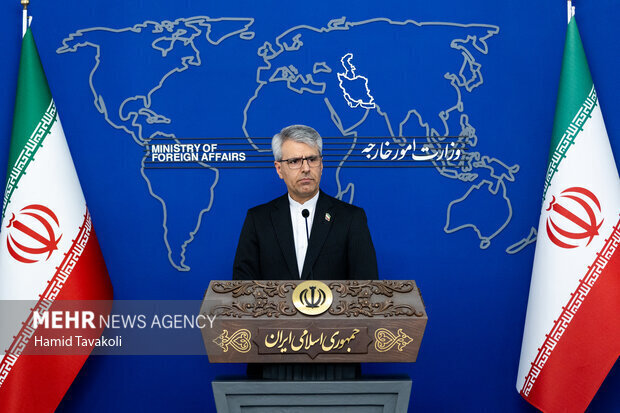
Iran's foreign minister said the Iran war had changed the region's security thinking, convincing Arab states that security must be collective and regional, not dependent on foreign bases that had become sources of insecurity.
Intelligence analysis by Llama

Iran's foreign minister, Seyed Abbas Araghchi, stated that the Iran war had altered the region's security dynamics, convincing Arab states that collective and regional security is more effective than relying on foreign bases.
Iran's foreign minister said the war changed how countries in the region think about security. Now, they believe security should be shared and regional, not just dependent on foreign bases.
Analysis
Iran's Shift in Foreign Policy Approach After the War
The Iran war has brought about a significant change in the country's foreign policy approach. Iran's foreign minister, Seyed Abbas Araghchi, has stated that the war has convinced Arab states that security must be collective and regional, not dependent on foreign bases that have become sources of insecurity.
This shift in approach is a direct result of the war's outcome, which has demonstrated that external forces and bases not only fail to deliver security but actively undermine it. Araghchi emphasized that countries without foreign bases have remained safer and suffered less from the war than those hosting American bases that were supposed to protect them.
The war has also led to a more accurate understanding across the region: Persian Gulf security must be collective, include economic dimensions, and cannot be achieved amid economic and security imbalances between states. This new understanding has been reflected in Iran's post-war foreign policy, which will be 'completely different' from the pre-war period.
The Image of a Weak Iran Has Been Erased
Before the war, Iran appeared weak, and this perception invited attack. However, after 40 days of resistance, the image of a weak Iran has been completely erased. The war has turned the image of a weak Iran into that of a tough and resistant Iran that can stand on its feet in the hardest conditions.
Iran's Public Diplomacy During the War
Western media has acknowledged that Iran's public diplomacy during the war has been 'extremely strong and influential, more influential than the entire Western media.' This is a testament to the effectiveness of Iran's diplomatic efforts during the war.
President Masoud Pezeshkian's Role in the Negotiations
Araghchi praised President Masoud Pezeshkian's role in the negotiations, calling him the most important factor in reaching the Islamabad MoU. Pezeshkian opposed a mere ceasefire after the 12-day war and insisted on an end to the war that would not be repeated. The Americans had begun with a 15-point text that was effectively a 'surrender document,' while the final 14-point MoU showed how far the process had moved.
A New Era in Iran's Foreign Policy
From now on, Iranians will see the image of a powerful, strong, and dignified foreign policy that pursues national interests, the rights of the people, and the pride of Iran. This new era in Iran's foreign policy is a direct result of the war's outcome and the country's shift in approach.
Key points
- Iran's foreign minister said the war changed the region's security thinking, convincing Arab states that security must be collective and regional.
- The war demonstrated that external forces and bases not only failed to deliver security but actively undermined it.
- Iran's post-war foreign policy will be 'completely different' from the pre-war period.
- President Masoud Pezeshkian's role in the negotiations was crucial in reaching the Islamabad MoU.
- Iran's public diplomacy during the war was 'extremely strong and influential, more influential than the entire Western media.'
The war has demonstrated Iran's ability to resist and defend itself, which could lead to increased regional cooperation and a more stable security environment.
The war has also highlighted the risks of relying on foreign bases, which could lead to increased tensions and instability in the region if not addressed.