Iran warns of strong response to any US aggression
Iran has warned of a strong response to any US aggression, accusing the US of violating a ceasefire understanding. The US and Iran have continued attacks in the Gulf, each accusing the other of violating an interim deal.
Intelligence analysis by Llama 3.3 70B
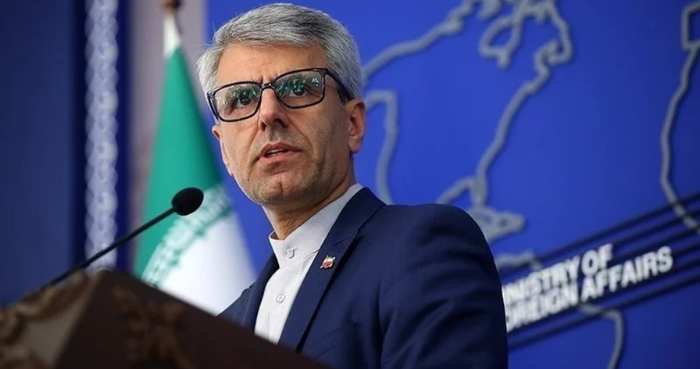
Iran has threatened to respond forcefully to any future US aggression, citing a breach of ceasefire terms. The US and Iran have exchanged attacks in the Gulf, despite a recent interim agreement.
Imagine two countries, the US and Iran, that are not getting along. They have been fighting, and recently they agreed to stop. But now they are fighting again, and it's making a lot of people worried. The US and Iran are important countries, and what they do can affect a lot of other people.
Analysis
Escalating Tensions in the Gulf
The recent exchange of attacks between the US and Iran has raised concerns about the stability of the region. The US has accused Iran of violating an interim deal, while Iran has claimed that the US has breached the terms of the agreement. The situation is complex, with both sides accusing each other of aggression.
The US-Iran interim agreement was meant to halt the fighting and reopen the Strait of Hormuz to shipping. However, the continued attacks have raised doubts about the effectiveness of the agreement. The US has warned that it may take further action, while Iran has threatened to respond forcefully to any future aggression.
The Role of the US in the Conflict
The US has played a significant role in the conflict, with President Donald Trump warning that the US might "militarily complete the job". The US has also been accused of violating the ceasefire terms, which has led to a escalation of tensions. The US has a significant military presence in the region, and its actions have been closely watched by Iran and other countries in the region.
The US has also been criticized for its approach to the conflict, with some arguing that it has been too aggressive. The US has a long history of conflict with Iran, and the current situation is just the latest episode in a long-standing rivalry. The US will need to carefully consider its next steps in order to avoid further escalation of the conflict.
Implications for Regional Stability
The conflict between the US and Iran has significant implications for regional stability. The Gulf region is a critical hub for global energy markets, and any disruption to shipping lanes could have significant economic consequences. The conflict has also raised concerns about the stability of other countries in the region, including Iraq and Saudi Arabia.
The international community will need to play a role in resolving the conflict and reducing tensions between the US and Iran. This could involve diplomatic efforts to negotiate a lasting ceasefire, as well as economic incentives to encourage both sides to negotiate. The situation is complex, and a resolution will require careful consideration and cooperation from all parties involved.
Key points
- Iran has warned of a strong response to any US aggression
- The US and Iran have continued attacks in the Gulf
- The conflict has significant implications for regional stability and global energy markets
A resolution to the conflict could lead to increased stability in the region, which would have positive implications for global energy markets. A lasting ceasefire could also lead to improved relations between the US and Iran, which could have benefits for trade and diplomacy.
The conflict could escalate further, leading to significant economic and humanitarian consequences. The situation is complex, and a resolution will require careful consideration and cooperation from all parties involved. If the conflict continues, it could lead to a wider regional conflict, drawing in other countries and causing significant instability.