Iranian radio drama adapts Stephen King’s “Misery”
Iran's Namayesh Radio has produced a six-part radio drama adaptation of Stephen King's novel 'Misery'. The production uses sound effects and voice acting to recreate the story's atmosphere of fear and suspense.
Intelligence analysis by Llama
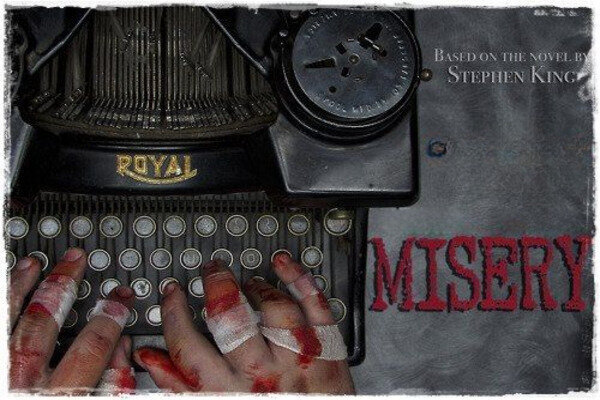
Iran's Namayesh Radio has adapted Stephen King's 'Misery' into a six-part radio drama, using sound effects and voice acting to recreate the story's atmosphere of fear and suspense. The production emphasizes the psychological tension of the original novel.
Imagine being trapped in a house with someone who won't let you leave. That's what happens to a writer in the story 'Misery'. The writer is forced to write a new book by his captor, who is obsessed with his work. The story is like a game of cat and mouse, where the writer tries to escape and the captor tries to keep him trapped.
Analysis
Adaptation and Production
The six-part radio drama 'A Nurse's Nightmare' was produced and broadcast by Iran's Namayesh Radio. Directed by Nazanin Mohaimani and adapted for radio by playwright and director Ayoub Aghakhani, the production offers an audio interpretation of one of King's best-known psychological horror stories. The cast of 'A Nurse's Nightmare' includes Mohsen Bahrami, Mona Safi, Mohammad Pourhasan, Mohammad Majdzadeh, Hassan Pourgolmohammadi and Nazanin Mohaimani. Mir-Taher Mazloumi serves as the narrator, while Narges Mousapour is responsible for sound effects and Majid Ayeneh serves as the sound engineer.
The Story
Through its six episodes, 'A Nurse's Nightmare' places particular emphasis on the psychological tension of 'Misery,' using the distinctive capabilities of radio drama to recreate the story's atmosphere of fear, isolation and suspense. 'Misery,' first published in 1987, tells the story of Paul Sheldon, a successful novelist who is seriously injured in a car accident while traveling through a remote area. He is rescued by Annie Wilkes, a former nurse and an obsessive fan of his novels. Annie takes Sheldon to her isolated home and begins caring for him. However, it soon becomes clear that she has no intention of allowing him to leave. After discovering that Sheldon has killed off Misery Chastain, the heroine of his popular series, Annie forces the injured writer to revive the character and write a new novel according to her demands. Confined to a bed and physically dependent on his captor, Sheldon becomes trapped in an increasingly terrifying struggle for survival. The story gradually transforms from a tale of rescue into a psychological battle between a writer desperate for freedom and a fan whose obsession has turned into violence. The novel explores themes including obsession, control, isolation, creativity and the complicated relationship between authors and their audiences. Much of its tension comes not from supernatural elements but from the psychological and physical vulnerability of its central character.
Adaptations of 'Misery'
'Misery' has been adapted several times since its publication. The best-known adaptation is Rob Reiner's 1990 film, starring James Caan as Paul Sheldon and Kathy Bates as Annie Wilkes. Bates' performance received widespread critical acclaim and earned her the Academy Award for Best Actress, making the film one of the most notable adaptations of King's work. The story was also adapted for the stage. In 2015, a theatrical production starring Laurie Metcalf and Bruce Willis was performed, further demonstrating the enduring appeal of King's claustrophobic psychological thriller. The Iranian radio adaptation, however, uses the possibilities of sound to retell the story in a six-part format. Without visual elements, the production relies on dialogue, narration, voice acting and sound effects to create the atmosphere of confinement and suspense at the heart of the original work.
Key points
- Iran's Namayesh Radio has produced a six-part radio drama adaptation of Stephen King's novel 'Misery'.
- The production uses sound effects and voice acting to recreate the story's atmosphere of fear and suspense.
- The adaptation emphasizes the psychological tension of the original novel.
- The story has been adapted several times since its publication, including a 1990 film and a 2015 stage production.
- The Iranian radio adaptation uses the possibilities of sound to retell the story in a six-part format.
The Iranian radio adaptation of 'Misery' could lead to increased interest in Stephen King's works and potentially inspire other adaptations in the region. This could be a positive development for the literary and cultural scene in Iran.
The adaptation of 'Misery' could also be seen as a negative development, as it may perpetuate the idea that Western literature is superior to Iranian literature. This could lead to a lack of interest in Iranian authors and their works.