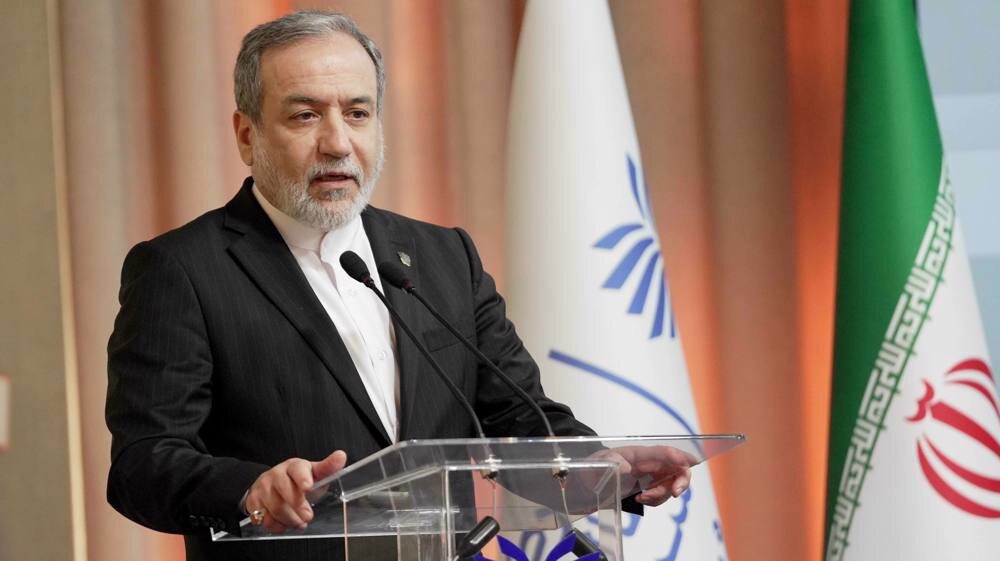
Iranian researcher recounts ordeal of arbitrary US detention
Iranian researcher Yousef Azizi recounts his ordeal of arbitrary US detention, despite holding valid legal status and residing in the US for 13 years. He was subjected to a pre-dawn raid, baseless allegations, inhumane detention conditions, and a clear effort to silence h…
Intelligence analysis by Llama

Iranian researcher Yousef Azizi recounts his arbitrary US detention, despite holding valid legal status. He was subjected to a pre-dawn raid, baseless allegations, and inhumane detention conditions. Azizi believes his media presence made him a target and that the US government wants to control the narrative.
Imagine you're a researcher who loves to tell the truth about what's happening in the world. But one day, some people in a different country come to your home and take you away. They say you did something wrong, but you know you didn't. You're kept in a small room with no pillows or food, and you start to feel really sick. This is what happened to Yousef Azizi, an Iranian researcher who was detained by US Immigration and Customs Enforcement (ICE). He was held for three months without any evidence of wrongdoing, and his family was threatened by the FBI. Luckily, some good people helped him get back home safely.
Analysis
Arbitrary Detention and Baseless Allegations
Yousef Azizi, an Iranian researcher and journalist, was subjected to a pre-dawn raid by US Immigration and Customs Enforcement (ICE) on April 13 outside his Maryland home. Despite holding valid legal status and residing in the US for 13 years, Azizi was handcuffed, shackled, and transferred to a detention center in Baltimore. During his three-month detention, interrogators repeatedly pressed him on a baseless claim that he was a member of the Student Basij Organization, a branch within the IRGC-affiliated Basij Organisation for university campuses, during his first master’s degree. Authorities attempted to weaponize the US government’s 2019 designation of the IRGC as a terrorist organization, retroactively demanding he disclose this alleged affiliation from years prior.
Family Trauma and Diplomatic Intervention
The psychological toll on Azizi’s family was immense. He revealed that an FBI special agent threatened his wife on two occasions, attempting to use her and their young children as leverage to coerce Azizi into cooperating with US authorities. While the local Iranian-American community and his children’s school rallied to support his family, the situation remained dire. Azizi credited the Iranian Interests Section at the Pakistani Embassy in Washington, D.C., particularly its head, Abolfazl Mehrabadi, for intervening. Despite the immense challenges, Mehrabadi and his team traveled to detention centers across the US, advocating for thousands of detained Iranian nationals and ultimately facilitating Azizi’s swift and safe return to Iran.
A Call for Justice
Now back in his home country, Azizi remains steadfast in his analytical approach. He rejected the notion that he is an ideologue, stating that his role is to objectively evaluate policies, criticizing economic hardships in Iran just as he condemns US imperialism and Israeli aggression. Regarding his academic future, Azizi is in communication with his committee chair at Virginia Tech to defend his dissertation remotely, a procedure that has precedents post-pandemic. However, due to US sanctions, he may need to register from a third country, such as Turkey or the UAE, to complete his degree. Azizi’s case is not an isolated incident. It reflects a broader, alarming pattern of politically driven immigration enforcement and due process violations targeting foreign nationals, particularly Iranians, in the United States.
Key points
- Iranian researcher Yousef Azizi was detained by US Immigration and Customs Enforcement (ICE) despite holding valid legal status.
- Azizi was subjected to baseless allegations, inhumane detention conditions, and a clear effort to silence his vocal criticism of US and Israeli foreign policy.
- The case reflects a broader pattern of politically driven immigration enforcement and due process violations targeting foreign nationals, particularly Iranians, in the United States.
- Azizi's family was threatened by the FBI, and he credits the Iranian Interests Section at the Pakistani Embassy in Washington, D.C. for intervening and facilitating his return to Iran.
- Azizi remains steadfast in his analytical approach, rejecting the notion that he is an ideologue and calling for justice in his case.
Azizi's case may lead to a review of the US immigration enforcement policies and procedures, potentially resulting in changes that would prevent similar arbitrary detentions in the future.
The US government's actions may continue to target foreign nationals, particularly Iranians, as a means of silencing dissent and controlling the narrative. This could lead to further human rights violations and erosion of trust between the US and the international community.