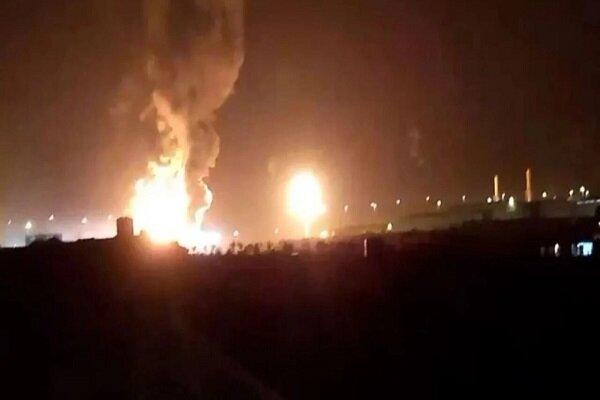
Iraqi resistance group calls for expelling Saudi ambassador
The Iraqi resistance movement Saraya Awliya al-Dam has demanded cutting immediate diplomatic and economic retaliation with Saudi Arabia after aggression on Popular Mobilization Forces bases. The group called on the Iraqi government to expel the Saudi ambassador and cut al…
Intelligence analysis by Llama

The Iraqi resistance group Saraya Awliya al-Dam has called for expelling the Saudi ambassador and cutting diplomatic and economic relations with Saudi Arabia in response to aggression on Popular Mobilization Forces bases.
Imagine a group of people in Iraq who are fighting for their country's freedom and independence. They are upset with Saudi Arabia because they think they are being aggressive and threatening their country. The group is asking the Iraqi government to stand up to Saudi Arabia and protect their country's interests.
Analysis
A Call to Action: Iraqi Resistance Group Demands Retaliation Against Saudi Arabia
The Iraqi resistance movement Saraya Awliya al-Dam has taken a bold stance against Saudi Arabia, demanding immediate diplomatic and economic retaliation in response to aggression on Popular Mobilization Forces bases. This move is a clear indication of the growing tensions between Iraq and Saudi Arabia, and the role of the Iraqi resistance movement in shaping the country's foreign policy.
The group's statement emphasizes the importance of national sovereignty and the lives of Iraqi citizens, which must take precedence over all other political considerations. This is a clear message to the Iraqi government, urging them to take a strong stance against Saudi Arabia and protect the country's interests.
The resistance group has also called on the Iraqi government to expel the Saudi ambassador and cut all diplomatic and economic relations with Saudi Arabia. This move is a significant escalation of the conflict, and it remains to be seen how the Iraqi government will respond.
The Role of the Iraqi Resistance Movement
The Iraqi resistance movement has played a significant role in shaping the country's foreign policy, particularly in relation to Saudi Arabia. The group's statement highlights the importance of national sovereignty and the lives of Iraqi citizens, which must take precedence over all other political considerations.
The resistance movement has also emphasized the need for the Iraqi government to take a strong stance against Saudi Arabia, and to protect the country's interests. This is a clear message to the government, urging them to take action against Saudi Arabia and to defend the country's sovereignty.
The Implications of the Conflict
The conflict between Iraq and Saudi Arabia has significant implications for the region, and for the global community. The growing tensions between the two countries have the potential to destabilize the region, and to create new challenges for the global community.
The Iraqi resistance movement's call for retaliation against Saudi Arabia is a significant development in this conflict, and it remains to be seen how the situation will unfold. One thing is certain, however: the conflict between Iraq and Saudi Arabia is a complex and multifaceted issue, with significant implications for the region and the global community.
Key points
- The Iraqi resistance movement Saraya Awliya al-Dam has demanded cutting immediate diplomatic and economic retaliation with Saudi Arabia.
- The group called on the Iraqi government to expel the Saudi ambassador and cut all diplomatic and economic relations with Saudi Arabia.
- The resistance group emphasized the importance of national sovereignty and the lives of Iraqi citizens, which must take precedence over all other political considerations.
If the Iraqi government takes a strong stance against Saudi Arabia and expels the Saudi ambassador, it could lead to a reduction in tensions between the two countries. This could also lead to a strengthening of the Iraqi resistance movement, which could help to protect the country's sovereignty and interests.
If the Iraqi government fails to take a strong stance against Saudi Arabia, it could lead to a further escalation of the conflict. This could also lead to a weakening of the Iraqi resistance movement, which could make it harder for the country to protect its sovereignty and interests.