IRGC writes an open letter to American people
Iran's Islamic Revolutionary Guards Corps (IRGC) has issued an open letter to the American public, urging them to distance themselves from Israel to achieve peaceful coexistence with Iran.
Intelligence analysis by Gemini 2.5 Flash

The IRGC's letter accuses the United States military of launching an unprovoked war of aggression against Iran seven months prior, citing attacks on a school and the Supreme Leader's office, resulting in thousands of civilian casualties. It claims a decisive victory for Iran despite the US's superior military budget and questions the American government's narrative.
Imagine a big army from Iran writing a letter to people in America, saying that America's army started a fight and hurt many innocent people, including kids at a school. Iran's army says they won the fight and that Americans should stop being friends with Israel if they want to live peacefully with Iran. They want Americans to see the truth for themselves.
Analysis
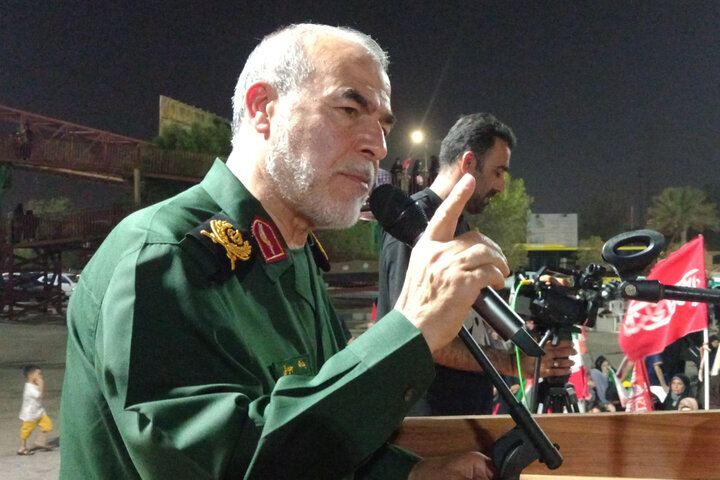
The Islamic Revolutionary Guards Corps (IRGC) has taken the unprecedented step of directly addressing the American populace through an open letter, a move that underscores a strategic shift in its public diplomacy. The letter, delivered via Brigadier General Hossein Mohebbi, frames the ongoing conflict as an unprovoked war of aggression initiated by the United States, in stark violation of international law. This narrative aims to position Iran as a victim while simultaneously asserting its military and moral superiority over its adversaries.
Minab Elementary School
The IRGC's letter specifically highlights an alleged attack on Minab Elementary School, claiming that the US military murdered 168 schoolchildren and their teachers. This detail serves as a powerful emotional appeal, designed to shock the American public and challenge the official narrative of US military operations. By focusing on civilian casualties, particularly children, the IRGC seeks to portray the US as a perpetrator of war crimes and to erode public support for American foreign policy in the region.
Ayatollah Seyyed Ali Khamenei
Another critical accusation in the letter is the alleged simultaneous attack on the Office of Leader of the Islamic Revolution Ayatollah Seyyed Ali Khamenei, which the IRGC claims resulted in the martyrdom of his family members, including his 14-month-old grandchild. This assertion aims to personalize the conflict and elevate the perceived stakes, framing the US actions as an assault on Iran's spiritual and political leadership. The inclusion of such a high-profile target and the tragic loss of a child's life are intended to galvanize anti-US sentiment and underscore the severity of the alleged aggression.
Strait of Hormuz
The letter concludes by inviting Americans to visit Iran, including strategic locations like the Strait of Hormuz, to personally verify the IRGC's assertions regarding the conflict and Iran's victory. This invitation, while seemingly open, is a rhetorical challenge, daring the American public to question their government's information and seek an alternative perspective. It also subtly reinforces Iran's control and confidence in its territorial integrity, even in a highly contested area like the Strait of Hormuz, a vital global shipping lane.
Key points
- The IRGC issued an open letter to the American public, urging them to separate from Israel for peaceful coexistence with Iran.
- The letter accuses the US military of launching an unprovoked war of aggression against Iran seven months prior.
- Specific alleged attacks include Minab Elementary School, resulting in 168 schoolchildren's deaths, and the office of Ayatollah Seyyed Ali Khamenei, martyring his family members.
- The IRGC claims Iran achieved a decisive victory despite the US's significantly larger military budget.
- The letter invites Americans to visit Iran, including the Strait of Hormuz, to verify its assertions.
From the IRGC's perspective, an optimistic outcome would involve the American public heeding their call to distance themselves from Israel, potentially leading to a more peaceful relationship between the US and Iran. This shift, as suggested by the letter, could alleviate regional tensions and foster a new era of coexistence.
The letter's accusations of unprovoked aggression and war crimes by the US military, coupled with claims of an 'impending collapse' for the US, suggest a pessimistic outlook where conflict escalates. If the American public does not respond as the IRGC hopes, the current trajectory of hostility and confrontation between the two nations could intensify, leading to further instability.