Is Vine back? Short-form video-sharing app Divine opens to public
A new app called Divine has been released, seen as a spiritual successor to Vine. It lets users create and share six-second videos that repeat on a loop, and hosts over two million original Vine videos. The app bans content made by AI and is backed by Twitter co-founder J…
Intelligence analysis by Llama
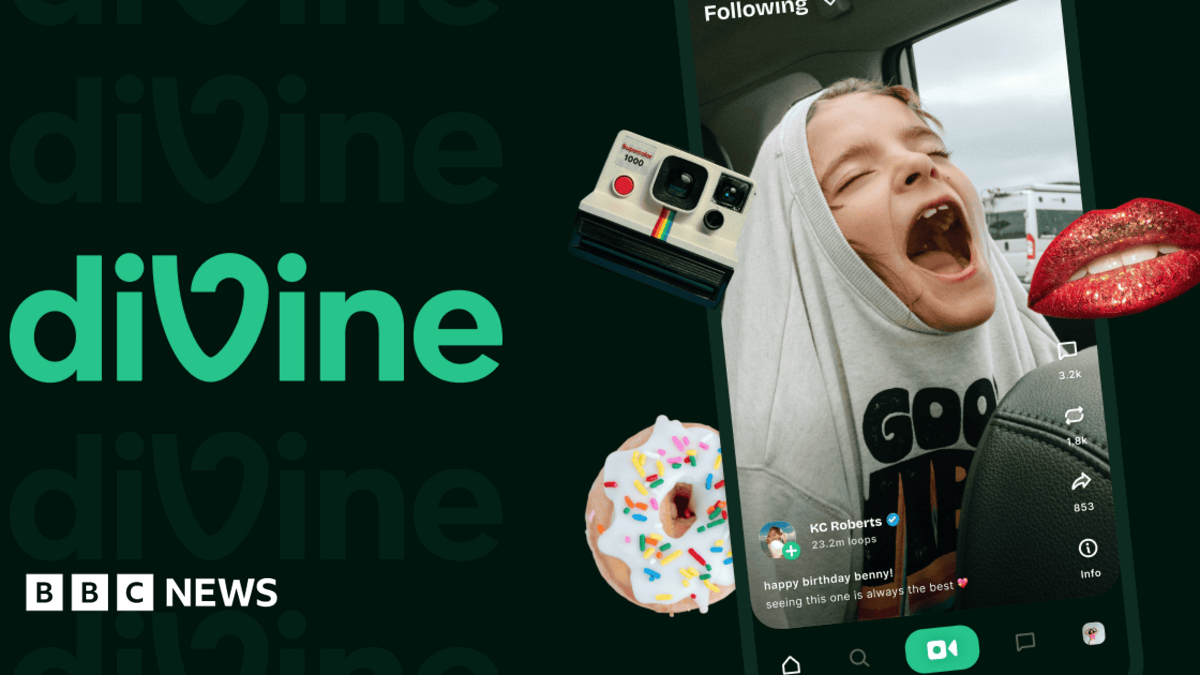
Divine, a new app, is a spiritual successor to Vine, allowing users to create and share six-second videos that repeat on a loop. It hosts over two million original Vine videos and bans AI-generated content. The app is backed by Twitter co-founder Jack Dorsey.
Imagine a video app where you can make and share short videos that are just six seconds long and repeat on a loop. That's what Divine is, and it's like a spiritual successor to the old video app Vine. It's also special because it doesn't let users make videos with AI, and it's backed by a famous person who helped create Twitter.
Analysis
A Spiritual Successor to Vine: Understanding Divine's Purpose and Features
Divine, the new short-form video-sharing app, has been released to the public, sparking interest among users who remember the original Vine experience. The app's founder, Evan Henshaw-Plath, a former Twitter employee, aimed to create a platform that would 'reset' social media and provide a unique experience for users. In this analysis, we will delve into the features and purpose of Divine, exploring its potential to rival other social media platforms and its significance in the current social media landscape.
A Decentralized Approach: How Divine Differs from Other Platforms
Divine is built on a decentralized system called Nostr, which means it is not controlled by a single company like TikTok or Instagram. This approach allows users to potentially take their accounts and content with them to other services that use the same system, rather than being locked into one platform. This is similar to the approach used by X rivals Bluesky and Mastodon.
Ensuring Human-Made Content: Divine's Verification Process
To ensure that all videos on the app are human-made and do not involve AI, Divine uses a verification tool called ProofMode. This tool works like a digital receipt for a piece of media, attaching information that helps verify elements such as when it was recorded and whether the file has been altered since. Users will also be able to flag suspected AI content, and automated systems as well as humans will be involved in looking for signs of the tech.
The Challenge of Turning Nostalgia into Something New
The challenge for Divine is to turn the nostalgia for Vine into something that works for a new generation of social media users. The app's founder, Henshaw-Plath, compared Vine's format to the haiku, stating that it is a form of poetry that values and has meaning. He believes that short-form content can be just as engaging and meaningful as longer videos, and that Divine can provide a unique experience for users.
Conclusion
Divine's release is a significant development in the social media landscape, offering a new platform for short-form video content. Its decentralized approach and verification process set it apart from other platforms, and its potential to rival other social media platforms is significant. However, the challenge of turning nostalgia into something new remains, and it will be interesting to see how Divine adapts to the changing needs of its users.
Key points
- Divine is a new short-form video-sharing app that is seen as a spiritual successor to Vine.
- The app allows users to create and share six-second videos that repeat on a loop.
- Divine hosts over two million original Vine videos and bans AI-generated content.
- The app is backed by Twitter co-founder Jack Dorsey and uses a decentralized system called Nostr.
- Divine's verification process ensures that all videos are human-made and do not involve AI.
If Divine is successful, it could provide a new platform for creators to share their short-form content, potentially leading to a resurgence in the popularity of short-form video sharing. Additionally, its decentralized approach could inspire other platforms to adopt similar models, leading to a more diverse and competitive social media landscape.
However, Divine's success is not guaranteed, and it may struggle to compete with established platforms like TikTok and Instagram. Additionally, its decentralized approach may be difficult to scale, and it may face challenges in ensuring the quality and consistency of its content.


