Ishaq Dar joins SCO foreign ministers’ meeting in Kyrgyzstan
Pakistan's Deputy Prime Minister and Foreign Minister, Senator Mohammad Ishaq Dar, attended the Shanghai Cooperation Organisation (SCO) Council of Foreign Ministers’ Meeting in Kyrgyzstan to discuss international affairs and security cooperation.
Intelligence analysis by Gemini 2.5 Flash
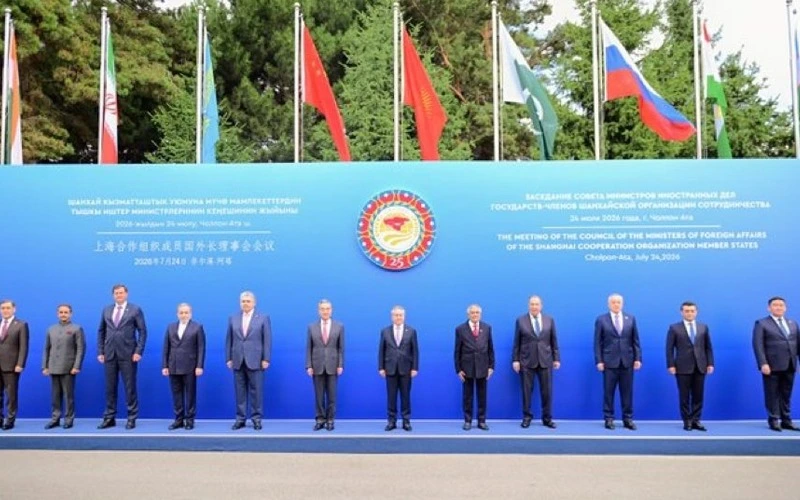
Deputy Prime Minister Ishaq Dar led Pakistan's delegation at the SCO Council of Foreign Ministers' Meeting in Bishkek, Kyrgyzstan. The gathering brought together foreign ministers from member states to coordinate foreign policy, address regional security challenges, and strengthen cooperation on issues of mutual interest, underscoring Pakistan's ongoing diplomatic engagement.
Imagine a club where countries in Asia get together to talk about how to be good neighbors and help each other stay safe. Pakistan's top diplomat, Ishaq Dar, went to one of these big meetings in a country called Kyrgyzstan. They all sat down to chat about world problems and how they can work together, like kids sharing toys and ideas to build a big fort.
Analysis
Pakistan's Diplomatic Engagement in SCO
Pakistan's Deputy Prime Minister and Foreign Minister, Senator Mohammad Ishaq Dar, represented the nation at the Shanghai Cooperation Organisation (SCO) Council of Foreign Ministers’ Meeting in Kyrgyzstan. This participation underscores Pakistan's continued diplomatic engagement with key regional partners within the SCO framework. The meeting served as a vital platform for member states to deliberate on pressing international affairs, coordinate foreign policy stances, and enhance security cooperation across the vast Eurasian region. Dar's presence, including an informal dinner and the main session, signifies Pakistan's intent to actively contribute to the organization's agenda and foster stronger bilateral and multilateral ties.
SCO's Role in Regional Stability and Cooperation
The Council of Foreign Ministers (CFM) is recognized as the third-highest decision-making body within the SCO, making its deliberations particularly significant. The forum's primary focus revolves around international relations, foreign policy coordination, and addressing regional security challenges that impact its diverse membership. Countries like China, India, Iran, Russia, and the Central Asian states, alongside Pakistan, utilize this platform to exchange views and strengthen collaborative efforts on issues of mutual interest. Such meetings are instrumental in building consensus on complex geopolitical matters and promoting a stable regional environment, which is critical for economic development and counter-terrorism efforts.
Strengthening Bilateral and Multilateral Ties
Pakistan's consistent participation in SCO meetings reflects Islamabad's strategic interest in deepening its relationships with regional partners. The article notes that the forum is expected to contribute to discussions on strengthening cooperation and addressing shared regional and international challenges. This engagement is not merely symbolic; it provides concrete opportunities for Pakistan to advocate for its interests, contribute to regional security frameworks, and explore avenues for economic collaboration. The exchange of greetings between DPM Dar and Kyrgyz Foreign Minister Zheenbek Kulubaev, and the broader interaction with other foreign ministers, are indicative of the ongoing efforts to foster goodwill and practical cooperation among SCO member states.
Key points
- Deputy Prime Minister and Foreign Minister Ishaq Dar attended the SCO Council of Foreign Ministers’ Meeting in Kyrgyzstan.
- The meeting focused on international affairs, foreign policy coordination, and security cooperation among SCO member states.
- DPM Dar was warmly received by Kyrgyz Foreign Minister Zheenbek Kulubaev upon arrival.
- Pakistan's participation highlights its continued diplomatic engagement with regional partners.
- The Council of Foreign Ministers is the third-highest decision-making forum within the SCO framework.
Pakistan's active participation in the SCO meeting could lead to enhanced regional cooperation on security and economic fronts, potentially fostering greater stability and trade opportunities. Strengthening diplomatic ties with member states may also help Pakistan address shared challenges more effectively.
While participation is positive, the effectiveness of such large multilateral forums can be limited by divergent national interests among member states. Real progress on complex issues like regional security and foreign policy coordination may remain slow, despite high-level diplomatic engagement.