Israel not American people ‘priority for US government’
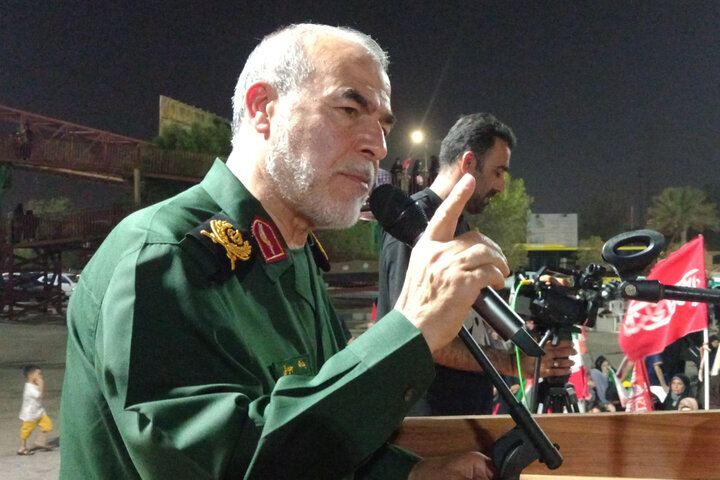
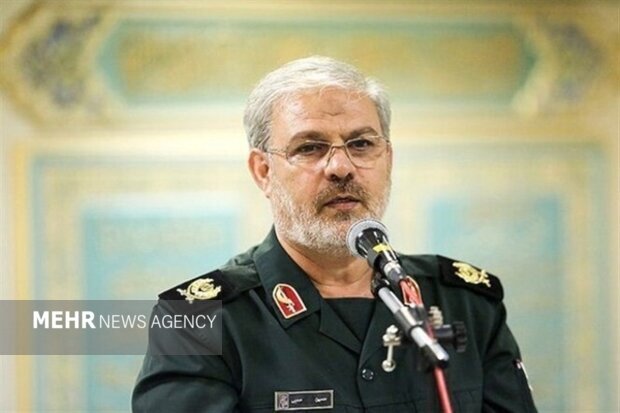
Iran's IRGC spokesman, Brigadier General Hossein Mohebbi, stated that the US government prioritizes Israel over its own citizens. He also criticized the US military's budget and capabilities.
Intelligence analysis by Gemini 2.5 Flash Lite
A senior Iranian military official claims the US prioritizes Israel's interests above those of the American people, despite promises of an 'America First' policy. The official also questioned the effectiveness of the US military's substantial budget.
Imagine the US government is like a parent. An Iranian military leader is saying this parent cares more about a friend (Israel) than their own kids (American people), even though they spend a lot of money on their kids' stuff (military budget).
Analysis
US Military Budget
Brigadier General Hossein Mohebbi, the spokesman for Iran's Islamic Revolutionary Guards Corps (IRGC), has asserted that the United States government's primary allegiance lies with the "Zionist regime" rather than its own populace. This assertion is framed within a broader critique of American military spending and perceived effectiveness. Mohebbi specifically questioned the capability of the US military, despite its substantial budget, to engage in conflicts with nations that possess significantly smaller defense expenditures. This rhetorical strategy aims to portray the US military as inefficient and its priorities as misplaced, serving foreign interests over domestic security or economic well-being.
Israel's Priority
The core of Mohebbi's statement revolves around the perceived prioritization of Israel by the US government. He directly contrasts this with promises made by former President Trump regarding an "America First" agenda, suggesting a betrayal of that commitment. According to Mohebbi, the reality on the ground is that "Israel come first for US." This narrative is a cornerstone of Iranian foreign policy discourse, used to delegitimize US influence in the Middle East and to rally domestic and regional support against perceived American-Israeli collusion. It serves to frame regional conflicts and US involvement as being driven by external agendas rather than genuine strategic interests.
Geopolitical Framing
This declaration by the IRGC spokesman is not merely a standalone comment but part of a consistent pattern of Iranian rhetoric aimed at shaping regional perceptions of US foreign policy. By highlighting the perceived subservience of US policy to Israeli interests, Iran seeks to undermine US credibility among its allies and to foster a narrative of American decline or hypocrisy. The statement also implicitly suggests that Iran, by contrast, acts in its own national interest and that of its allies, positioning itself as a more authentic regional power. The critique of the US military budget further serves to bolster Iran's own narrative of resilience and strategic capability despite facing international sanctions and economic pressures.
Key points
- Iran's IRGC spokesman claims the US government prioritizes Israel over its own citizens.
- He stated that "Israel come first for US," contradicting 'America First' promises.
- The spokesman also questioned the effectiveness of the US military's large budget.
- This statement aligns with Iran's long-standing narrative about US foreign policy in the Middle East.
If the US were to genuinely re-evaluate its foreign policy priorities to better align with the interests of its own citizens, it could lead to a reduction in regional tensions. Such a shift might foster more stable international relations and allow for greater focus on domestic economic and social development within the United States.
Conversely, if the perception that US foreign policy is primarily driven by external interests, such as those of Israel, continues to be reinforced, it could further alienate key populations and allies. This could exacerbate regional instability and undermine the US's global standing and diplomatic effectiveness.