Israel president says probe into Arab parties mustn’t ‘tarnish an entire community’
Israeli President Isaac Herzog called for an investigation into election fraud allegations but warned against stigmatizing the Arab community. Prime Minister Netanyahu's bloc accused Arab parties of impropriety, which the parties reject as fear-mongering.
Intelligence analysis by Gemini 2.5 Flash Lite
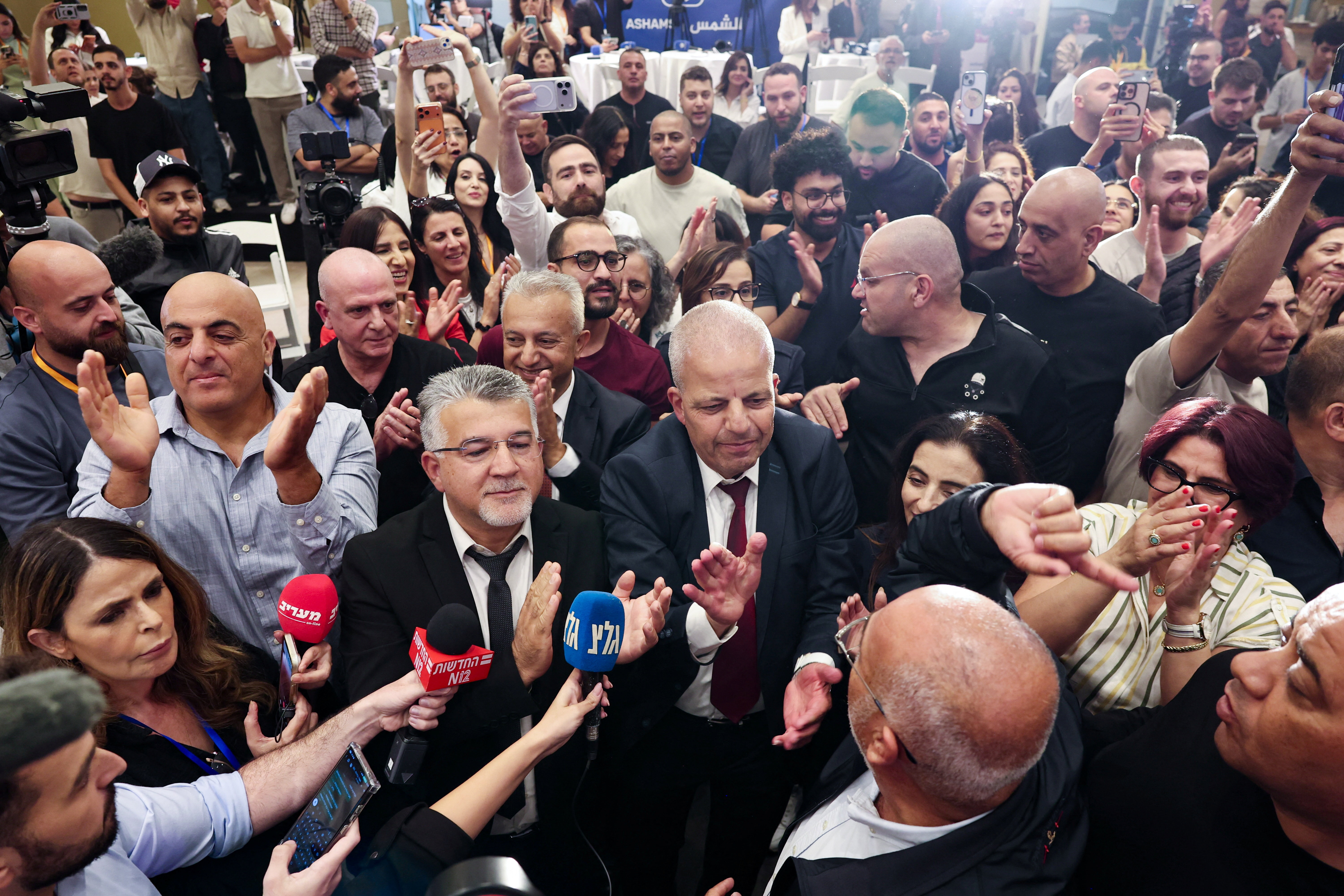
Following an inconclusive Israeli election where Arab parties saw a surge in support, Prime Minister Netanyahu's bloc has leveled accusations of foreign funding and impropriety against them. While President Herzog has called for an investigation, he stressed the need to avoid collective punishment. Arab parties decry these claims as a "campaign of incitement" driven by fear of their g…
Imagine a big school election where some students who usually don't get many votes suddenly get a lot! The leader of the school, who is worried, starts saying those students cheated. The country's president says, "Let's check if they cheated, but don't blame all the students who voted for them just because they are part of that group."
Analysis
Netanyahu's Coalition
Prime Minister Benjamin Netanyahu's bloc has intensified pressure on Arab political parties in Israel, leveraging unproven accusations of foreign funding and electoral impropriety. This strategy appears aimed at undermining the influence of Arab parties, which have seen a significant surge in their electoral performance, securing an unprecedented 19 seats in the recent inconclusive election. The Netanyahu camp's accusations, particularly concerning alleged Qatari funding for the Raam party, have been labeled a "political earthquake" by his Likud party, though concrete evidence has not been presented. This tactic is seen by some as an attempt to delegitimize the Arab vote and sow discord within the opposition, which might otherwise rely on Arab party support to form a government.
Arab Joint List
The Arab Joint List has vehemently rejected the accusations, characterizing them as a "campaign of incitement" orchestrated by Netanyahu and his "fascist coalition." They assert that these allegations stem from a deep-seated fear of the Arab community's increasing political strength and clout within Israel. The Joint List has urged the opposition to resist echoing these claims, emphasizing that the unprecedented participation of Arab voters in the election signals a growing demand for political representation and a challenge to the status quo. Their willingness to cooperate with the opposition to oust Netanyahu, without necessarily joining a government, underscores their strategic positioning as potential kingmakers.
President Herzog's Caution
Israeli President Isaac Herzog has acknowledged the need for an investigation into the allegations of electoral fraud but has simultaneously issued a crucial warning against collective punishment. He emphasized that any probe must not "tarnish an entire community," highlighting the importance of distinguishing between alleged wrongdoing by specific parties or individuals and the broader Arab Israeli population. This call for a balanced approach aims to uphold democratic processes while safeguarding the rights and reputation of the Arab community, which has historically faced discrimination and marginalization. Herzog's stance reflects a delicate balancing act between addressing potential irregularities and preventing the escalation of ethnic and political tensions.
Key points
- Israeli President Isaac Herzog called for an investigation into election fraud allegations but cautioned against stigmatizing the entire Arab community.
- Prime Minister Netanyahu's bloc accused Arab parties of impropriety and foreign funding, which the parties reject as a "campaign of incitement."
- Arab parties saw a surge in support in the inconclusive election, gaining an unprecedented 19 seats.
- The accusations could impact government formation, as Arab parties hold potential sway in forming a majority.
- Qatar has denied accusations of interference in Israel's elections.
If the investigations are conducted fairly and transparently, they could lead to a clearer understanding of electoral integrity without alienating a significant portion of the population. This could foster greater trust in the democratic process among Arab Israelis and potentially pave the way for more inclusive political dialogue in the future.
The accusations, even if unproven, could further deepen divisions and mistrust between the Arab community and the Israeli establishment. This might lead to increased political polarization, discourage Arab participation in future elections, and complicate efforts to form stable governing coalitions.