Israel's yellow line, a shifting edge of war pushing Gazans from home
Israel's military has expanded its control in Gaza, pushing residents from their homes as the yellow line, a military demarcation, is moved forward. The move has led to multiple displacements, with residents forced to leave shelters and rebuild only to be ordered to move …
Intelligence analysis by Llama
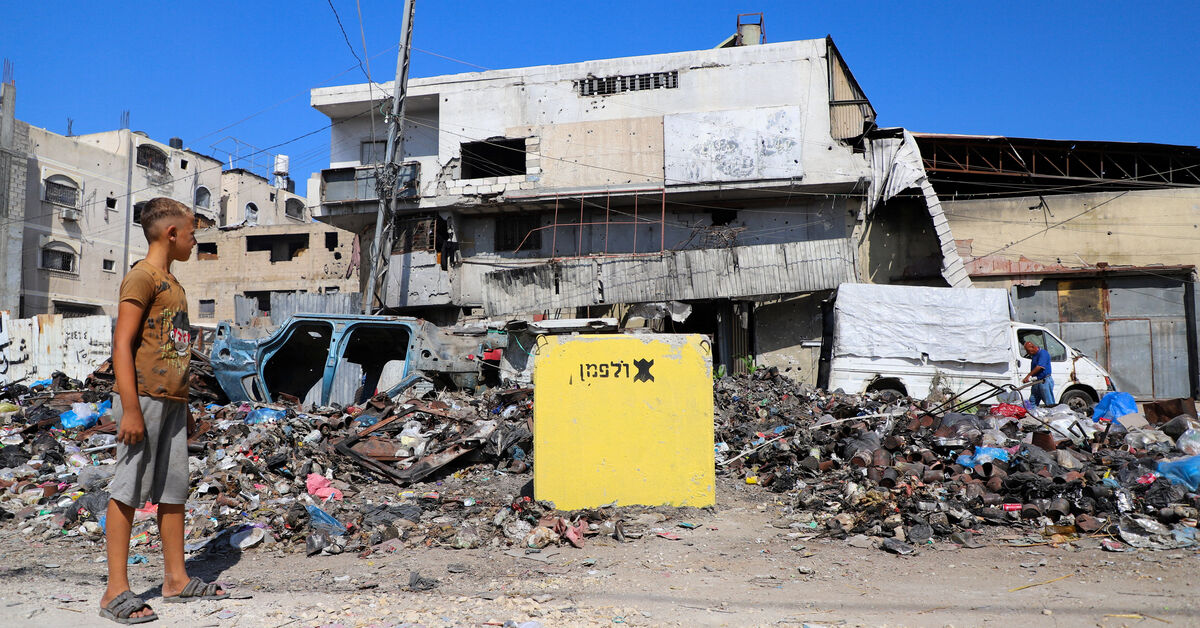
Israel's military expansion in Gaza has led to the displacement of residents, with the yellow line being moved forward, forcing families to leave their homes and rebuild only to be ordered to move again.
Imagine you're living in a place where you can't stay in one house for too long because the army keeps moving the line of control. You have to pack up your belongings and move to a new place, but it's not safe there either. This is what's happening to many people in Gaza, where the Israeli army is expanding its control and pushing people out of their homes.
Analysis
A Shifting Edge of War
The Israeli military's expansion of its control in Gaza has led to the displacement of residents, with the yellow line being moved forward. This move has forced families to leave their homes and rebuild only to be ordered to move again. The residents of Gaza are facing dire humanitarian conditions, with many living in damaged buildings or makeshift shelters. The expansion of Israel's military control has sparked concerns about the long-term displacement of Palestinians and the potential for further conflict.
A Pattern of Displacement
The displacement of residents in Gaza is not a new phenomenon. Since the war began, families have been forced to leave their shelters and rebuild only to be ordered to move again. The process has become painfully familiar, with residents gathering whatever survived the previous displacement and setting out, often after dark, for another area designated as safe by the Israeli military. The repeated displacement has taken a toll on the residents of Gaza, who are struggling to cope with the uncertainty and trauma.
A Humanitarian Crisis
The expansion of Israel's military control in Gaza has exacerbated the humanitarian crisis in the territory. The residents of Gaza are facing dire conditions, with many living in damaged buildings or makeshift shelters. The repeated displacement has made it difficult for residents to access basic necessities like food, water, and healthcare. The humanitarian situation in Gaza is a pressing concern, and the international community must take action to address the crisis.
Key points
- Israel's military has expanded its control in Gaza, pushing residents from their homes.
- The yellow line, a military demarcation, has been moved forward, leading to multiple displacements.
- Residents are being forced to leave shelters and rebuild only to be ordered to move again.
- The humanitarian crisis in Gaza is worsening, with many residents facing dire conditions.
- The international community must take action to address the crisis and work towards a peaceful resolution.
If the international community can come together to address the humanitarian crisis in Gaza, there may be a chance for a peaceful resolution to the conflict. This could involve providing aid to the residents of Gaza and working towards a long-term solution that addresses the root causes of the conflict.
The repeated displacement of residents in Gaza has taken a toll on the community, and the humanitarian crisis is likely to worsen if the situation is not addressed. The expansion of Israel's military control has sparked concerns about the long-term displacement of Palestinians and the potential for further conflict.