It is time for the US military to leave Mideast, says special assistant to Biden
Michael Fuchs, a director at the Open Society Foundations, says it is time for the United States military to leave the Middle East, citing the stationing of U.S. troops as a contributor to instability and destruction.
Intelligence analysis by Llama
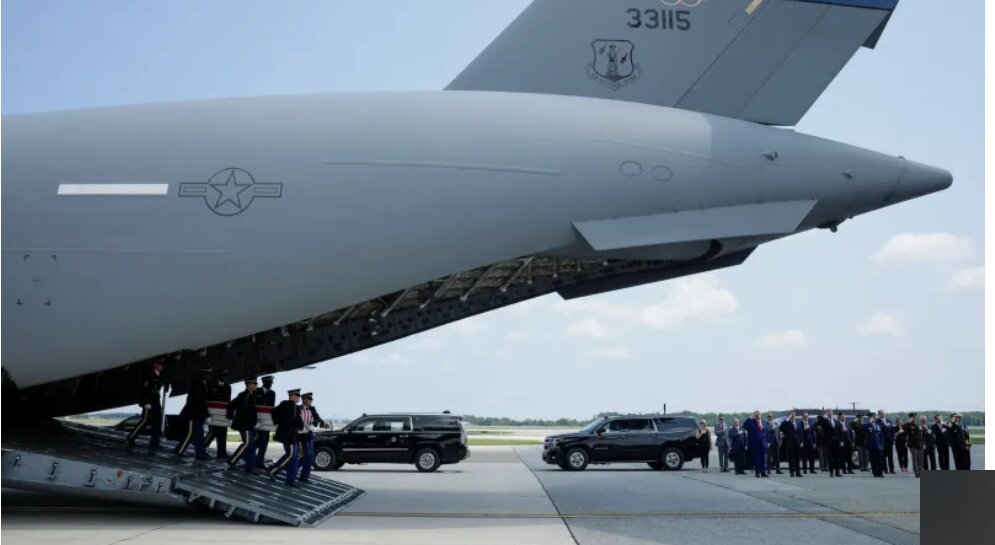
The U.S. military presence in the Middle East has contributed to instability and destruction, according to Michael Fuchs. He argues that the U.S. should withdraw its forces and stop arming governments that violate U.S. and international law.
Imagine you're playing a game where you're supposed to protect your friends, but instead, you're causing more problems and making everyone unhappy. That's kind of what's happening with the U.S. military presence in the Middle East. It's like a big game of risk, but instead of just moving pieces around, people are getting hurt and countries are getting into trouble.
Analysis
The Epic Disaster of the Iran War
The war with Iran is an epic disaster. The United States and Israel launched an unnecessary campaign that has violated international law, killed at least 1,700 Iranian civilians (including 307 children), caused widespread damage to civilian infrastructure, and deepened regional turmoil. Iran's retaliation has killed 18 U.S. troops and injured more than 600 on bases in neighboring countries, and people around the world are still reeling from the spike in energy prices caused by the closure of the Strait of Hormuz.
The Failures of U.S. Policy
This war is the latest consequence of a series of U.S. policy choices over the last 35 years that have made the United States less safe and intensified conflict across the Middle East. Those failures stem from the U.S. military presence in the region, which has fed Washington's mistaken belief that it must continually launch wars and intervene in ongoing conflicts to advance U.S. security. Welcoming American bases and troops onto their territory has also made host countries more vulnerable, exposing them to direct attacks from Iran.
The Cost of the U.S. Military Presence
For decades, the United States has acted as though its military presence in the Middle East were essential to American strategic interests and regional security. It has sought to protect partners such as Israel and the (Persian) Gulf (Arab) states, check Iran and other adversaries, and combat terrorism. In practice, the U.S. military posture has contributed to instability and destruction. Nowhere is this clearer than in the campaign against Iran; the war has generated the very dangers it was meant to prevent. It is long past time for the United States to withdraw its forces from the Middle East, stop arming governments that violate U.S. and international law, and end its role as guarantor of regional order.
Key points
- The U.S. military presence in the Middle East has contributed to instability and destruction.
- The U.S. should withdraw its forces and stop arming governments that violate U.S. and international law.
- The U.S. has spent $8 trillion fighting in Afghanistan, Iraq, and other theaters as part of its post-9/11 'war on terror'.
- More than 940,000 people have died from direct violence, including 432,000 civilians, and 38 million have been displaced.
If the U.S. withdraws its forces from the Middle East, it could lead to a decrease in regional tensions and a reduction in the number of people affected by the conflict. This could also allow the U.S. to focus on higher-priority objectives, such as deterring great-power war in Asia and Europe.
If the U.S. continues to maintain a military presence in the Middle East, it could lead to further instability and conflict in the region. This could also result in more people being killed or injured, and a continued spike in energy prices.