Italy says it’s suspending EU Schengen arrangement with Spain after 60,000 migrants reach Ceuta
Italy has suspended its EU Schengen arrangement with Spain after 60,000 migrants reached Ceuta, a Spanish North African enclave. At least 41 people died during the surge, and 25,000 migrants voluntarily returned to Morocco on Friday.
Intelligence analysis by Llama
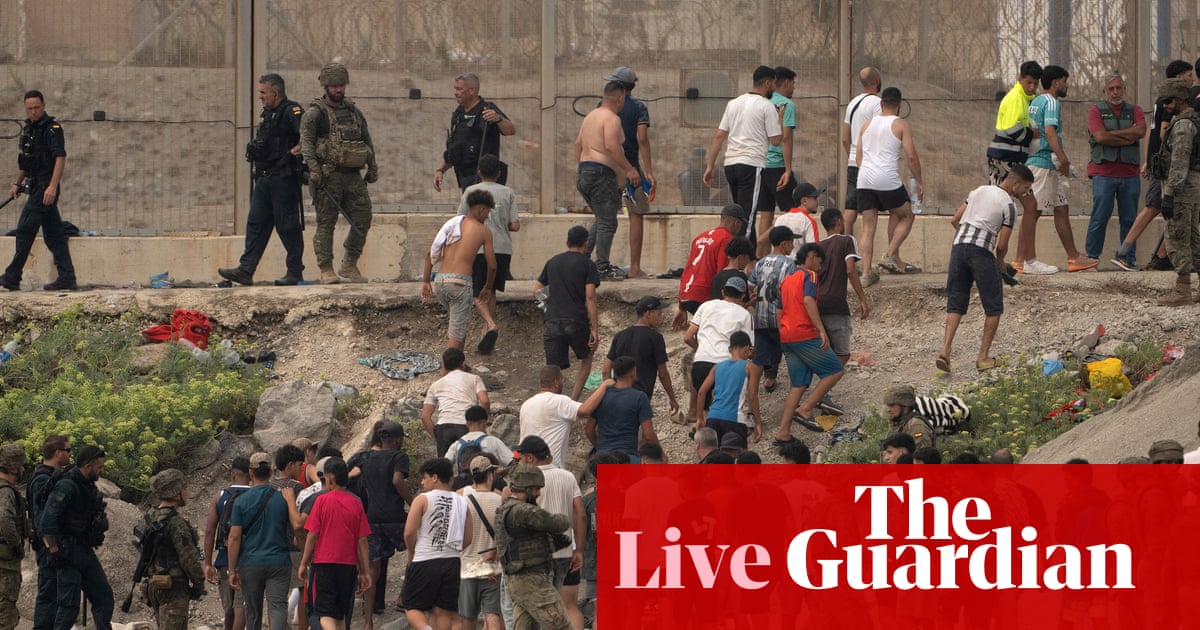
Italy has suspended its EU Schengen arrangement with Spain after a massive influx of migrants reached Ceuta, a Spanish North African enclave. The move will impact people traveling by plane or boat between the two countries.
Imagine a big group of people trying to get into a country through a small border. That's what's happening in Ceuta, a Spanish North African enclave. Italy has suspended its EU Schengen arrangement with Spain because of this, which means people traveling by plane or boat between the two countries will be affected. It's like a big traffic jam, but with people trying to get into a country.
Analysis
A $60B Vote of Confidence
Italy's decision to suspend its EU Schengen arrangement with Spain is a significant development in the ongoing migration crisis. The move is a response to the massive influx of migrants that reached Ceuta, a Spanish North African enclave, in the last 24 hours. At least 41 people died during the surge, and 25,000 migrants voluntarily returned to Morocco on Friday.
The crisis in Ceuta has sparked a heated debate within the EU about the need for stronger border controls and asylum laws. Italy's decision to suspend Spain's Schengen status is a clear indication that the EU is willing to take drastic measures to address the crisis. However, the move has also raised questions about the Schengen area's ability to cope with large-scale migration.
Why Cursor?
The EU's Schengen area is a unique entity that allows for the free movement of people between 26 European countries. However, the area's rules and regulations are not equipped to handle large-scale migration. The crisis in Ceuta has highlighted the need for a more robust and effective system to manage migration flows.
The Road Ahead
The EU's response to the crisis in Ceuta will be crucial in determining the future of the Schengen area. Italy's decision to suspend Spain's Schengen status is a clear indication that the EU is willing to take drastic measures to address the crisis. However, the move has also raised questions about the Schengen area's ability to cope with large-scale migration. The EU must now work towards finding a more effective solution to manage migration flows and ensure the continued functioning of the Schengen area.
Key points
- Italy has suspended its EU Schengen arrangement with Spain after 60,000 migrants reached Ceuta.
- At least 41 people died during the surge, and 25,000 migrants voluntarily returned to Morocco on Friday.
- The crisis in Ceuta has sparked a heated debate within the EU about the need for stronger border controls and asylum laws.
- Italy's decision to suspend Spain's Schengen status is a clear indication that the EU is willing to take drastic measures to address the crisis.
- The EU must work towards finding a more effective solution to manage migration flows and ensure the continued functioning of the Schengen area.
If the EU can find a way to manage migration flows effectively, the Schengen area can continue to function smoothly. This would require a more robust and effective system to handle large-scale migration, which could be achieved through a combination of stronger border controls and asylum laws.
If the EU fails to address the crisis in Ceuta, the Schengen area may be severely impacted. This could lead to a breakdown in the free movement of people between European countries, which would have significant economic and social consequences.