Japan raises interest rates to 31-year high as central bankers fight inflation; retail sales rise in Great Britain – business live
The Bank of Japan raised interest rates to a 31-year high of 1.25%, joining global central banks in fighting inflation, though the yen weakened due to dissenting votes. Meanwhile, Great Britain saw a rise in retail sales.
Intelligence analysis by Gemini 2.5 Flash
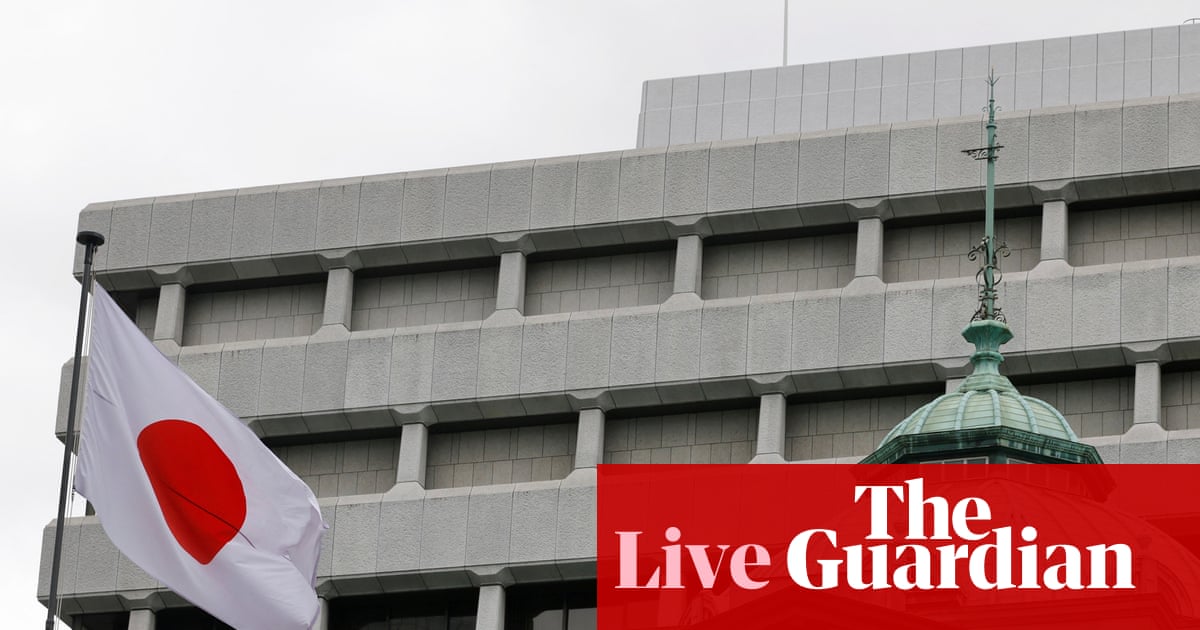
Japan's central bank increased its key interest rate, a move largely anticipated but met with market surprise due to two dissenting board members, causing the yen to weaken. This decision aligns Japan with other major economies tightening monetary policy, while the Bank of England held its rates steady, even as UK mortgage rates crept higher.
Imagine the economy is like a car. When it goes too fast (prices rise too quickly, called inflation), the central bank (the driver) might tap the brakes by raising interest rates, making it more expensive to borrow money. Japan just did this, raising its rates to slow things down. But surprisingly, their money (the yen) actually got a bit weaker because some people on the central bank team weren't fully on board with speeding up the braking. Meanwhile, in Great Britain, people are still buying things in shops, which is good, but borrowing money for houses is getting a little more expensive.
Analysis
The Bank of Japan's decision to raise its target interest rate to 1.25%, the highest since 1995, marks a significant moment in its monetary policy trajectory. This move, part of a rate-rising cycle initiated in 2024, aims to combat persistent inflation and stabilize the yen, which has been under pressure against the dollar. However, the market's reaction was not straightforward, as the yen actually weakened following the announcement.
Bank of Japan
The Bank of Japan's latest interest rate hike, a quarter of a percentage point increase to 1.25%, was largely expected by analysts. This decision brings Japan in line with other major central banks, such as the US Federal Reserve and the European Central Bank, which have also tightened monetary policy recently. The BoJ has been under pressure to raise borrowing costs, particularly as the yen has steadily weakened against the dollar throughout the year, prompting previous interventions to stabilize the currency.
The market's focus, however, quickly shifted to the internal dynamics of the BoJ's decision-making. The fact that two board members dissented from the hike surprised traders and strategists, including Jim Reid of Deutsche Bank. This dissent is interpreted as potentially limiting the pace of future rate increases, leading to a counterintuitive market response where the yen depreciated rather than strengthened, defying conventional economic logic.
Yen 157.10
The yen's unexpected depreciation to ¥157.10 against the dollar, a two-week low, underscores the market's sensitivity to nuances in central bank communication. Despite the rate hike, traders sold off the yen, reacting to the non-unanimous vote and the perceived lack of hawkishness from BoJ governor Ueda. Kathleen Brooks, research director at XTB, noted that Ueda's signals were mixed, acknowledging a new policy-making stage while also cautioning against rapid rate hikes that could trigger asset price volatility.
This market reaction highlights the BoJ's complex dilemma: the need to raise rates to stabilize inflation versus the risk of upsetting the bond market given Japan's substantial government debt load. The expectation among some for mass capital repatriation by Japanese funds and individuals following a rate hike was not realized, as the yen weakened and Japanese bond yields fell across the curve, indicating investor caution and a nuanced interpretation of the central bank's future intentions.
Great Britain Retail Sales
In contrast to Japan's monetary policy shifts, Great Britain reported a rise in retail sales for August, indicating some resilience in consumer spending. This positive economic indicator comes amidst broader concerns among Britons regarding the climate emergency and job security, as revealed by new data from the Office for National Statistics. The proportion of adults reporting climate change and employment as important issues has increased significantly since 2024 and 2025, respectively.
Despite the rise in retail sales, the UK economic landscape presents its own challenges. The Bank of England opted to keep its interest rates on hold at 3.75%, yet UK mortgage rates have continued to creep higher. Moneyfacts reported that the average 2-year fixed residential mortgage rate reached 5.84%, and the 5-year fixed rate hit 5.88%, both representing multi-month highs. This divergence suggests that while consumers are still spending, the cost of borrowing for housing continues to rise, potentially impacting future economic activity.
Key points
- The Bank of Japan raised its target interest rate by a quarter of a percentage point to 1.25%, the highest level since 1995.
- Two BoJ board members dissented from the rate hike, leading to an unexpected weakening of the yen against the dollar.
- The yen dropped to ¥157.10 against the dollar, a two-week low, as markets reacted to mixed signals from BoJ Governor Ueda.
- Retail sales rose across Great Britain in August, indicating continued consumer spending.
- UK mortgage rates have crept higher, with the average 2-year fixed rate reaching 5.84% and the 5-year fixed rate at 5.88%.
Japan's proactive stance against inflation could lead to greater economic stability and a stronger currency in the long term, provided the Bank of Japan manages market expectations effectively. The rise in Great Britain's retail sales suggests consumer resilience, which could help sustain economic activity despite rising borrowing costs.
The yen's unexpected weakening despite a rate hike indicates market skepticism about the Bank of Japan's future policy path, potentially leading to further currency instability. In the UK, rising mortgage rates, even with the Bank of England holding rates, could dampen consumer confidence and spending in the coming months, posing a risk to economic growth.