Japan says Chinese and Russian warships held live-fire drills within its EEZ
Japanese Defence Minister Shinjiro Koizumi confirmed that Chinese and Russian warships held live-fire drills within Japan's claimed exclusive economic zone in the Pacific Ocean on Sunday.
Intelligence analysis by Llama
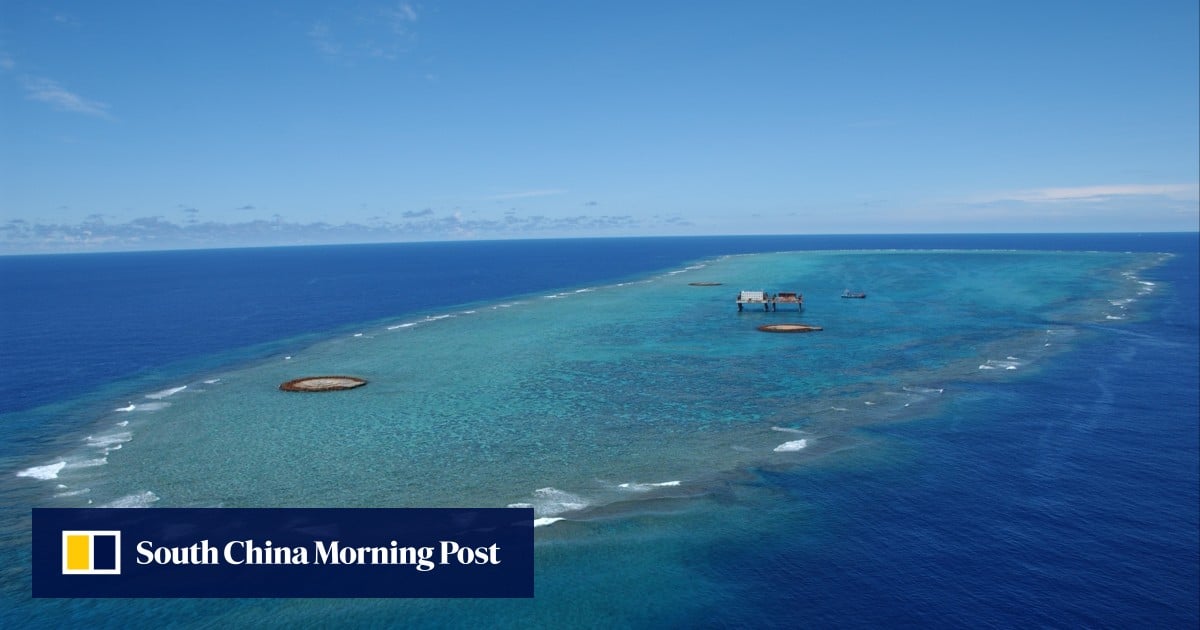
Japanese Defence Minister Shinjiro Koizumi revealed that Chinese and Russian warships held live-fire drills within Japan's EEZ, highlighting their deepening military cooperation.
Imagine you're playing a game with your friends, and you all agree to play by the same rules. But then, two of your friends start making up new rules that you didn't agree to, and they're not even following the old rules. That's kind of what's happening with China and Russia in the Pacific Ocean. They're making up new rules and not following the old ones, which is causing problems for other countries in the region.
Analysis
A Growing Military Alliance in the Pacific
The recent live-fire drills conducted by Chinese and Russian warships within Japan's exclusive economic zone (EEZ) are a significant development in the region. This joint exercise highlights the deepening military cooperation between China and Russia, which is a cause for concern for Japan and other regional players.
The drills were conducted in the Pacific Ocean, southwest of the remote Okinotori Island, and involved two Chinese missile destroyers, a Chinese supply ship, and a Russian frigate. The Chinese warship's crew notified ships in surrounding waters of the location and duration of the drill, which is a standard procedure in such exercises.
The significance of this development cannot be overstated. China and Russia have been strengthening their military ties in recent years, and this joint exercise is a manifestation of their growing cooperation. The drills were conducted within Japan's EEZ, which is a clear indication of the two nations' disregard for Japan's territorial claims.
This development has significant implications for regional security. Japan, the United States, and other regional players will need to reassess their military strategies in light of this growing military alliance. The drills also highlight the need for Japan to strengthen its military capabilities to counter the growing threat from China and Russia.
A Challenge to Regional Stability
The joint drills by Chinese and Russian warships within Japan's EEZ are a challenge to regional stability. The drills demonstrate the growing military capabilities of China and Russia, which is a cause for concern for Japan and other regional players.
The drills were conducted in a region where tensions are already high. The South China Sea is a contentious issue, with China's claims to the region being disputed by several countries, including Japan, the Philippines, and Vietnam. The drills also highlight the need for Japan to strengthen its military capabilities to counter the growing threat from China and Russia.
Implications for Regional Security
The joint drills by Chinese and Russian warships within Japan's EEZ have significant implications for regional security. The drills demonstrate the growing military capabilities of China and Russia, which is a cause for concern for Japan and other regional players.
The drills also highlight the need for Japan to strengthen its military capabilities to counter the growing threat from China and Russia. Japan will need to reassess its military strategies in light of this growing military alliance. The drills also highlight the need for the United States to strengthen its military presence in the region to counter the growing threat from China and Russia.
Key points
- Chinese and Russian warships held live-fire drills within Japan's EEZ.
- The drills were conducted in the Pacific Ocean, southwest of the remote Okinotori Island.
- The Chinese warship's crew notified ships in surrounding waters of the location and duration of the drill.
- The drills demonstrate the growing military capabilities of China and Russia.
- The drills highlight the need for Japan to strengthen its military capabilities to counter the growing threat from China and Russia.
If this development plays out positively, it could lead to increased cooperation between Japan and other regional players to counter the growing threat from China and Russia. This could result in a stronger and more stable regional security framework.
If this development plays out negatively, it could lead to increased tensions and conflict in the region. This could result in a destabilized regional security framework and potentially even war.