Japan's Nikkei falls more than 2% on AI spending worries
Japan's Nikkei share average fell more than 2% on Friday, as a sharp decline in Google parent Alphabet shares spurred concerns about heavy AI spending.
Intelligence analysis by Llama
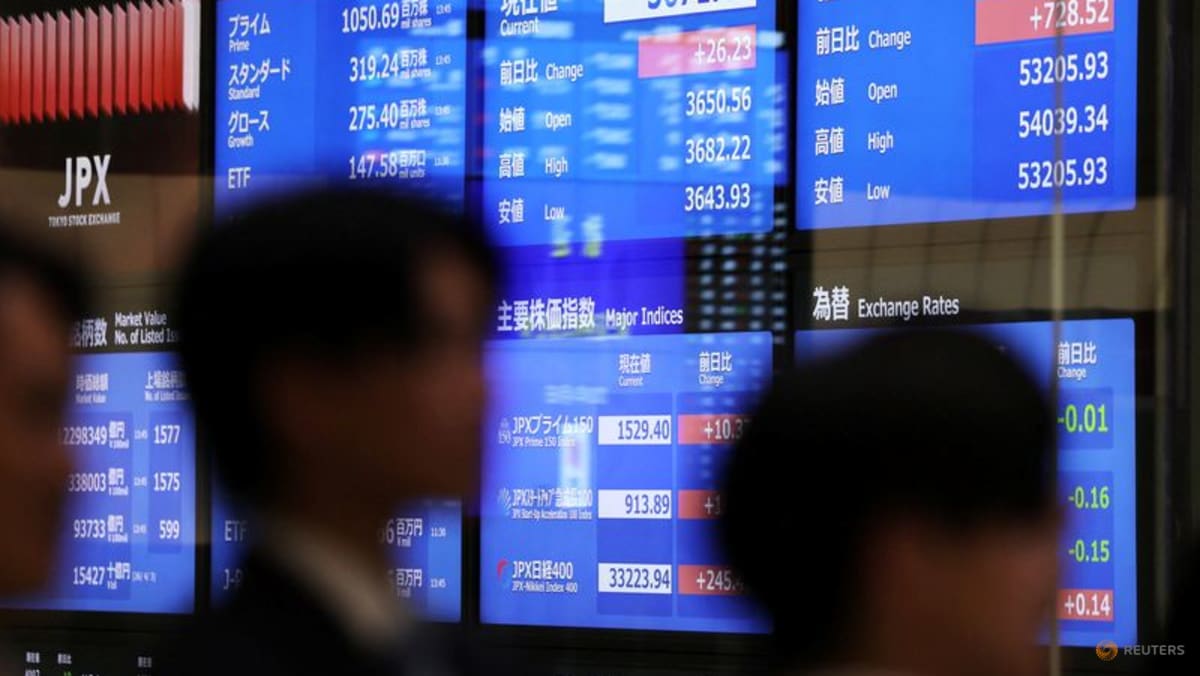
The Nikkei has lost more than 7% so far this month, tumbling into correction territory last week. Shares of Alphabet sank 7% overnight after the company reported higher spending plans while it also burned cash.
Imagine you're investing in a new technology that's really cool, but it's also really expensive. You might be worried that you're spending too much money on it, and that it might not be worth it in the end. That's kind of what's happening with the Nikkei, a stock market index in Japan. It's fallen a lot because people are worried that companies are spending too much money on a new technology called AI, and that it might not be sustainable.
Analysis
A $60B Vote of Confidence
The recent decline in the Nikkei has sparked concerns about the sustainability of heavy spending on AI infrastructure. Alphabet's sharp decline in shares has raised questions about whether Japanese companies can afford to invest heavily in AI without compromising their financial stability. The Nikkei's fall into correction territory last week has also highlighted the vulnerability of the Japanese economy to external factors, particularly in the tech sector.
Why Cursor?
The Nikkei's decline has been attributed to a range of factors, including the sharp decline in Alphabet shares and the impact of overseas factors on the index. However, the underlying issue remains the sustainability of heavy spending on AI infrastructure. As Japanese companies continue to invest heavily in AI, they must carefully balance their spending with their financial stability. The recent decline in the Nikkei serves as a reminder of the risks associated with heavy spending on AI infrastructure.
The Road Ahead
The future of the Nikkei and the Japanese economy remains uncertain. While some analysts believe that the index's trend may change if Japanese companies report strong earnings, others remain concerned about the sustainability of heavy spending on AI infrastructure. As the situation continues to unfold, it is essential to monitor the Nikkei's performance and assess the implications for the Japanese economy.
Key points
- The Nikkei has lost more than 7% so far this month, tumbling into correction territory last week.
- Shares of Alphabet sank 7% overnight after the company reported higher spending plans while it also burned cash.
- The decline in the Nikkei has sparked concerns about the sustainability of heavy spending on AI infrastructure.
- Japanese companies must carefully balance their spending on AI infrastructure with their financial stability.
If Japanese companies can find a way to balance their spending on AI infrastructure with their financial stability, the Nikkei could potentially recover and even surpass its previous levels. This would be a positive development for the Japanese economy, particularly in the tech sector.
On the other hand, if the sustainability of heavy spending on AI infrastructure remains a concern, the Nikkei could continue to decline, potentially leading to a correction in the Japanese economy. This would have significant implications for the tech sector and the broader economy.