Jeep Stuck on Railway Track While Gate Was Closing; Train Slows Down, Case Registered
A jeep became stuck on railway tracks at Thazhechovva, Kerala, while attempting to cross a closing railway gate on Wednesday morning. The vehicle was safely removed by a crane, and the Amrit Bharat Express passed the location at a reduced speed.
Intelligence analysis by Gemini 2.5 Flash
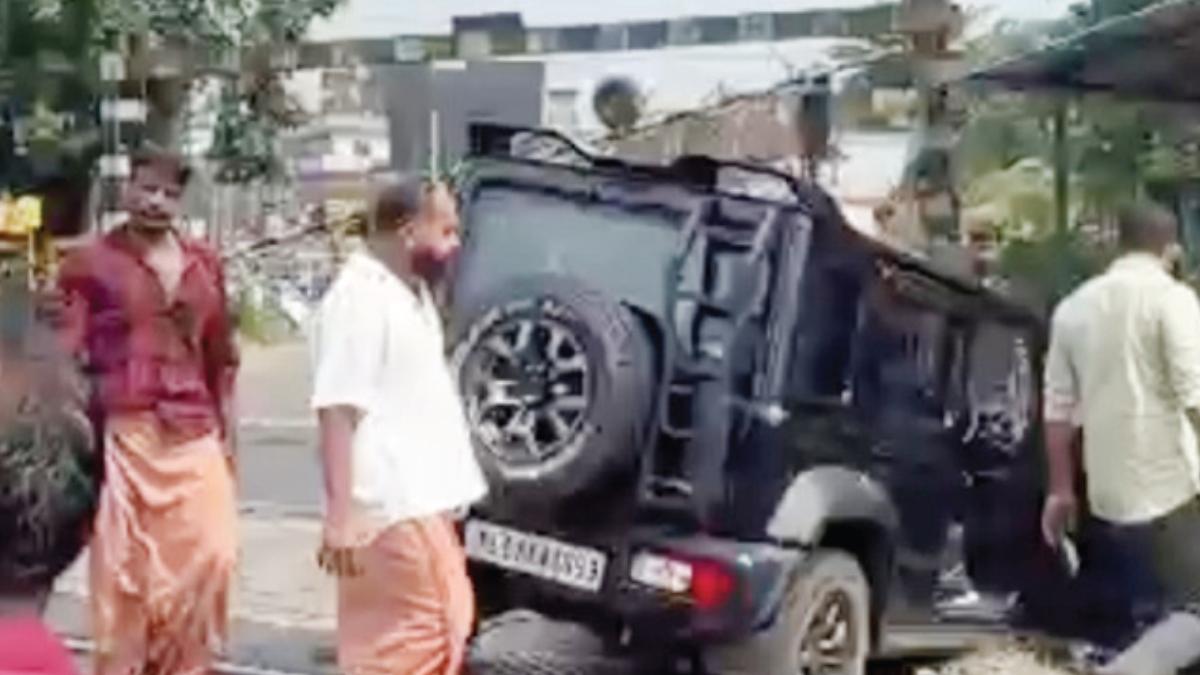
An incident unfolded at the Thazhechovva railway gate where a jeep became trapped on the tracks as the gate was closing, necessitating a rapid response to clear the obstruction. Railway authorities successfully managed the situation by slowing down the approaching Amrit Bharat Express, ensuring its safe passage, and police have initiated legal proceedings against the driver for the da…
Imagine a big metal train track with a gate that closes when a train is coming, like a fence. A driver tried to sneak their jeep across just as the gate was closing, and the jeep got stuck right on the tracks! Luckily, a big train called the Amrit Bharat Express saw it and slowed down, so no one got hurt. A giant crane then pulled the jeep off the tracks, and the police are going to fine the driver for being unsafe.
Analysis
Thazhechovva
The incident took place at the Thazhechovva railway gate, a specific location in Kerala, India, emphasizing the localized nature of such safety breaches. This particular crossing became the scene of a near-miss when a driver attempted to bypass safety protocols, leading to the jeep getting stuck on the tracks. The geographical context of Thazhechovva underscores that such incidents are not isolated but can occur at numerous railway crossings across the country, necessitating constant vigilance and adherence to safety guidelines by the public. The quick response at this specific location, including the deployment of a crane, prevented a larger catastrophe and ensured the smooth flow of rail traffic after the obstruction was cleared.
Amrit Bharat Express
The Amrit Bharat Express, a train scheduled to pass the Thazhechovva gate, was forced to reduce its speed due to the obstruction on the tracks. This highlights the direct impact of reckless driving on railway operations and the safety of passengers aboard trains, as any delay or potential collision could have severe consequences. The train's ability to slow down safely indicates effective communication and operational protocols by railway authorities, preventing a potential collision and ensuring passenger safety. This incident serves as a reminder of the intricate coordination required to manage railway traffic and respond to unexpected hazards, showcasing the robustness of the railway system's emergency response.
Wednesday Morning
The timing of the incident, Wednesday morning around 10:15 AM, suggests a period of potentially high traffic, both vehicular and rail, making the driver's attempt to cross the closing gate particularly hazardous. Such peak hours often see increased impatience and risk-taking by drivers, leading to dangerous situations at railway crossings. The occurrence during daylight hours allowed for quicker identification of the problem and deployment of a crane for removal, which might have been more challenging in low visibility conditions. This specific timing underscores the constant need for caution at railway crossings, regardless of the time of day, and highlights the importance of public awareness regarding railway safety rules.
Key points
- A jeep got stuck on railway tracks at Thazhechovva, Kerala, while trying to cross a closing gate.
- The incident occurred on Wednesday morning around 10:15 AM.
- The Amrit Bharat Express train slowed down and passed the location safely.
- A crane was used to remove the jeep from the tracks.
- Railway police registered a case against the driver and will impose a fine.
The swift action by railway authorities to slow down the Amrit Bharat Express and quickly remove the jeep with a crane demonstrates effective emergency response protocols. This incident, while dangerous, could serve as a crucial lesson for other drivers, potentially leading to increased public awareness and stricter adherence to railway crossing safety rules, thereby preventing future accidents.
Despite the fortunate outcome, this incident underscores a persistent problem of drivers disregarding railway crossing safety, which could lead to more severe accidents in the future if such behavior continues unchecked. The imposition of a fine might not be a sufficient deterrent for all, indicating a need for broader public education or more stringent enforcement measures to prevent similar dangerous occurrences.