Just Ask the Dinosaurs How Bad Air Quality Can Get
The air quality in the eastern United States is bad due to smoke from Canadian wildfires. The smoke has turned the sky orange in Philadelphia and veiled the Statue of Liberty in Manhattan. The author compares the current air quality to that of 66 million years ago when an…
Intelligence analysis by Llama
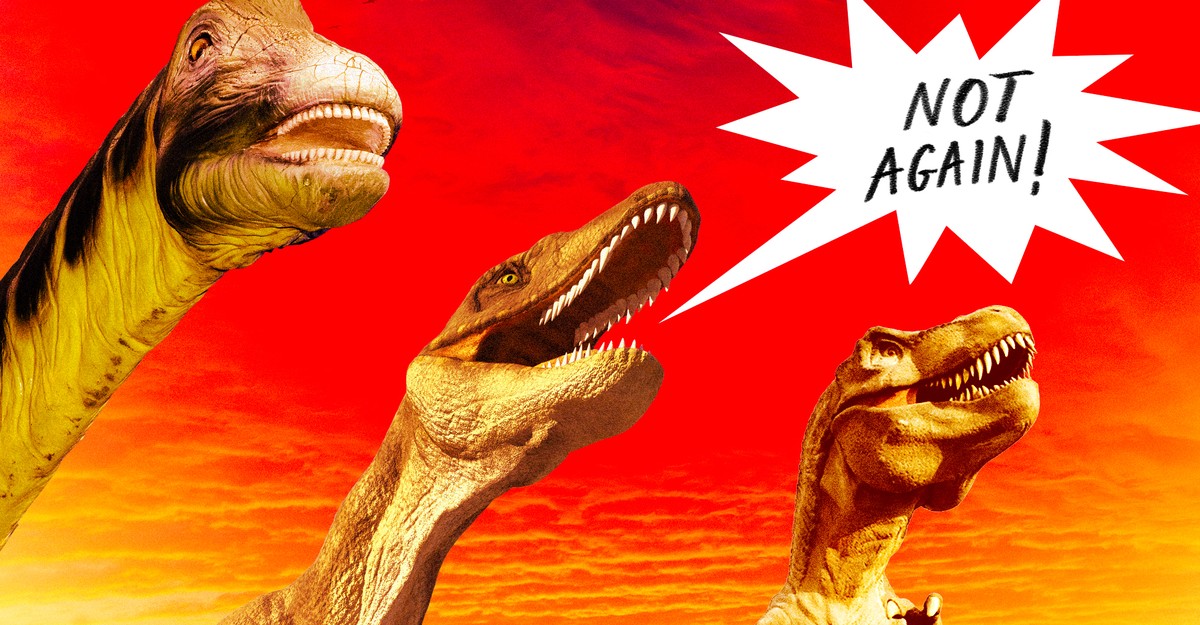
The current air quality in the eastern United States is bad due to Canadian wildfires, but it's not as bad as it was 66 million years ago when an asteroid struck the Earth, causing massive wildfires and a global cloud of dust and debris that blocked sunlight.
Imagine a world where a huge asteroid hits the Earth, causing massive wildfires and a thick cloud of dust and debris that blocks sunlight. This is what happened 66 million years ago, and it's much worse than the air pollution we're facing today.
Analysis
A Global Cloud of Dust and Debris
The asteroid that struck the Earth 66 million years ago was a massive event that caused a global cloud of dust and debris to block sunlight. This led to massive wildfires that burned all the biomass on the planet, not just some forests in Canada. The dinosaurs would have been trapped in a level of smoke far more intense than the kind of downwind exposure that the U.S. experienced this week.
The Era of Darkness
The air wasn't just smoky; it was loaded with dust and gases. The gloom lasted for about two years, as particulates from the asteroid impact remained in the atmosphere and soot from wildfires added to them. The next couple of decades were 'very low light, very difficult for photosynthesis to occur,' which led herbivores to starve.
A Couple of Years After Impact
Although most soot and dust particles went away within a few years, sulfate aerosols continued to create 'a global, orange-brown smog.' It was only about four years after the asteroid arrived that full sunlight reappeared. The era in which the dinosaurs perished would be unrecognizable to a modern person. Compared with that, the air pollution Americans are facing right now, 'ain't nothin'.
Key points
- The air quality in the eastern United States is bad due to smoke from Canadian wildfires.
- The smoke has turned the sky orange in Philadelphia and veiled the Statue of Liberty in Manhattan.
- The current air quality is not as bad as it was 66 million years ago when an asteroid struck the Earth, causing massive wildfires and a global cloud of dust and debris that blocked sunlight.
- The asteroid impact led to the extinction of the dinosaurs.
- The air pollution we're facing today is not as bad as it was 66 million years ago.
The article highlights the devastating effects of an asteroid impact 66 million years ago, but it also shows that the air pollution we're facing today is not as bad. This could be a wake-up call for people to take action to reduce air pollution and protect the environment.
The article suggests that the air pollution we're facing today is not as bad as it was 66 million years ago, but it also highlights the devastating effects of an asteroid impact. This could be a reminder of the potential consequences of not taking action to reduce air pollution and protect the environment.