Kampnagel Summer Festival in Hamburg Aims to Showcase Hopeful Art
Kampnagel's International Summer Festival opens in Hamburg under the theme 'hope!' and runs through August 23, featuring dance, theater and music including a speech by Yulia Navalnaya. After the festival, the venue will undergo a €168 million renovation by the Paris firm …
Intelligence analysis by Llama
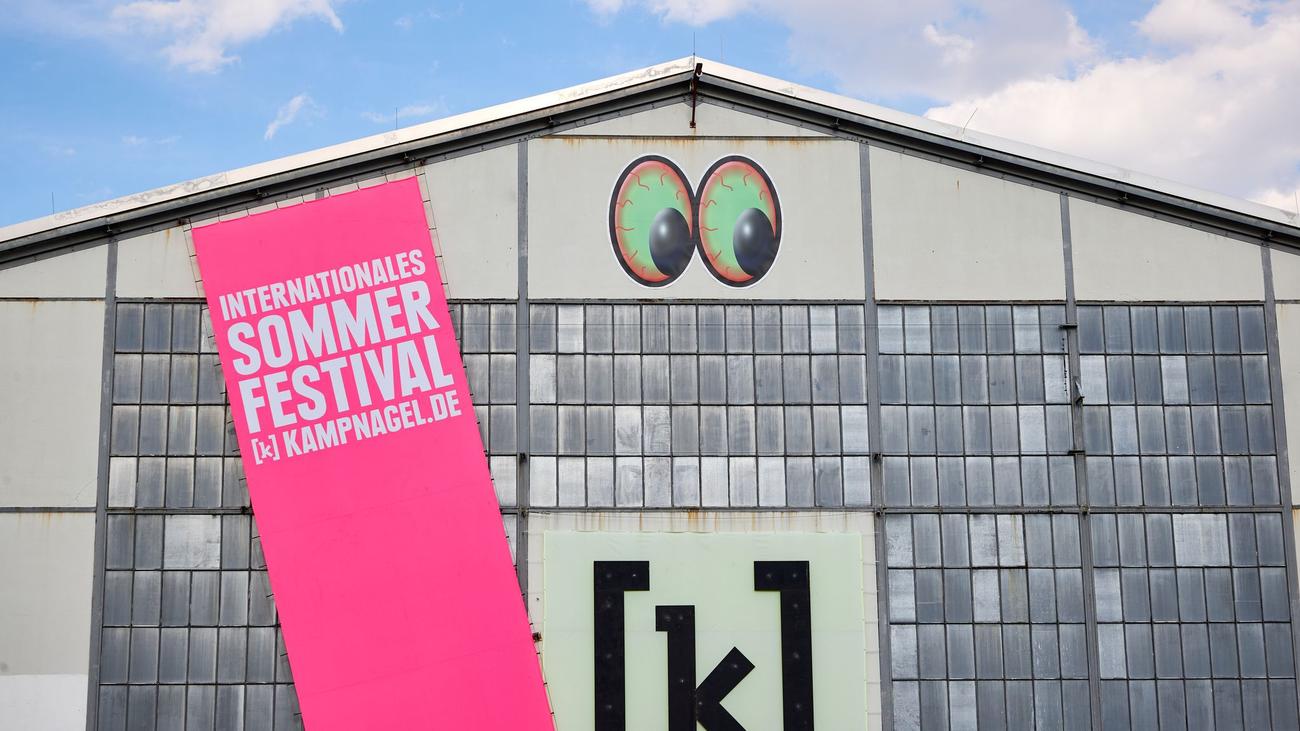
Hamburg's Kampnagel venue opens its three-week summer festival on the theme 'hope,' mixing joyful protest, cancer-themed choreography and a guest appearance by Alexei Navalny's widow. When the program ends on August 23, the Winterhude halls will close for a €168 million reconstruction funded jointly by the federal government and the city of Hamburg.
The famous Kampnagel theater in Hamburg is throwing a big summer festival all about hope. After the festival ends, the building will get a huge makeover costing 168 million euros so it can be even bigger and better for future shows.
Analysis
A Festival Framed by Hope
Kampnagel's International Summer Festival has run since 2013 under artistic director András Siebold, occupying the Hamburg venue during the broader theater summer recess. The three-week program, which runs through August 23, brings together dance, theater, visual art and music under the motto "hope!" — a thematic through-line around which visiting artists shape their contributions. The festival has built a reputation for hosting politically engaged work, a tradition this edition extends by inviting Yulia Navalnaya, widow of the late Russian opposition figure Alexei Navalny, to speak on August 14.
The opening night leans toward joy as a form of resistance. Argentine choreographer Ayelen Parolin premieres "Irresistible Revolution," a piece that merges political protest with Argentine carnival aesthetics. A week later, the choreographic collective (La)Horde teams up with the Ballet national de Marseille for "Après Moi, Le Déluge," a large-scale dance tableau meditating on humanity's search for exits from looming catastrophe. The musical program, anchored by the Symphoniker Hamburg under Sylvain Cambreling with Swiss director Christoph Marthaler staging "Erste letzte Sekunde — eine Gala," adds a long-running Kampnagel staple of dry, deadpan humor to the mix.
Personal Catastrophe as Choreographic Material
Several programmers appear to have made vulnerability itself a creative engine. Los Angeles-based Jacob Jonas translates his own cancer diagnosis into a three-part physical-dance evening, while Melanie Jame Wolf, who also lives with breast cancer, channels her experience into what the festival bills as "liberating comedy." The pieces reflect the festival's curatorial wager — that personal reckoning, staged honestly, can resonate beyond the individual and offer audiences a model for navigating their own difficulties.
That sensibility runs through the more absurdist slots as well. The Norwegian collective Susie Wang sets "Burnt Toast" inside what appears to be a conventional hotel-lobby encounter in the American South before sliding into surreal, playful horror. The Austrian collective Nesterval, the article notes, is reliably sold out at this point; the group returns with "Das Schiff," staged aboard the MS Stubnitz, in which audiences become participants in a voyage through the past and future of cruise tourism.
A €168 Million Makeover on the Horizon
The festival's timing carries an extra layer of significance this year: it is the last full edition before Kampnagel's main hall in Hamburg-Winterhude goes dark for renovation. The city and federal authorities have commissioned the Paris-based architecture firm Lacaton & Vassal — winners of a Europe-wide tender — to overhaul the former machinery-factory spaces, modernize infrastructure and stage technology, and expand the footprint. The total cost is €168 million, of which the federal government contributes €60 million; the city of Hamburg covers the remainder.
Construction is projected to last four years, with theater operations continuing in adapted form throughout, according to the article. The renovation positions Kampnagel, already one of Germany's more distinctive independent venues, as a long-term infrastructure bet in Hamburg's cultural landscape. That this final pre-renovation edition leans explicitly into "hope" can be read as an organizing principle — and a quiet benedition before the scaffolding goes up.
Key points
- Kampnagel's International Summer Festival runs through August 23 under the theme 'hope!,' with dance, theater, art and music from international artists.
- New works include Ayelen Parolin's 'Irresistible Revolution,' (La)Horde's 'Après Moi, Le Déluge' with Ballet national de Marseille, and Christoph Marthaler's gala with the Symphoniker Hamburg.
- Yulia Navalnaya, widow of the late Russian opposition politician Alexei Navalny, is scheduled to speak at Kampnagel on August 14.
- Choreographers Jacob Jonas and Melanie Jame Wolf draw on their own cancer diagnoses in physical-dance and comedy pieces, respectively.
- After the festival, the Winterhude halls will undergo a €168 million renovation led by Paris-based firm Lacaton & Vassal, with €60 million from the federal government and the balance from the city of Hamburg over four years.
The festival's programming suggests the curators believe artistic work can model resilience through crisis, while the four-year renovation — backed by €60 million in federal funding plus the Hamburg city's contribution — commits Kampnagel to an expanded footprint and stable operations through construction.
A four-year construction phase means prolonged operational disruption and the need for temporary venues, raising execution risk for programming. The €168 million budget is substantial and the federal share only partially covers costs, leaving Hamburg exposed to any overruns that emerge during the build.