Keir Starmer says he will resign as prime minister, leader of Labour Party
Keir Starmer announced he will resign as leader of the Labour Party, remaining as prime minister until a new leader is chosen. His departure sets the stage for Britain's seventh prime minister in a decade.
Intelligence analysis by Llama 3.3 70B
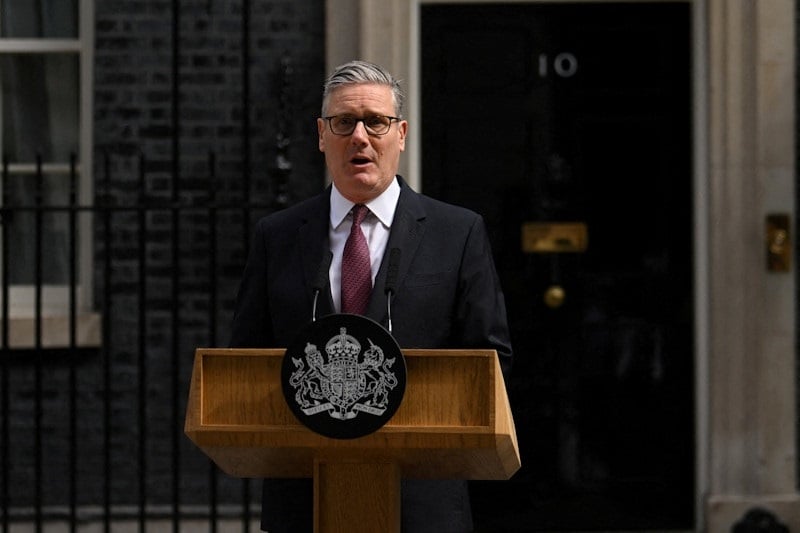
Keir Starmer's resignation as Labour leader comes less than two years after his landslide election victory, amid building pressure and speculation about a leadership challenge.
Keir Starmer is stepping down as the leader of the Labour Party in the UK. This means someone new will take his place and help make big decisions for the country. It's like a big change in management, and it can affect how the country is run.
Analysis
A New Era for Labour
Keir Starmer's decision to resign as leader of the Labour Party marks a significant turning point for the party and the country. His tenure was marked by early successes, including a decisive Brexit renegotiation stance and a rebound in Labour's poll numbers. However, critics accused him of abandoning key pledges, including sweeping nationalization and free university tuition.
The threat to Starmer's leadership had been building for months, but intensified sharply after former cabinet minister Andy Burnham decisively won a parliamentary by-election. This fueled speculation about a leadership challenge, and ultimately led to Starmer's resignation.
Implications for British Politics
Starmer's resignation sets the stage for Britain's seventh prime minister in a decade, underscoring the persistent instability that has defined Westminster politics since the 2016 Brexit referendum. The Labour Party faces an accelerated leadership contest, which will determine who will steer the party and the country through a period of economic stagnation, persistent public-sector strikes, and growing discontent over immigration and healthcare.
The leadership contest is expected to conclude within the next six to eight weeks, with potential candidates including Deputy Prime Minister Angela Rayner, Chancellor Rachel Reeves, and Foreign Secretary David Lammy. The outcome of this contest will have significant implications for the future of British politics and the country's direction.
A Smooth Transition
Starmer has pledged to ensure an orderly transfer of power, vowing to give his successor his full support. He has spoken with King Charles III and has committed to working with the new leader to ensure a smooth transition. This is crucial, given the significant challenges facing the country, including economic stagnation, public-sector strikes, and growing discontent over immigration and healthcare.
The new leader will face significant challenges, but also opportunities to shape the future of the Labour Party and the country. The outcome of the leadership contest will be closely watched, both within the UK and internationally, as the country navigates a critical period in its history.
Key points
- Keir Starmer resigns as Labour leader
- New leader to be chosen within 6-8 weeks
- Potential candidates include Angela Rayner, Rachel Reeves, and David Lammy
The new leader of the Labour Party could bring fresh ideas and energy to the role, potentially leading to positive changes for the country. A smooth transition could also help to stabilize the government and provide a sense of continuity.
The leadership contest could be divisive, leading to further instability and infighting within the Labour Party. The new leader may also face significant challenges in addressing the country's economic and social issues, which could lead to further discontent and unrest.