Khyber Pakhtunkhwa distributes over 315,000 subsidized flour bags in a week
Khyber Pakhtunkhwa's Food Department said the provincial government distributed 315,534 subsidized flour bags through 1,771 dealers in one week, releasing 2,000 metric tons of wheat daily from its strategic reserve.
Intelligence analysis by Llama
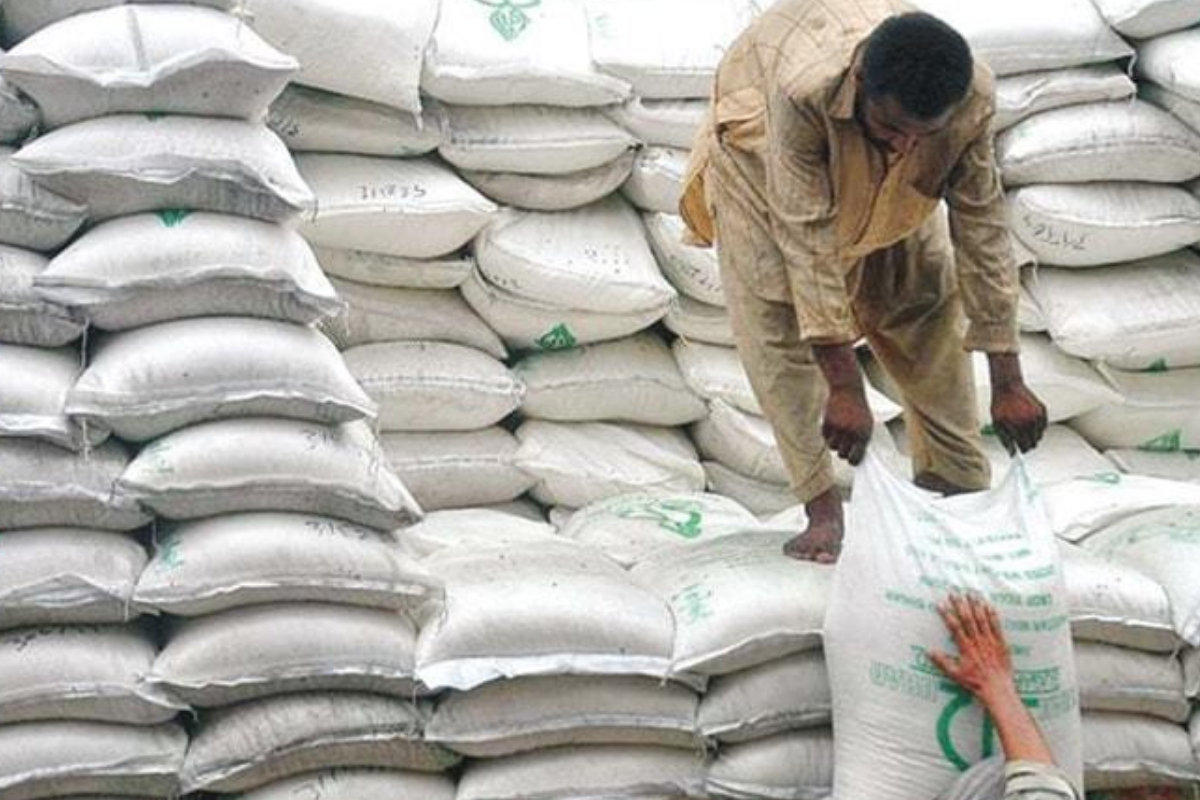
KP's provincial government is releasing 2,000 metric tons of wheat daily from its strategic reserve to keep subsidized 20-kg flour bags flowing at Rs2,520 through 1,771 active dealers. Division-wise tallies show Malakand, Peshawar and Hazara receiving the largest shares of the weekly 315,534-bag distribution.
Imagine the government has a big pantry of wheat and every day it gives flour factories enough to make 20,000 big bags. Shops then sell smaller 20-kg bags to families at a cheaper price. Last week, more than 315,000 of those small bags went out across the province so people could buy flour without it costing too much.
Analysis
315,534 bags across seven divisions
The headline number, 315,534 subsidized flour bags in a single week, is the figure the provincial Food Department has chosen to project. The bag count is broken down by division, which suggests the release is meant to double as a public accountability tool rather than a simple press note. Peshawar Division, the population center of the province, took 69,446 bags, while Malakand led with 78,122 and Hazara followed with 65,400. Mardan received 41,452, Dera Ismail Khan 32,094, Kohat 17,360 and Bannu 11,660. The distribution shape roughly tracks provincial population density, with Bannu trailing despite being a sizable division, which a reader can use to gauge whether the supply is reaching the more remote southern districts or pooling in the central corridor. The Food Department paired the tally with a quality-monitoring pledge and a threat of quota cancellation and legal action against mills found producing substandard flour, signaling that the release is being treated as a politically managed program, not a routine commodity flow.
1,771 active dealers and the Rs2,520 price point
Behind the bag count is a network of 1,771 active dealers selling a 20-kilogram bag at Rs2,520, equivalent to Rs126 per kilogram. The provincial government is feeding that network by releasing 20,000 bags of 100-kilogram wheat flour daily to mills from the Provincial Strategic Reserve, a backstop built to keep the retail price in check when open-market wheat prices spike. The price point is the politically sensitive number, since any increase would likely dominate the next news cycle, and the dealer count is the operational one: it tells readers how many retail outlets the province is relying on to convert strategic wheat into subsidized household supply. The fact that the Food Department is publishing these figures in real time suggests the program is under public scrutiny, and the threat of legal action for substandard output indicates the administration wants to be seen as policing its own supply chain rather than only claiming credit for it.
Dr. Muhammad Israr Khan's shot at Punjab
Special Assistant to the Chief Minister on Food Dr. Muhammad Israr Khan used the release to escalate a long-running inter-provincial dispute, blaming rising flour prices nationwide on what he called the Punjab government's incorrect policies. Specifically, he accused Punjab of maintaining barriers to inter-provincial free trade of flour and wheat. The accusation is pointed: Punjab is the country's breadbasket and the source of most wheat shipments, so any restriction on movement out of Punjab has direct consequences for KP's retail price. By tying the weekly bag count to that grievance, the KP government frames its distribution effort as a response to a Punjab-induced supply squeeze rather than a stand-alone welfare program. The political framing matters because flour subsidies are a recurring flashpoint between federal and provincial authorities, and KP is using a routine supply update to lay the groundwork for a louder public argument about who controls the wheat economy.
Key points
- KP's Food Department says 315,534 subsidized flour bags were distributed through 1,771 active dealers in one week.
- The province is releasing 2,000 metric tons of wheat daily from its strategic reserve, yielding 20,000 100-kg bags for mills each day.
- A 20-kg subsidized bag is sold to citizens for Rs2,520 through selected dealers.
- Malakand (78,122), Peshawar (69,446) and Hazara (65,400) divisions received the largest weekly shares, while Bannu received the fewest at 11,660.
- Special Assistant Dr. Muhammad Israr Khan blamed Punjab's policies for rising flour prices and warned of legal action against mills producing substandard flour.
If the daily 2,000-metric-ton release and 1,771-dealer network hold, KP households could see stable retail flour prices through the next pricing cycle while the Food Authority's quality checks reduce complaints about substandard bags. Sustained strategic-reserve releases would also give the provincial government a defensible record to point to if inter-provincial wheat trade remains contested.
The 2,000-metric-ton daily draw on the Provincial Strategic Reserve is not sustainable indefinitely, and once stocks thin, retail prices will revert to whatever the open market dictates. The inter-provincial dispute Khan flagged also means a sudden decision in Punjab to restrict wheat movement out of the province could wipe out the price advantage the subsidy is designed to deliver.