KMT accuses Taiwan's government of failing to uphold South China Sea claims
Taiwan's KMT opposition accused the DPP government of staying silent over the Philippines' move to file a UN nautical chart defining its claims around Scarborough Shoal, contrasting it with louder rhetoric toward Beijing.
Intelligence analysis by Llama
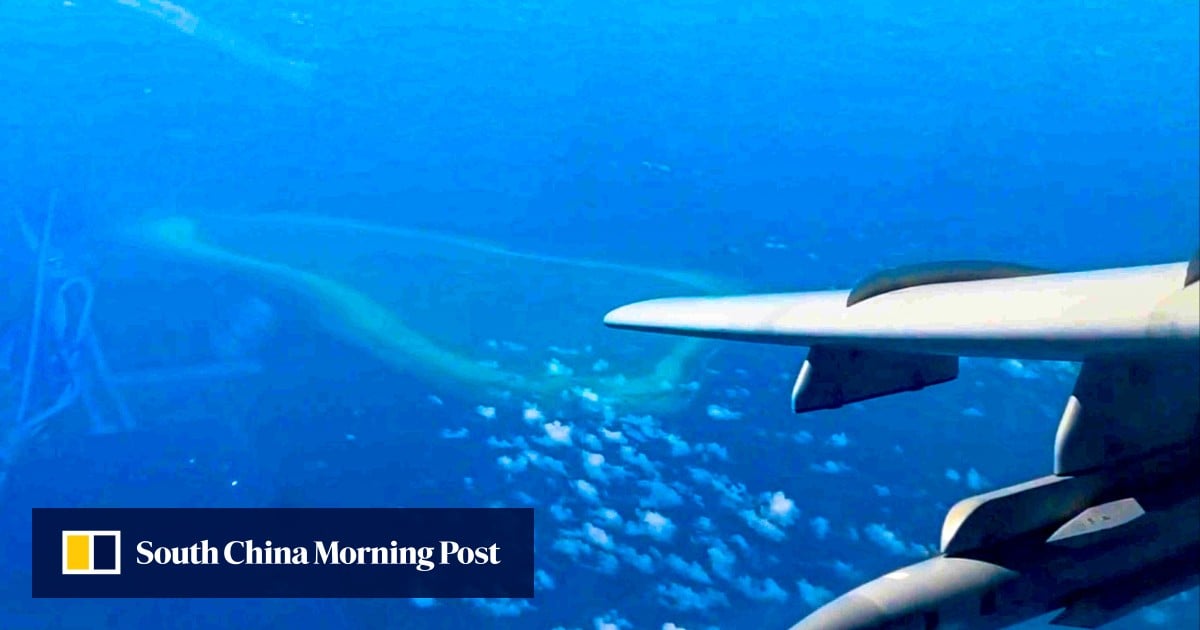
Opposition KMT figure Chen I-hsin criticised the DPP administration for failing to defend Taiwan's South China Sea claims after Manila filed a UN nautical chart for Scarborough Shoal, a feature claimed by Taiwan, China and the Philippines under different names.
Three countries all say the same little rock in the ocean belongs to them, like three kids arguing over the same cookie. The Philippines sent a drawing of the cookie to the UN, and Taiwan's opposition party said the government isn't shouting loud enough to keep its name on it.
Analysis
A Three-Way Tug Over a Rocky Outcrop
Scarborough Shoal sits roughly 120 nautical miles off the west coast of Luzon and has been a friction point between China and the Philippines for decades. The shoal is known as Huangyan Island in mainland China, Minzhu Reef in Taiwan and Panatag Shoal in the Philippines, with all three governments asserting overlapping sovereignty. Beijing has effectively controlled the feature in practice since 2012, but Manila's recent move to lodge a formal nautical chart with the United Nations reopens the legal and diplomatic contest on paper. Taiwan's claim, while rarely exercised on the ground, forms part of its broader narrative of being a distinct political entity with its own maritime entitlements rather than an extension of Beijing's nine-dash line.
Domestic Politics on the Water
Chen I-hsin, director of the KMT's culture and communications committee, framed the DPP's response as selective. According to Chen, quoted in the article, "the government speaks loudly when confronting mainland China, but falls silent when Japan or the Philippines challenges Taiwan's claims." The accusation lands inside a familiar pattern of Taiwan's two main parties trading barbs over which one more credibly defends the island's interests abroad. For the KMT, the Philippines' UN filing is a test the DPP has failed: protesting Beijing incursions is politically easy, but pushing back on a fellow democracy and treaty ally like Manila carries diplomatic cost. The DPP government, in turn, has to weigh whether a strong objection would disrupt the cooperation it seeks with the Philippines amid shared concerns over China.
Why the UN Filing Matters
UN maritime filings are not just bureaucratic paperwork. They feed into the baseline measurements that determine the outer limits of a state's territorial sea, contiguous zone and exclusive economic zone, all of which shape fishing rights, resource extraction and naval activity. By formally charting Scarborough Shoal's territorial sea baseline, the Philippines is anchoring its claim in a venue where Taiwan cannot easily respond: the UN recognition framework treats the Republic of China (Taiwan) as effectively absent, and the People's Republic of China contests Taiwan's right to file on its own behalf. That structural disadvantage is what makes Chen's criticism pointed, the DPP is being asked to defend a claim in a diplomatic arena where Taipei already operates with one hand tied behind its back.
Key points
- KMT's Chen I-hsin accused the DPP of double standards, being vocal against Beijing but quiet toward Manila and Tokyo
- The Philippines filed a nautical chart for Scarborough Shoal with the UN, defining its territorial sea baseline, 12-nm territorial sea and 24-nm contiguous zone
- Scarborough Shoal is claimed by China (Huangyan Island), Taiwan (Minzhu Reef) and the Philippines (Panatag Shoal)
- Taiwan faces structural limits in contesting UN filings because it lacks UN recognition and Beijing disputes its standing
A firm Taiwanese protest could reinforce Taipei's claim to a distinct maritime identity and open a channel for trilateral coordination with the Philippines and Japan on South China Sea issues, strengthening the island's diplomatic footprint despite its limited recognition.
Continued silence risks normalising Philippine and Japanese encroachments in Taiwan's claimed waters, emboldening further filings at the UN where Taiwan already has no seat, and reinforcing Beijing's narrative that Taipei cannot independently manage its own territorial affairs.