KP Gold Mining Contracts Under Scrutiny Over Alleged Irregularities
National Accountability Bureau (NAB) is investigating alleged irregularities in gold mining contracts awarded in Khyber Pakhtunkhwa during the PTI government, involving billions of rupees.
Intelligence analysis by Gemini 2.5 Flash Lite
The National Accountability Bureau (NAB) has initiated a probe into gold mining contracts in Khyber Pakhtunkhwa, awarded during the Pakistan Tehreek-e-Insaf (PTI) government. Concerns include inflated contract values, disregard for geological studies, and potential violations of auction rules, with allegations of favouritism and unauthorized mining activities.
Imagine some people were given permission to dig for gold, but officials might have let them do it unfairly, possibly without checking how much gold was really there or following the rules. Now, a watchdog group is looking into whether this was done right, as it could have cost the government a lot of money.
Analysis
Irregularities in Contract Awards
The National Accountability Bureau (NAB) is scrutinizing gold mining contracts in Khyber Pakhtunkhwa, awarded during the Pakistan Tehreek-e-Insaf (PTI) government, citing serious irregularities amounting to billions of rupees. An official report from October 2024 highlights concerns over the auction procedures, contract awards, and ongoing mining activities along the Indus and Kabul rivers. Four placer gold mining blocks were auctioned for approximately Rs4.93 billion, but allegations suggest that specific bidders were favored and mandatory legal and regulatory requirements were bypassed. The Indus River's Block A went to Globa Core Private Limited for Rs1.25 billion, Block B to Majco Private Limited for Rs1.261 billion, Block C to Himalaya Earth Private Limited for Rs1.305 billion, and Block D to Shakardara Minerals Private Limited for Rs1.111 billion.
NAB has requested records from the KP Minerals Department to investigate these disputed contracts. Key concerns include the determination of base prices without accurate gold reserve assessments and the alleged disregard for a 2015 geological study. Furthermore, questions have arisen regarding alleged violations of the Mineral Auction Rules 2022. The investigation also covers the suspension of geological mapping, which commenced in February 2022 but was reportedly halted in November 2023. The issuance of allotment letters despite contracts not being finalized within the stipulated 14-day period is also under scrutiny.
Unauthorised Mining and Financial Concerns
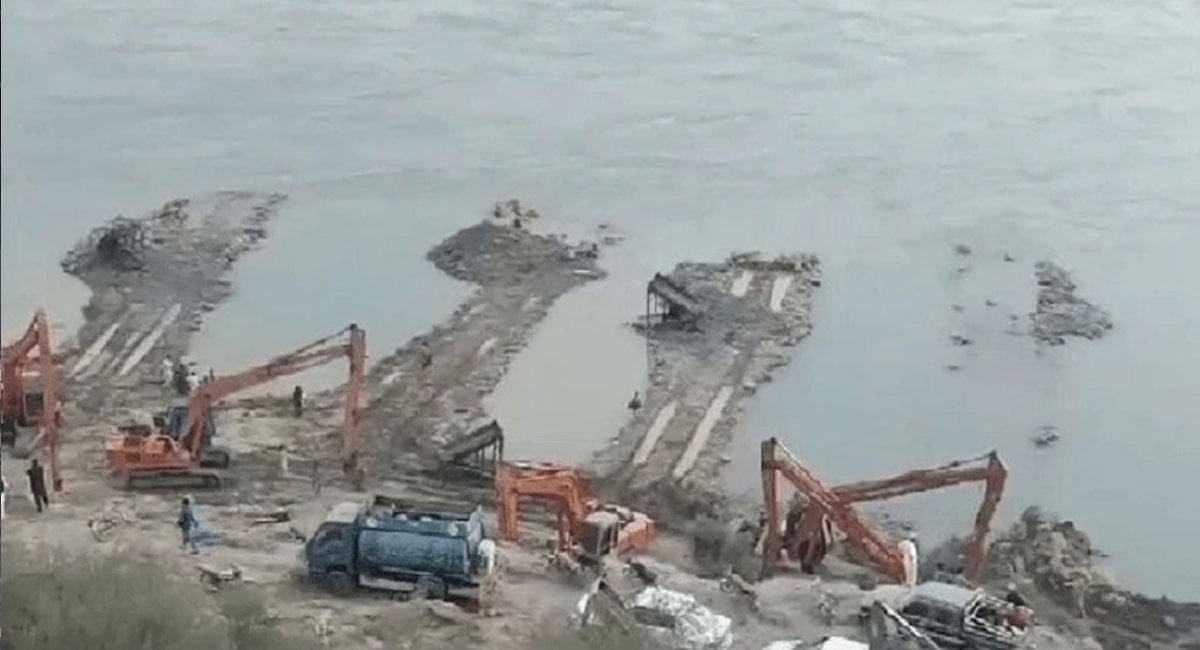
Mining activities reportedly continued in November 2024, even after a stay order was issued by the Peshawar High Court. NAB has also flagged concerns about mining operations allegedly conducted without environmental approvals and the necessary mining plans. The findings indicate the alleged unauthorized use of over 1,500 excavators in the affected areas. Leaseholders were reportedly charging excavator operators between Rs500,000 and Rs700,000 weekly. Estimates suggest that unauthorized subleasing might have generated between Rs7.5 billion and over Rs10 billion weekly, indicating a significant loss of potential revenue for the government.
Further concerns have been raised regarding the failure to provide complete records of gold production and sales from these mining operations. These alleged irregularities have led to questions about the accountability of officials responsible for approving and supervising these contracts, and for ensuring compliance with applicable rules during the PTI government's tenure. The scale of alleged financial impropriety and operational misconduct points to systemic issues in resource management and oversight.
Accountability and Future Implications
The ongoing investigation by NAB into these gold mining contracts underscores a broader challenge of ensuring transparency and preventing corruption in Pakistan's resource extraction sectors. The alleged favouritism, procedural violations, and environmental disregard highlight the need for robust regulatory frameworks and stringent enforcement mechanisms. The involvement of the Peshawar High Court and NAB suggests a multi-pronged approach to addressing these alleged malpractices.
The outcome of this investigation could have significant implications for future contract awards, potentially leading to stricter due diligence processes and increased scrutiny of mining operations. It also raises questions about the recovery of any potential losses incurred by the provincial exchequer. The focus on the PTI government's tenure suggests a political dimension to the accountability process, which is common in Pakistan's dynamic political landscape. The findings will be crucial in shaping public perception and policy reforms related to natural resource management.
Key points
- NAB is investigating alleged irregularities in KP gold mining contracts awarded during the PTI government.
- Contracts worth approximately Rs4.93 billion are under scrutiny for alleged favouritism and procedural violations.
- Concerns include inaccurate reserve assessments, disregard for geological studies, and potential violations of auction rules.
- Allegations of unauthorized mining, environmental approval lapses, and significant revenue loss through subleasing have been raised.
- The investigation questions the roles of officials responsible for contract approval and supervision.
If the investigation leads to stricter regulations and transparent auction processes, it could pave the way for more equitable distribution of mining revenues and attract legitimate investment. Enhanced oversight could also ensure environmental protection and prevent illegal mining activities in the future.
The ongoing scrutiny could deter legitimate investors due to perceived instability and corruption risks in the sector. Furthermore, if the alleged irregularities are proven and accountability is not effectively enforced, it could embolden further corrupt practices and lead to continued loss of national resources.