Kuwait International Airport Bans All Photography and Live Streaming
Kuwait International Airport has implemented a complete ban on all photography, video recording, and live streaming activities across its facilities. This directive, issued by the DGCA, aims to enhance security and protect traveler and staff privacy.
Intelligence analysis by Gemini 2.5 Flash Lite
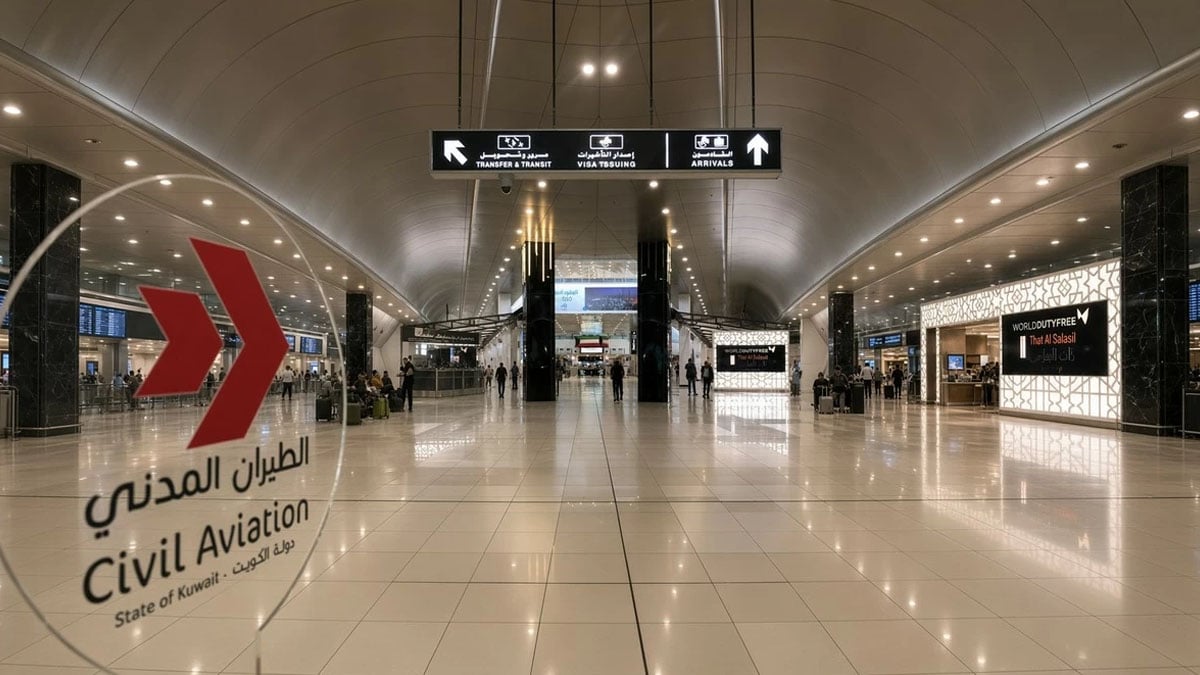
Kuwait International Airport has enacted a strict, zero-tolerance policy against photography, video recording, and live streaming in all its areas. The ban, formalized by DGCA Circular No. 60 of 2026, covers passenger terminals, administrative buildings, and operational zones, citing security concerns and the need to safeguard privacy.
Imagine Kuwait's big airport is like a super-secret clubhouse. To keep everyone's secrets safe and make sure things run smoothly, they've put up a big sign saying 'No photos or videos allowed!' This is to protect people's privacy and stop anyone from seeing or sharing things they shouldn't, like secret plans or where the security guards are.
Analysis
Kuwait International Airport
The recent directive from Kuwait International Airport, prohibiting all forms of photography, video recording, and live streaming, marks a significant tightening of regulations at a key regional aviation hub. This comprehensive ban, detailed in Circular No. 60 of 2026 issued by the Directorate General of Civil Aviation (DGCA), extends to every facet of the airport's operations. It encompasses not only public areas like passenger terminals but also extends to administrative buildings, technical facilities, and any space utilized by the aviation authority. The explicit prohibition on capturing footage of security checkpoints, surveillance systems, aircraft movements, and operational procedures underscores the airport's classification as a 'strategic sensitive national facility.' This classification suggests a heightened awareness of potential security threats and the critical role such infrastructure plays in national security.
The rationale behind this sweeping prohibition is multifaceted, as articulated by civil aviation officials. Primarily, the measure is intended to bolster the privacy of both travelers and airport employees. In an era where personal data and images are easily disseminated, the airport authorities are taking proactive steps to prevent unauthorized capture and sharing of individuals within the airport environment. Furthermore, the ban aims to facilitate smoother day-to-day operations by minimizing potential disruptions that could arise from filming activities. The overarching goal is to address security concerns comprehensively, ensuring a safer and more controlled environment for all stakeholders. The circular emphasizes a 'zero tolerance' approach, indicating that any deviation from these new rules will be met with immediate legal repercussions.
Enforcement of this new regulation is set to be rigorous, with clear stipulations for non-compliance. Article Two of the circular outlines that any individual or agency found violating the ban will face immediate prosecution. The penalties stipulated include disciplinary actions and other measures as prescribed by state regulations, specifically referencing the Civil Service Law and Kuwait's Civil Aviation Law. This suggests a robust legal framework is in place to deter and punish infringements. The decree's effective date is the date of its issuance, granting airport authorities full discretion to implement and enforce these restrictions across all entities and institutions operating within the airport premises. The move reflects a global trend of increased security scrutiny at international airports, driven by evolving security landscapes and the need to protect sensitive infrastructure and personal information.
Circular No. 60 of 2026
Circular No. 60 of 2026, issued by the Directorate General of Civil Aviation (DGCA) and headed by Acting Director General Engineer Saad Al-Otaibi, serves as the legal instrument for the new photography and live-streaming ban at Kuwait International Airport. This circular is not merely a suggestion but a formal directive that mandates a complete prohibition on recording, shooting videos, and live streaming across all airport facilities. The document meticulously details the scope of the ban, ensuring that it leaves no room for ambiguity. It specifies that the limitations apply to a wide array of areas, including passenger terminals, administrative buildings, technical facilities, and other spaces under the purview of the aviation authority. This comprehensive coverage indicates a deliberate effort to leave no loopholes for unauthorized visual documentation.
The circular's provisions extend to specific types of content that are now forbidden. This includes any video footage of security inspection points, surveillance cameras, aircraft activity, or operational procedures. Additionally, the prohibition covers the taking of pictures of any confidential in-house documents, administrative communications, or security procedures. This broad scope suggests an intention to protect not only the physical infrastructure and operational integrity of the airport but also sensitive information and internal processes. The DGCA's issuance of this circular underscores its authority and responsibility in setting and enforcing aviation standards and security protocols within Kuwait, ensuring that the airport operates under a strict and controlled environment.
The circular's emphasis on 'zero tolerance' and the immediate prosecution of offenders highlights the seriousness with which Kuwaiti authorities are treating this matter. The legal framework cited, including the Civil Service Law and Civil Aviation Law, indicates that violations will be handled through established legal channels, potentially leading to significant penalties for individuals and organizations. The effective date of the circular, from its issuance, means that compliance was expected immediately, and airport authorities were empowered to enforce these rules without delay. This proactive stance by the DGCA aims to preemptively address potential security risks and privacy breaches, reinforcing Kuwait International Airport's status as a secure and well-managed facility.
Saad Al-Otaibi
Acting Director General Engineer Saad Al-Otaibi, at the helm of the Directorate General of Civil Aviation (DGCA), is the official overseeing the implementation of the stringent new photography and live-streaming ban at Kuwait International Airport. As the head of the DGCA, Engineer Al-Otaibi holds significant authority in shaping and enforcing aviation regulations within Kuwait. His leadership in issuing Circular No. 60 of 2026 signifies a decisive move by the aviation authority to address perceived security vulnerabilities and privacy concerns at the nation's primary international gateway.
The circular, bearing his office's authority, explicitly prohibits all recording, video shooting, and live streaming activities across the airport's extensive facilities. This includes passenger terminals, administrative buildings, technical areas, and operational zones. The directive's comprehensive nature, covering everything from aircraft movements to security procedures and confidential documents, reflects a top-down approach to enhancing airport security and safeguarding sensitive information. Engineer Al-Otaibi's role in this initiative positions him as a key figure in Kuwait's efforts to modernize and secure its aviation infrastructure in line with international best practices and national security imperatives.
The strict enforcement measures detailed in the circular, including immediate prosecution for violations, are indicative of the gravity with which the DGCA, under Engineer Al-Otaibi's leadership, views compliance. The aim is to ensure the privacy of travelers and staff, maintain operational efficiency, and mitigate potential security risks. This decisive action by the DGCA, spearheaded by its acting director general, underscores Kuwait's commitment to maintaining a secure and controlled environment at its international airport, potentially setting a precedent for other regional aviation authorities facing similar challenges.
Key points
- Kuwait International Airport has imposed a complete ban on all photography, video recording, and live streaming.
- The ban, issued via DGCA Circular No. 60 of 2026, applies to all airport facilities.
- Reasons cited include safeguarding traveler and employee privacy, enhancing security, and ensuring smooth operations.
- Violators will face immediate prosecution and disciplinary actions under state regulations.
- The directive covers passenger terminals, administrative buildings, technical facilities, and operational areas.
The ban could lead to a more secure and private environment for travelers and staff at Kuwait International Airport, potentially reducing security incidents and privacy breaches. It may also streamline airport operations by eliminating distractions and unauthorized access to sensitive areas.
The strict prohibition could hinder legitimate travel documentation, journalism, and personal memory-keeping for passengers. It might also create challenges for airport operations if essential, authorized recording for safety or training purposes is inadvertently caught in the broad ban.