Ledger Launches Bitcoin Loans, Letting Holders Borrow Without Selling
Ledger has introduced a new self-custodial 'Crypto Loan' feature within its wallet app, enabling eligible users to pledge wrapped Bitcoin as collateral to borrow stablecoins like USDC or USDT.
Intelligence analysis by Gemini 2.5 Flash
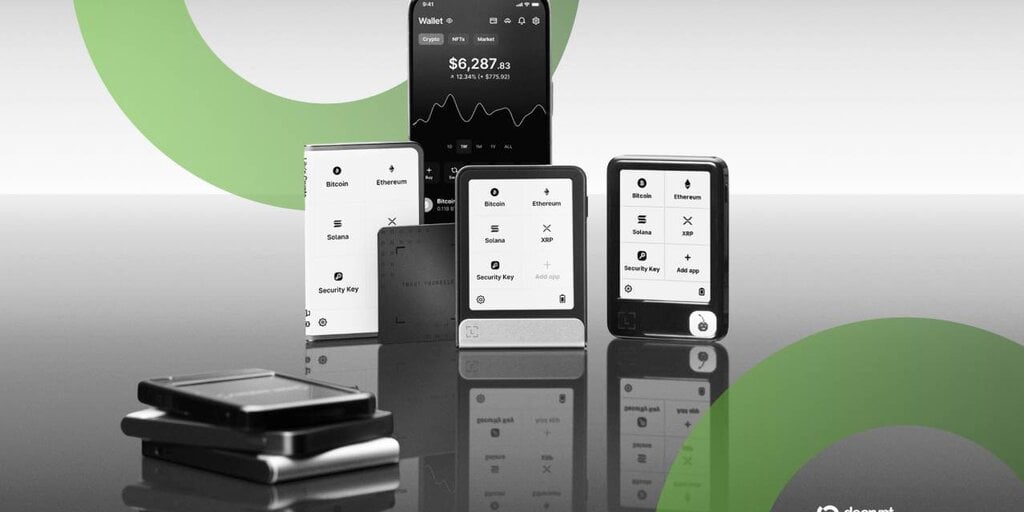
The hardware wallet provider Ledger is expanding into financial services by offering Bitcoin-backed loans directly through its self-custodial wallet app. This allows users to access liquidity without selling their Bitcoin or transferring it to a centralized platform, with all critical loan actions requiring physical approval on their Ledger device.
Imagine you have a special piggy bank that holds your valuable digital coins, like Bitcoin. Now, Ledger, the company that makes your piggy bank, has added a new trick: you can borrow money without actually selling your coins! It's like using your favorite toy as a promise to get some pocket money, but you still get to keep your toy. You use a tiny bit of your digital coins as a guarantee, and then you can get other digital money, called stablecoins, to spend. You still control your coins, and you have to press a button on your special piggy bank to say 'yes' to everything.
Analysis
Ledger's introduction of the Crypto Loan feature marks a notable expansion of its services beyond hardware security into the realm of decentralized finance. By allowing users to borrow against their Bitcoin without selling it, Ledger addresses a key pain point for long-term holders who wish to maintain their crypto exposure while accessing fiat liquidity. This self-custodial approach, where final approval for all loan actions rests on the user's physical hardware device, distinguishes it from centralized lending platforms and aligns with the core ethos of crypto security and user control.
Morpho
The underlying technology powering Ledger's new Crypto Loan feature is provided by Morpho, a decentralized credit network, through its technical partner Yield.xyz. This collaboration is crucial as it enables the self-custodial nature of the loans, allowing users to interact with a decentralized protocol directly from their Ledger device. Morpho's role extends to facilitating the liquidity flywheel, where stablecoins deposited through Ledger's existing Earn product can be utilized to fund the very loans that Bitcoin holders are now taking out, creating an interconnected ecosystem.
This integration also includes a new direct-access mechanism, allowing Ledger devices to connect to Morpho without the need for browser extensions or software wallets. This streamlines the user experience and enhances security by minimizing potential attack vectors associated with third-party interfaces. The partnership with Morpho highlights Ledger's strategy to leverage established DeFi protocols to offer advanced financial services while maintaining its commitment to self-custody.
TOKEN2049
The Crypto Loan feature was officially unveiled at the TOKEN2049 conference in Singapore, a prominent event in the cryptocurrency calendar. Launching at such a high-profile industry gathering underscores the strategic importance Ledger places on this new offering and its ambition to be a significant player in the evolving crypto financial services sector. The announcement at TOKEN2049 also positions Ledger alongside other major players like Coinbase and JPMorgan, who are also exploring or have launched similar Bitcoin-backed lending products.
This public debut at a major conference helps to build awareness and legitimacy for Ledger's expanded offerings, signaling its intent to move beyond being solely a hardware wallet provider. The timing suggests a response to growing market demand for more sophisticated financial tools that cater to crypto holders who prefer to HODL their assets while still needing access to capital. The conference served as an ideal platform to showcase Ledger's deepening push into financial services.
San Antonio Spurs
In addition to the financial services announcement, Ledger also used the Singapore stage to unveil a limited-edition Nano Gen5 signer. This particular hardware wallet was created in collaboration with the NBA's San Antonio Spurs, extending a marketing deal that was initially announced last year. The release is a limited run of 250 units, indicating a strategic effort to blend cryptocurrency technology with mainstream sports branding.
This marketing initiative, while seemingly distinct from the Crypto Loan feature, demonstrates Ledger's broader strategy to expand its brand presence and appeal to a wider audience. By associating with a well-known sports franchise like the San Antonio Spurs, Ledger aims to increase its visibility and potentially attract new users who might not yet be deeply entrenched in the crypto space. Such partnerships are crucial for mainstream adoption and brand recognition in a competitive market.
Key points
- Ledger launched 'Crypto Loan,' a self-custodial feature allowing users to borrow stablecoins (USDC/USDT) against wrapped Bitcoin (cbBTC/wBTC) collateral.
- The service is powered by Morpho, a decentralized credit network, through technical provider Yield.xyz.
- Users can manage loans directly in the Ledger Wallet app, with all key actions requiring physical approval on their Ledger hardware device.
- Ledger also announced direct access for its devices to Morpho, bypassing browser extensions for enhanced security.
- The feature was unveiled at the TOKEN2049 conference in Singapore and expands Ledger's push into crypto financial services, following similar moves by Coinbase and JPMorgan.
This development offers Bitcoin holders a secure, self-custodial way to unlock liquidity from their assets without triggering a taxable sale, potentially increasing the utility and appeal of holding Bitcoin long-term. It also positions Ledger as a more comprehensive financial services provider within the crypto ecosystem, fostering greater adoption of decentralized finance tools.
The primary risk for users is the volatility of Bitcoin's price; a sharp drop could lead to the liquidation of their collateral, meaning they could lose their pledged Bitcoin if the loan-to-value ratio is not carefully managed.