Leftist Wins Michigan Primaries: With Little Money and Much Citizen Proximity
Progressive Democrat Abdul El-Sayed secured the Democratic nomination for the US Senate in Michigan, defying traditional political expectations in the swing state. He achieved this victory with a campaign focused on anti-corruption and strong community engagement, rather …
Intelligence analysis by Gemini 2.5 Flash
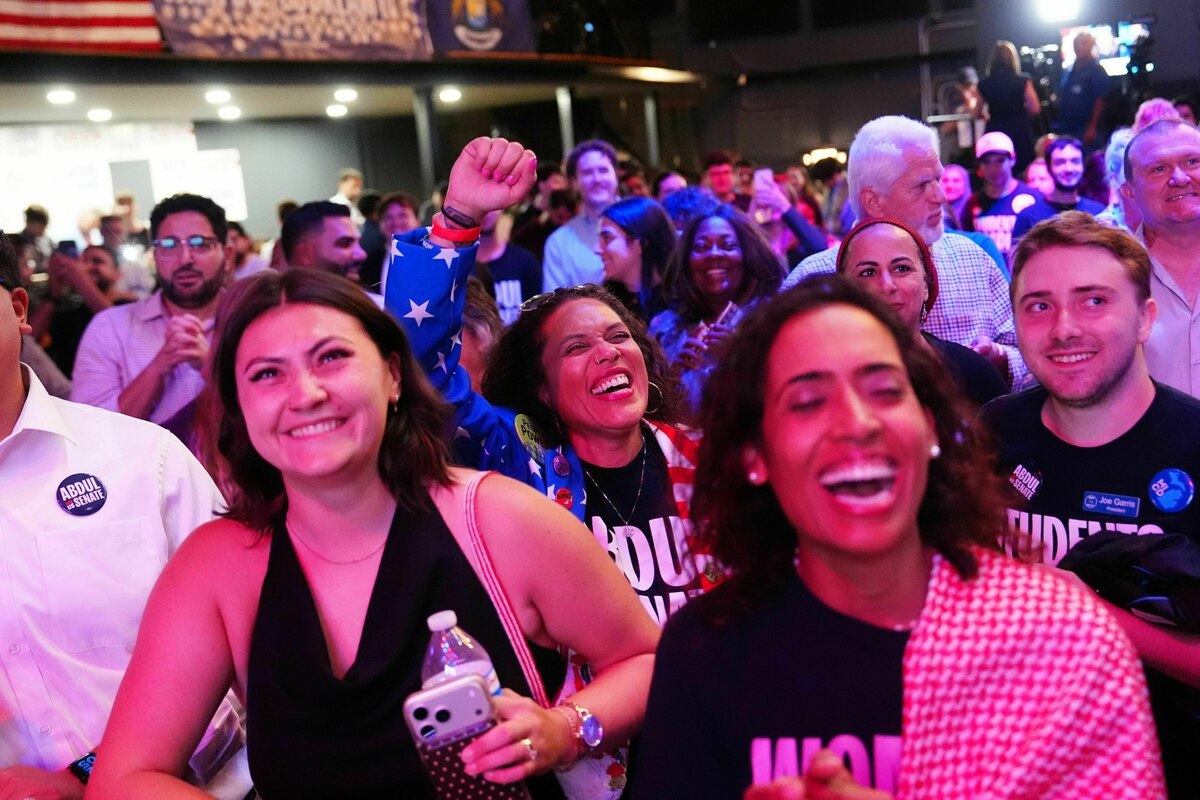
Abdul El-Sayed's primary win in Michigan signals a potential shift in US politics, as his progressive, anti-corruption message resonated with voters, including some former Trump supporters, despite his left-leaning stance and Arab-sounding name in a traditionally moderate swing state. His success, mirrored by other progressive candidates, suggests that traditional fears and campaign s…
Imagine a school election. Abdul, a kid who doesn't have much pocket money but talks to everyone about making the school fair and honest, won the first round! Grown-ups thought he couldn't win because of his name or because he's a bit different, but he showed that talking to people and caring about their problems can be more powerful than having lots of money.
Analysis
Challenging Traditional Political Logic
Abdul El-Sayed's victory in the Michigan Democratic primaries for the US Senate represents a significant challenge to the established norms of American politics, particularly in a crucial swing state. Republican opponent Mike Rogers was quick to dismiss El-Sayed's chances in the general election, basing his optimism on the traditional logic that has long governed US electoral outcomes. Michigan, having voted for Trump in 2016 and 2024, and Biden in 2020, is known for its volatile electorate, often swayed by moderate candidates who can appeal to undecided voters.
The article highlights that a left-progressive candidate with an Arab-sounding name would traditionally be seen as having little chance in such a context. However, El-Sayed and the progressive wing of the Democratic Party are betting that these 'old rules' no longer apply. They contend that the 'panic about the left' and fears associated with Arab-sounding names are not as widespread as they once were, signaling a potential shift in voter priorities and perceptions.
The Anti-Corruption Platform's Appeal
Central to El-Sayed's success, and that of his progressive counterparts like Chris Raab in Pennsylvania, Claire Valdez and Darializa Chevalier in New York, and Melat Kiros in Colorado, is a singular focus on corruption. These candidates have demonstrated that electoral victories can be achieved with limited financial resources and a strong emphasis on citizen proximity. By prioritizing direct engagement with communities and advocating against corruption, they aim to prove their genuine concern for the interests of ordinary people, positioning themselves as authentic representatives.
This approach stands in stark contrast to both traditional Republicans and 'old school' Democrats, who, according to the article, often fail to provide similar proof of their commitment to the common citizen. The progressive candidates' ability to win primaries with this strategy suggests a growing disillusionment among voters with conventional, money-driven politics and a desire for more transparent and accountable leadership.
A Blueprint for Progressive Victories?
El-Sayed's primary win, and the broader success of progressive candidates in other states, could serve as a blueprint for future left-leaning campaigns. The article suggests that their core message of anti-corruption and genuine representation not only resonates with the Democratic base and swing voters but also holds appeal for some former Trump voters. This indicates a potential for cross-ideological appeal on issues of integrity and accountability, transcending traditional party lines.
If this strategy proves successful in the general election, it could fundamentally reshape how political campaigns are conducted, emphasizing grassroots organizing and issue-based appeals over large campaign chests and fear-mongering tactics. The progressive movement is banking on the idea that voters are increasingly looking beyond superficial identity politics and are more concerned with tangible issues like corruption and economic fairness, offering a new path forward for the Democratic Party.
Key points
- Abdul El-Sayed, a progressive Democrat, won the Michigan Democratic primary for the US Senate.
- His campaign focused on anti-corruption and strong community engagement, succeeding with limited financial resources.
- This victory challenges traditional US political wisdom regarding swing states and the electability of left-progressive candidates with Arab-sounding names.
- El-Sayed and other progressive candidates believe old political fears are losing their effectiveness.
- Republican opponent Mike Rogers initially dismissed El-Sayed's chances in the general election.
El-Sayed's victory suggests that a grassroots, anti-corruption message can successfully mobilize voters and challenge well-funded, traditional campaigns, potentially leading to more authentic representation in politics. This approach could inspire a new generation of politicians to focus on community engagement over corporate donations, fostering greater trust between citizens and their representatives.
Despite his primary win, El-Sayed faces a significant challenge in the general election against a Republican opponent who dismisses his chances in a swing state. The traditional political logic, which El-Sayed aims to defy, still holds considerable sway, and overcoming established party machinery and voter habits could prove difficult, potentially leading to a setback for the progressive movement.