Leipzig airport drone-bomb: Could Russia be involved?
A drone loaded with explosives was discovered at Leipzig airport, forcing one runway into lockdown. The investigation is ongoing, but there are concerns about a potential link to Russia, which has a history of hybrid warfare.
Intelligence analysis by Llama
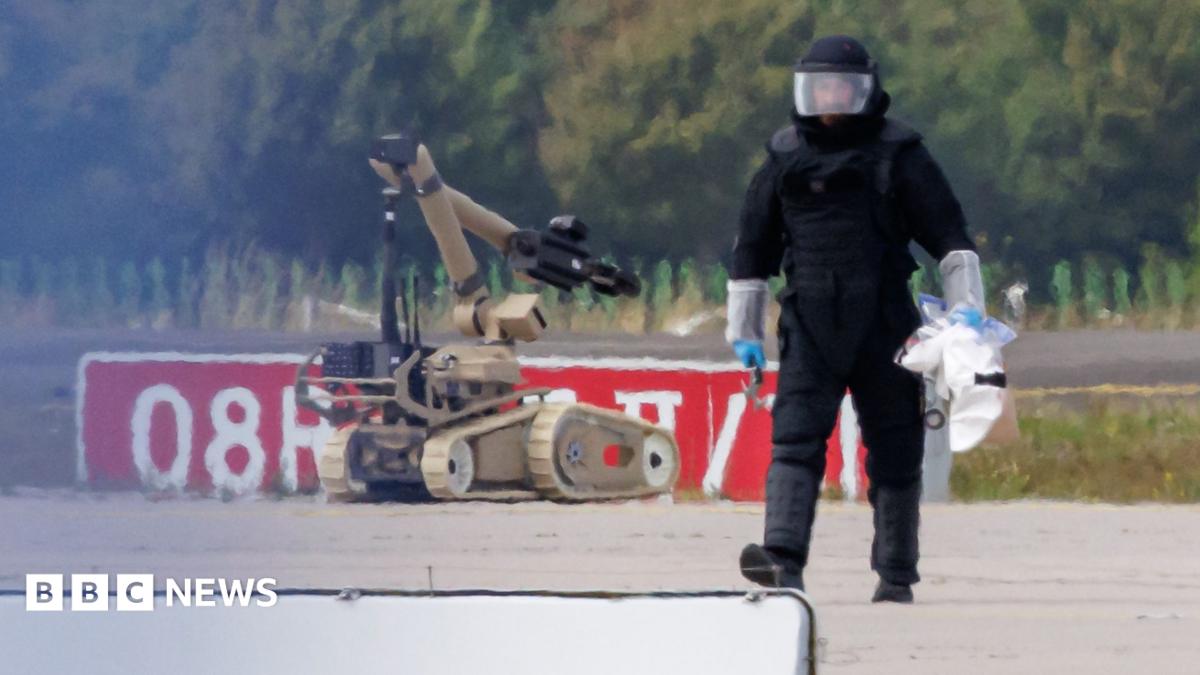
A drone loaded with explosives was discovered at Leipzig airport, and the investigation is ongoing. There are concerns about a potential link to Russia, which has a history of hybrid warfare.
Imagine someone sending a small drone with a bomb to a big airport. It's like a tiny plane that can fly around and cause trouble. The police are trying to figure out who sent it and why. They think it might be connected to a country called Russia, which has a history of doing bad things.
Analysis
Leipzig Airport Incident: A Potential Hybrid Warfare Attack?
The discovery of a drone loaded with explosives at Leipzig airport has raised concerns about a potential link to Russia, which has a history of hybrid warfare. The incident highlights the potential for hybrid warfare and the need for increased security measures at airports.
The investigation is ongoing, but there are several factors that suggest a potential link to Russia. Firstly, the use of drones and explosives is a tactic that has been used by Russian-backed proxies in the past. In 2024, a parcel containing a sophisticated incendiary device caught fire at the airport's DHL hub, and similar packages then ignited in the UK and Poland, causing extensive damage. A group of men are currently on trial in both Lithuania and Poland, where prosecutors believe they were part of a substantial network of proxies recruited by Russian military intelligence.
Furthermore, the use of RDX explosives in the Leipzig drone bomb is similar to the explosives found in the food cans in a Lithuanian cemetery, which were seized by investigators in 2024. The amount of RDX explosives found in the food cans was significant, equivalent to 6kg of TNT, and the detonators were hidden inside headphone sets.
While there is no evidence of a direct link to Russia, the 2024 plot certainly highlights the potential for hybrid warfare. Vladyslav D., one of the suspects charged in Poland, described in detail to investigators how he made multiple long car trips in July 2024 following instructions from someone he knew as 'Warrior'. He was ordered to leave the headphones many hours' drive away in Poland, where he noticed 'a guy on a bicycle' collect them from beside the road.
The intended targets of the drones and other items were never revealed, but the motive was clear. Vladyslav was paid more than $2,000 in cryptocurrency for his efforts. His motive was clear, and what about the Leipzig case? Few details about the drone bomb are yet public, but some German sources report that the explosive was Semtex, which contains RDX - the explosive found in the food cans in a Lithuanian cemetery.
The physical damage may have been limited, but if Russia was behind this, its aim was more likely to sow fear. Andrei Soldatov, an expert on Russia's intelligence agencies, said it 'makes sense' to suspect Moscow, pointing to a clear pattern of sabotage and hostile activity, from arson attacks on facilities supporting Ukraine to drones over sensitive sites in Europe.
Germany is one of Kyiv's biggest suppliers of military aid, and the incident highlights the potential for hybrid warfare. The investigation is ongoing, but the incident highlights the need for increased security measures at airports and the potential for hybrid warfare.
Key points
- A drone loaded with explosives was discovered at Leipzig airport.
- The investigation is ongoing, but there are concerns about a potential link to Russia.
- The use of drones and explosives is a tactic that has been used by Russian-backed proxies in the past.
- The 2024 plot highlights the potential for hybrid warfare.
- The investigation is ongoing, and the incident highlights the need for increased security measures at airports.
If the investigation finds that the drone bomb was not linked to Russia, it could be a sign that the country is not as involved in hybrid warfare as previously thought. This could lead to a decrease in tensions between Russia and Europe.
If the investigation finds that the drone bomb was linked to Russia, it could be a sign of a new level of hybrid warfare. This could lead to increased tensions between Russia and Europe, and potentially even more attacks.