Liberia receives first group of 'third country' deportees from U.S., officials say
Liberia received the first group of 'third country' deportees from the U.S. on Thursday, including migrants from Latin America. A small group of deportees resisted and refused to deplane, but were eventually escorted back onto the plane.
Intelligence analysis by Llama
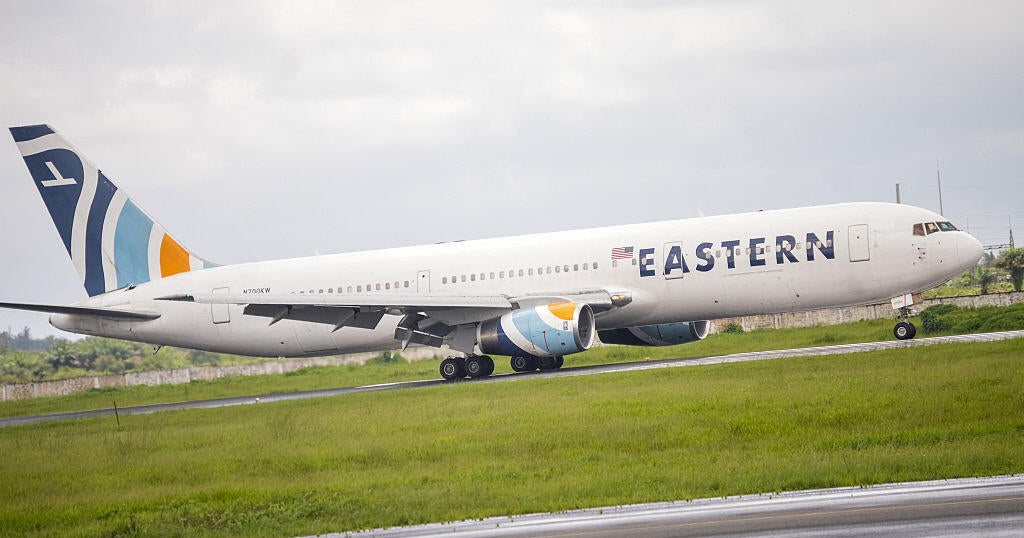
Liberia has accepted the first group of 'third country' deportees from the U.S., including migrants from Latin America. The move is part of President Trump's crackdown on illegal immigration and an aggressive White House effort to deport migrants to third countries.
Liberia has accepted the first group of 'third country' deportees from the U.S., including migrants from Latin America. This means that the migrants will be allowed to apply for asylum in Liberia, but some of them resisted and refused to deplane when they arrived.
Analysis
Liberia's Role in Third Country Deportations
Liberia has become the latest country to accept deportees who are not its citizens as part of President Trump's crackdown on illegal immigration. The government of Liberia has said it intends to accept up to 1,200 third country deportees from the U.S. over the next year, and that the new arrivals will be allowed to apply for asylum there.
The move is part of a broader effort by the Trump administration to deport migrants to third countries where they have no ties. The administration has brokered third country deportation agreements with dozens of nations across the globe, including African countries plagued by armed conflict, political tumult and human rights abuses.
Human rights activists have denounced the third country deportations as inhumane and illegal under international law, saying some countries are returning deportees to places they fled because of persecution. But the Trump administration has defended the legality and merits of the deportations, portraying them as an effective way to deter illegal immigration.
The Impact on Migrants
The deportees who arrived in Liberia on Thursday include migrants from Latin America, who were deported from the U.S. after being detained at the border. The migrants were taken to a processing center in Liberia, where they will be allowed to apply for asylum.
The move has been criticized by human rights activists, who say that the third country deportations are a violation of international law. The activists argue that the deportations are a way for the Trump administration to avoid its obligations to protect the rights of migrants.
The Future of Third Country Deportations
The Trump administration's third country deportation effort has been a contentious issue, with many critics arguing that it is inhumane and illegal under international law. The administration has defended the effort, saying that it is an effective way to deter illegal immigration.
But the future of the effort is uncertain, with many countries refusing to accept deportees from the U.S. The issue is likely to continue to be a contentious one, with many critics arguing that the deportations are a violation of human rights.
Key points
- Liberia has accepted the first group of 'third country' deportees from the U.S., including migrants from Latin America.
- The deportees will be allowed to apply for asylum in Liberia.
- The move is part of President Trump's crackdown on illegal immigration and an aggressive White House effort to deport migrants to third countries.
- Human rights activists have denounced the third country deportations as inhumane and illegal under international law.
If the third country deportation effort is successful, it could lead to a reduction in the number of migrants attempting to cross the U.S.-Mexico border. This could also lead to a decrease in the number of migrants being detained at the border, which could help to alleviate the pressure on immigration facilities.
The third country deportation effort has been criticized by human rights activists, who say that it is inhumane and illegal under international law. If the effort continues, it could lead to more migrants being deported to countries where they have no ties, which could put them at risk of persecution or harm.