Live updates: Bitcoin holds below $80,000 as AI buildout draws investor attention and capital
Bitcoin is trading below $80,000 as significant capital flows into the AI sector, overshadowing crypto markets. Major tech firms are raising billions for AI development, diverting investor focus.
Intelligence analysis by Gemini 2.5 Flash Lite
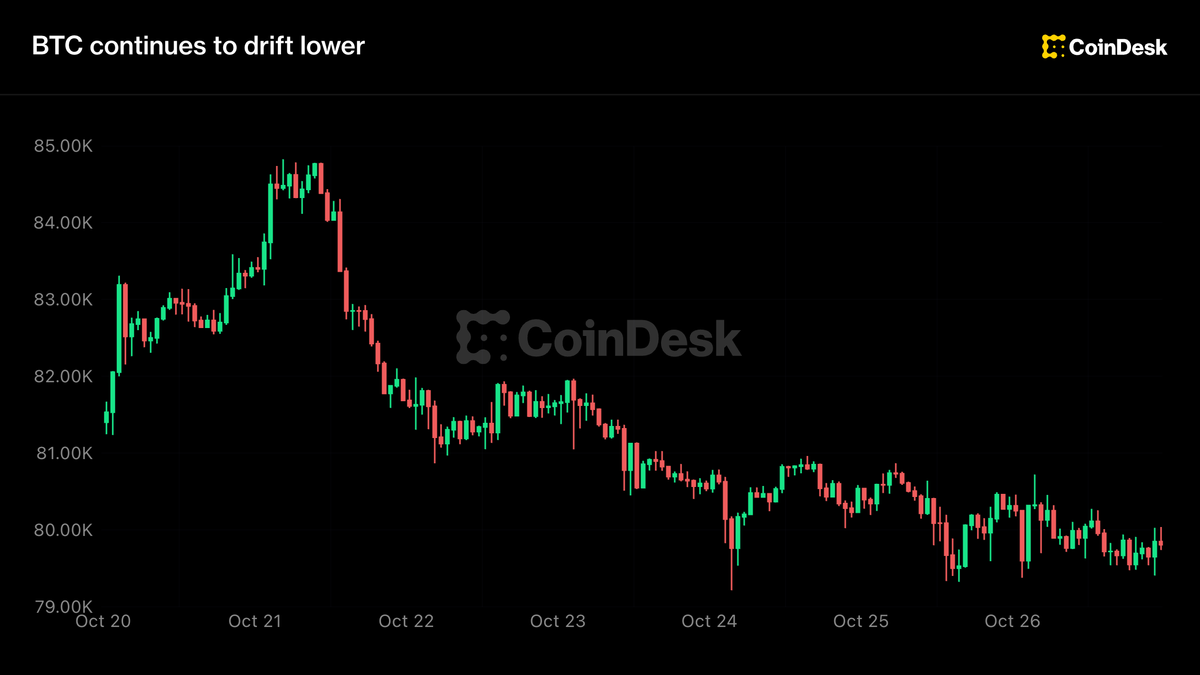
While Bitcoin hovers below the $80,000 mark, the cryptocurrency market is experiencing a notable shift in investor attention and capital allocation towards the burgeoning artificial intelligence sector. This trend is highlighted by substantial capital raises from major tech companies and AI startups, suggesting a temporary diversion of funds away from digital assets.
Imagine money is like toys. Right now, lots of people are excited about building super-smart robots (AI), so they're putting their money into that. This means there's a bit less money going into buying Bitcoin, making its price stay steady instead of going up a lot.
Analysis
AI Capital Influx
The cryptocurrency market is currently navigating a landscape where investor capital is increasingly being drawn towards the artificial intelligence sector. This phenomenon is underscored by substantial financial maneuvers within the tech industry, with companies like Meta announcing massive capital raises, reportedly around $95 billion. Furthermore, AI startup Anthropic is reportedly exploring an Initial Public Offering (IPO) with aspirations to raise up to $100 billion. These figures collectively represent a colossal sum, estimated to be nearly $200 billion, being earmarked for AI-related ventures. This significant allocation of capital suggests a powerful magnetic pull from the AI narrative, potentially at the expense of traditional or emerging asset classes like cryptocurrencies.
The implications for the crypto market are multifaceted. While Bitcoin and other digital assets have historically attracted speculative capital, the sheer scale of investment in AI presents a formidable competitor for investor dollars. This dynamic could lead to a temporary or even prolonged period of reduced inflows into crypto, impacting liquidity and price appreciation. The narrative surrounding AI's potential for transformative societal and economic impact appears to be capturing the imagination of investors and corporations alike, creating a powerful counter-narrative to the digital asset space.
Bitcoin's Price Stagnation
Bitcoin, the flagship cryptocurrency, is currently trading below the significant psychological threshold of $80,000. This price action occurs against a backdrop of broader market movements, including a pullback in interest rate hike expectations and a reversal in some of the recent gains seen in oil prices. Equities, particularly the Nasdaq, have shown some resilience, with futures indicating a positive start to the trading day. However, the crypto market, including major altcoins like Ether and Solana, is experiencing a slight downturn, with XRP showing a modest gain following a legal development for Ripple.
The juxtaposition of Bitcoin's struggle to maintain its upward momentum against the backdrop of a surging AI investment theme is noteworthy. While the crypto market often exhibits its own internal drivers and sentiment, it is not immune to macroeconomic trends and competing investment opportunities. The current environment suggests that the allure of AI-driven innovation and its potential for high returns is currently overshadowing the speculative appeal of Bitcoin for a segment of the investment community.
Investor Sentiment and Outlook
Investor sentiment, as reflected in market commentary, indicates a degree of skepticism regarding Bitcoin's near-term prospects. Prominent venture capitalist Jason Calacanis, for instance, has publicly stated that "a brutal year for Bitcoin is just getting started," predicting a test of the $57,000 low within the next 12 months. Calacanis argues that more dynamic investment opportunities exist in areas like "Super Intelligence" (AI) that offer greater value creation potential compared to Bitcoin, which he characterizes as a "dead network" primarily serving as a store of value. His commentary, while controversial and noted as a recurring theme in his past analyses, highlights a segment of the investment community that is actively pivoting away from traditional cryptocurrencies towards AI-related assets.
Conversely, some entities within the crypto space maintain a more optimistic stance. Galaxy Digital, for example, reported strong third-quarter earnings, partly attributed to Bitcoin's gains during the period. The company also announced a significant share buyback authorization and highlighted progress on its Helios data center project, indicating confidence in its business operations and future growth opportunities. Despite these internal positive developments, the broader market sentiment appears to be influenced by the compelling narrative and capital flows directed towards AI, creating a challenging environment for Bitcoin's immediate price performance.
Key points
- Bitcoin is trading below $80,000 as investor capital shifts towards the artificial intelligence sector.
- Major tech companies and AI startups are raising billions, indicating a strong focus on AI development.
- Some prominent investors express skepticism about Bitcoin's future, favoring AI investments.
- Despite AI's draw, some crypto firms like Galaxy Digital report positive earnings and progress.
If the AI buildout continues to attract significant capital, it could lead to technological advancements that indirectly benefit the crypto space through increased infrastructure development or new use cases. Furthermore, a successful AI boom might eventually lead investors to seek diversification, potentially bringing capital back to digital assets.
The substantial capital flowing into AI could divert investment away from cryptocurrencies for an extended period, leading to stagnant or declining prices for Bitcoin and other digital assets. If AI proves to be a more compelling investment narrative, crypto could face a prolonged period of reduced interest and capital inflow.