Looking back Messi’s first Argentina retirement, and the glorious years that came after
Lionel Messi announced his second international retirement on Monday, a decision largely expected after winning the World Cup at 39. This contrasts sharply with his first, sudden retirement in 2016 at 29, following a third consecutive major final loss, which sparked wides…
Intelligence analysis by Gemini 2.5 Flash
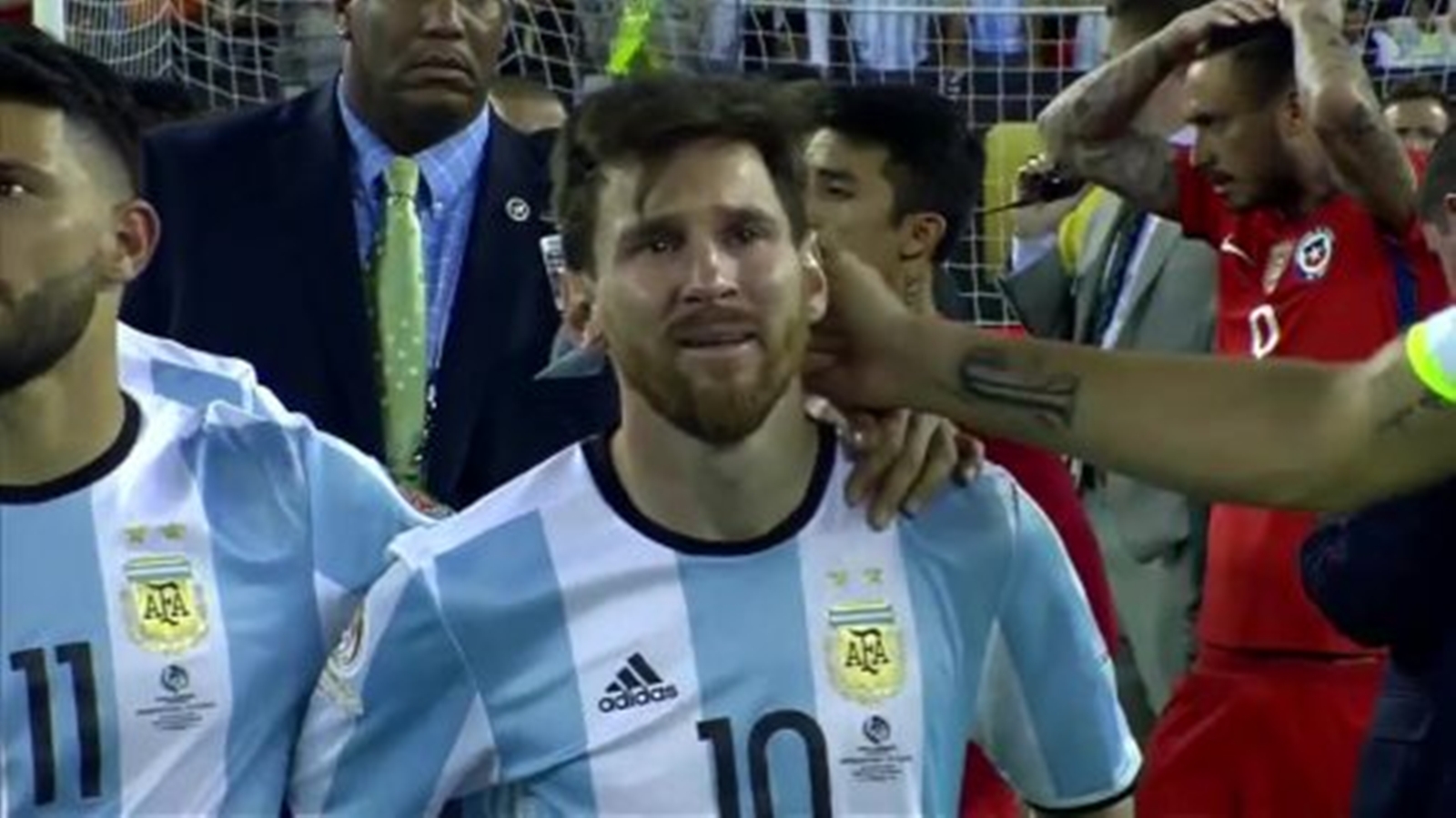
The article reflects on Lionel Messi's two international retirement announcements, contrasting his recent, expected departure as a decorated champion with his emotional, sudden first retirement in 2016. That initial decision, driven by heartbreak after consecutive final losses, sparked a massive public plea for his return, ultimately paving the way for his most glorious years with Arg…
Imagine a super-talented soccer player named Leo who loved playing for his country but kept losing big games. He got so sad he said he'd quit! But everyone loved him so much they begged him to come back. He did, and then he finally won all the biggest trophies, becoming a true legend.
Analysis
Lionel Messi's recent announcement of his second international retirement, following a career crowned with every major trophy, stands in stark contrast to his first, emotionally charged departure from the Argentina national team in 2016. That initial decision, made at the age of 29, came after a period of intense scrutiny and heartbreak, fundamentally shaping the narrative of his international career.
2016 Copa America Centenario
Messi's first retirement announcement came abruptly after Argentina's defeat to Chile in the Copa America Centenario final. This loss marked the third consecutive major final defeat for Messi and Argentina, following the 2015 Copa America final and the 2014 World Cup final. The cumulative weight of these near-misses led to growing questions about his legacy with the national team, with many comparing his perceived commitment to Argentina unfavorably against his performances for Barcelona. Messi himself expressed profound resignation, stating, "For me, the national team is over," and lamenting that despite his desire, winning a major international trophy "wasn’t meant to be."
Obelisco de Buenos Aires
The immediate aftermath of Messi's 2016 retirement was a wave of shock and an overwhelming public appeal for him to reconsider. The campaign to bring him back dominated media conversations and spilled onto the streets of Argentina. Approximately 50,000 supporters gathered at the iconic Obelisco de Buenos Aires on July 2, holding signs and placards predominantly bearing the message 'No Te Vayas Leo' (Don't go Leo). This widespread outpouring of support underscored Messi's immense importance to the nation, demonstrating that his perceived failures were overshadowed by the public's deep affection and belief in him.
2021 Copa America
Ultimately, Messi reversed his decision about a month later, announcing in August 2016 his availability for Argentina's 2018 World Cup qualifiers. This return proved to be a pivotal moment, as it ushered in the most glorious period of his international career. On July 10, 2021, Messi finally secured his first international trophy, winning the Copa America. The following year, he achieved his lifelong ambition and ended Argentina's nearly four-decade wait by lifting the World Cup trophy after a thrilling final against France. His success continued, with Argentina successfully defending their Copa America title on July 14, making it his third international trophy, a testament to the resilience and determination that followed his initial heartbreak.
Key points
- Lionel Messi's recent international retirement was expected, unlike his first sudden announcement in 2016.
- His 2016 retirement followed three consecutive major final losses, including the Copa America Centenario.
- The initial decision sparked a massive public campaign in Argentina, with thousands appealing for his return.
- Messi reversed his retirement a month later, leading to a period where he won the Copa America and the World Cup.
- His return allowed him to secure his legacy as one of football's greatest players with international honors.
Messi's decision to reverse his initial retirement led directly to an unprecedented period of success for him and Argentina, culminating in multiple international trophies, including the coveted World Cup. This demonstrates the power of perseverance and the impact of public support in motivating a legendary athlete to achieve his ultimate goals.
Had Messi not reversed his 2016 retirement, his international legacy would have remained incomplete, marked by a series of final losses and unfulfilled potential. Argentina would have missed out on their long-awaited World Cup victory, and fans would have been deprived of witnessing his triumphant final years with the national team.