Mainland Chinese pay tribute to Tung Chee-hwa for opening door to Hong Kong
Mainland Chinese are honoring Hong Kong's first chief executive, the late Tung Chee-hwa, for introducing the Individual Visit Scheme (IVS) in 2003, which significantly boosted tourism and economic ties.
Intelligence analysis by Gemini 2.5 Flash
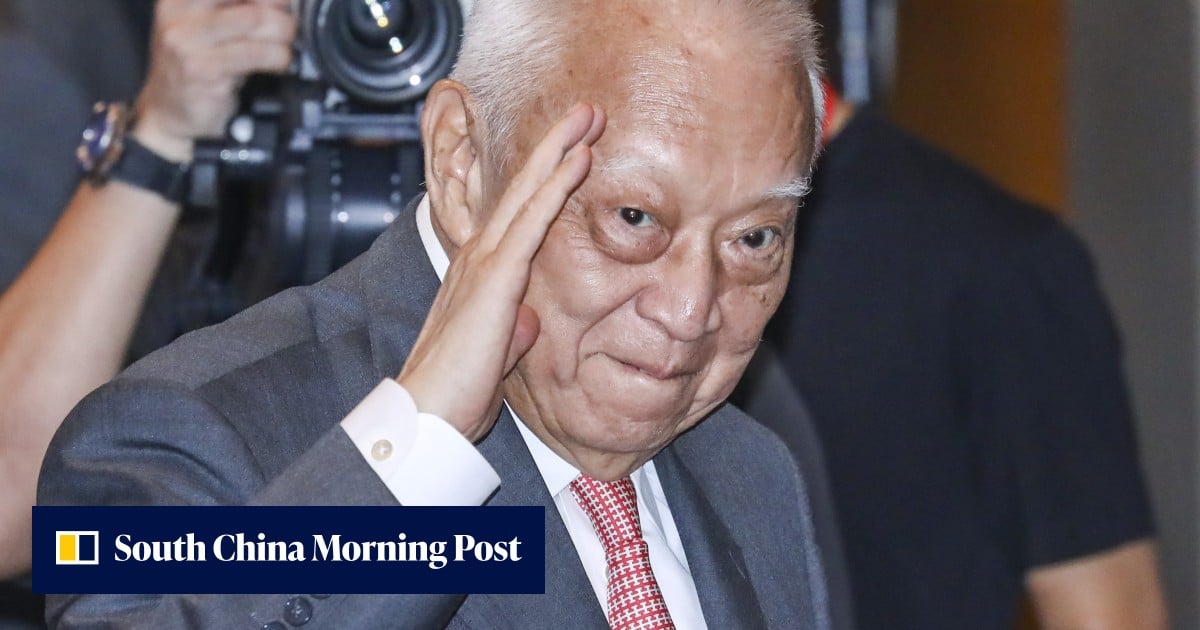
The Individual Visit Scheme, initiated by Tung Chee-hwa over two decades ago, allowed solo mainland Chinese travelers to visit Hong Kong, expanding from a few cities to 59 nationwide. This policy, introduced post-Sars, played a crucial role in revitalizing Hong Kong's economy and fostering cross-border understanding, leaving a lasting legacy now remembered after Tung's passing.
Imagine Hong Kong was like a special club, and it used to be a bit tricky for people from mainland China to visit on their own. Tung Chee-hwa, who was like the first principal of Hong Kong, helped open a special 'solo-travel door' in 2003. This made it super easy for millions of people to visit, like going to a big, fun fair, which helped Hong Kong's shops and restaurants and let families make lots of happy memories.
Analysis
Individual Visit Scheme
The Individual Visit Scheme (IVS) was a transformative policy introduced in 2003, allowing solo mainland Chinese travelers to visit Hong Kong. Initially launched for a limited number of cities in Guangdong province, the scheme has since expanded dramatically to encompass 59 cities across mainland China, reaching as far west as Urumqi in Xinjiang. This expansion led to a more than fivefold increase in mainland arrivals to Hong Kong, fundamentally altering the city's tourism landscape and economic structure.
The IVS was conceived during a critical period for Hong Kong, specifically in the aftermath of the severe acute respiratory syndrome (Sars) outbreak, which had severely impeded cross-boundary exchanges and dealt a significant blow to the city's economy. As Henry Tang Ying-yen, who served as financial secretary at the time, noted, the scheme was a strategic effort to align Hong Kong with the mainland's broader reform and opening-up policies. Its primary objective was to stimulate economic recovery by attracting a new wave of visitors, thereby injecting much-needed revenue into various sectors of Hong Kong's economy.
Tung Chee-hwa
Tung Chee-hwa, Hong Kong's first chief executive, is being widely recognized for his instrumental role in the establishment and implementation of the Individual Visit Scheme. His leadership was crucial in navigating the political complexities required to secure approval from the central government in Beijing for such a significant policy shift. Tung successfully integrated the IVS into the Closer Economic Partnership Arrangement (CEPA), a free-trade deal negotiated between Hong Kong and the central government, thereby embedding the travel scheme within a broader framework of economic cooperation.
His vision extended beyond immediate economic benefits, aiming to foster greater understanding and connection between residents on both sides of the border. By opening Hong Kong to millions of individual travelers, Tung's initiative created countless opportunities for cultural exchange and personal experiences, shaping indelible memories for a generation of middle-class mainland families. His recent passing at the age of 89 has prompted renewed tributes to his foresight and dedication in strengthening Hong Kong's ties with the mainland.
Guangdong
The initial rollout of the Individual Visit Scheme began strategically in a handful of cities within Guangdong province, reflecting the geographical proximity and existing economic linkages between the province and Hong Kong. This phased approach allowed for a controlled implementation and assessment of the scheme's impact before its broader expansion. The success observed in Guangdong quickly paved the way for the IVS to be extended to numerous other cities across the country, demonstrating its effectiveness and popularity.
The expansion beyond Guangdong underscored the central government's commitment to supporting Hong Kong's economic recovery and integration with the mainland. This gradual but extensive growth of the IVS facilitated a deeper economic interdependence and cultural interaction, transforming Hong Kong into a premier destination for mainland tourists. The scheme's evolution from a regional initiative to a nationwide program highlights its profound and lasting influence on both Hong Kong's economy and the personal experiences of millions of mainland Chinese visitors.
Key points
- Mainland Chinese are paying tribute to Tung Chee-hwa, Hong Kong's first chief executive, for introducing the Individual Visit Scheme (IVS).
- The IVS, launched in 2003, allowed solo mainland Chinese travelers to visit Hong Kong, initially from Guangdong province.
- The scheme expanded to 59 cities across China, leading to a more than fivefold increase in mainland arrivals to Hong Kong.
- It was introduced post-Sars to boost Hong Kong's economy and foster understanding between residents.
- Tung played a key role in securing central government approval for the IVS, integrating it into the Closer Economic Partnership Arrangement (CEPA).
The Individual Visit Scheme successfully fostered economic growth and cultural exchange between Hong Kong and mainland China, demonstrating the potential for policies to strengthen cross-border understanding and prosperity. This legacy could continue to encourage mutually beneficial interactions and economic integration in the future.
