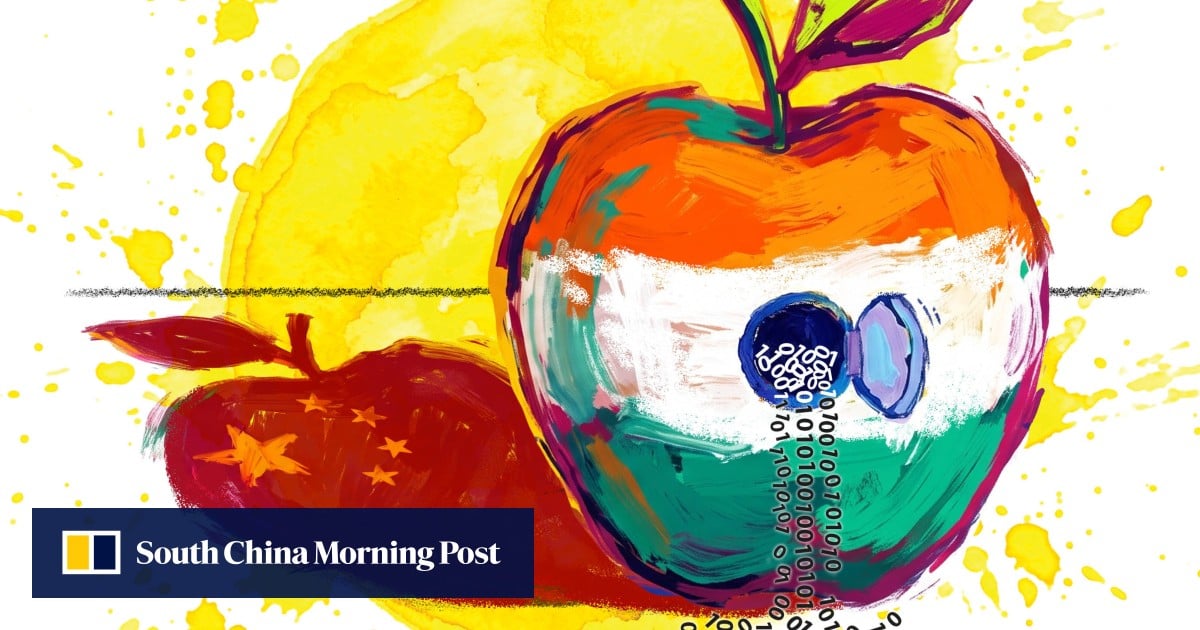
Making sense of the panic over Chinese AI
The launch of Moonshot AI’s Kimi model has reignited debates in the US over Chinese AI competitiveness, with concerns about open models and reported lobbying by American AI companies.
Intelligence analysis by Gemini 2.5 Flash

A recent TechCrunch podcast episode discussed the recurring 'panic' in Silicon Valley and Washington D.C. surrounding new Chinese AI models like Kimi. While some express genuine concerns about national competitiveness and security, critics suggest much of the alarm is amplified by protectionist motives and a desire to benefit specific American proprietary AI labs.
Imagine there's a big race to build the smartest computer brains, called AI. Some new, really good ones are coming from China, like one called Kimi, and they seem very clever and cheap. This makes some grown-ups in America, especially those who make their own smart computer brains, a bit worried. They're talking to the rule-makers, saying these Chinese brains might be risky or give China too much of an advantage. But others think the worry is too much and might just be a way for big American companies to make sure everyone buys their computer brains instead.
Analysis
The Recurring Cycle of AI Hysteria
The discourse surrounding Chinese AI models, particularly with the recent launch of Moonshot AI's Kimi, has been characterized by a familiar pattern of alarm within the tech industry. Sean O’Kane, a TechCrunch podcast host, notes that this 'feels like we’re seeing repeats of prior freakouts,' where the industry is 'expecting that something is going to arrive and blow everything else away.' This sentiment was evident in exaggerated claims, such as Kimi supposedly replicating macOS in 30 minutes, which O'Kane dismisses as an overreaction. The article suggests this 'jumpiness' is a recurring theme, previously seen with the DeepSeek model, where competitive benchmarks from Chinese firms trigger disproportionate responses.
Geopolitical Tensions and Protectionist Undercurrents
Beyond the technical capabilities, the 'China aspect always adds this certain level of hysteria,' according to Anthony Ha. This amplifies concerns, drawing parallels to past debates like the one surrounding TikTok, where the mere mention of China dramatically escalates discussions. Kirsten Korosec points to a story by Tim Fernholz that unpacks this 'psychosis,' highlighting worries about implicit bias in Chinese open-weight models and security risks. However, a significant underlying driver appears to be protectionism, centered on the question of whether the US or China will 'win the AI race.' This framing, the article implies, can be used to push pre-existing agendas, as exemplified by David Sacks's arguments against regulation, framed as necessary to prevent China from gaining an advantage.
The Open vs. Proprietary AI Divide
The debate is further complicated by the tension between open-source and proprietary AI models. OpenAI and Anthropic have reportedly lobbied US regulators with concerns about open Chinese models, suggesting a strategic move to influence policy. Kirsten Korosec critically asks whether restrictions on Chinese open-weight models would truly 'accelerate and ensure that Americans win the AI race, or are we ensuring that certain frontier labs do better than others?' The implication is that such bans could primarily benefit American proprietary AI companies by forcing enterprises to use their models, like those from OpenAI, rather than more openly available and potentially cheaper alternatives like Kimi. This highlights a commercial dimension to the geopolitical panic, where market dominance is a key stake.
Key points
- The launch of Moonshot AI’s Kimi model reignited debates on American competitiveness and open versus proprietary AI.
- OpenAI and Anthropic have reportedly lobbied US regulators with concerns about open Chinese AI models.
- Critics suggest the 'panic' is a recurring industry 'freakout' often amplified by geopolitical tensions with China.
- Underlying concerns include potential implicit bias, security risks, and protectionist motives to ensure US AI dominance.
- Restrictions on Chinese open-weight models could primarily benefit American proprietary AI labs by limiting competition.
The intense debate could lead to a more nuanced understanding of AI's global development, potentially fostering international collaboration on safety standards and ethical guidelines, rather than purely competitive restrictions. It might also spur greater innovation as companies strive to outperform rivals.
The current 'panic' could result in overly protectionist policies that stifle global AI innovation, create a fragmented technological landscape, and unfairly benefit a few large proprietary AI companies at the expense of broader access and development.