Makkah Alliance Decides to Deploy Joint Military Forces in Saudi Arabia
The Makkah Alliance for Defence has decided to deploy joint military forces in Saudi Arabia to counter security threats. Retired Lt. Gen. Nauman Mahmood was appointed as the first Secretary General.
Intelligence analysis by Gemini 2.5 Flash Lite
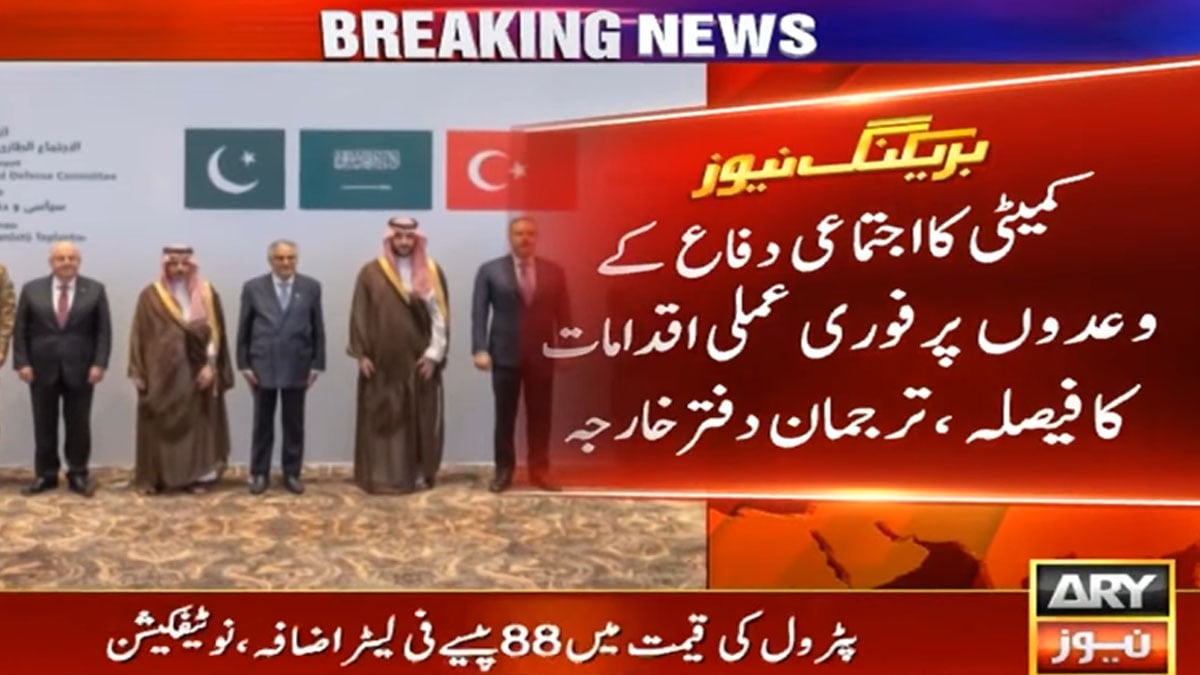
The Makkah Alliance, comprising Pakistan, Turkiye, and Saudi Arabia, has committed to collective defense by deploying joint military forces to Saudi Arabia. This decision follows discussions on regional security threats and aims to bolster deterrence and preparedness against attacks on member states.
Imagine three friends who promise to protect each other's houses if anyone tries to break in. They've decided to put some of their toys (like toy soldiers) together and keep them ready at one friend's house to make sure no one bothers them.
Analysis
Makkah Alliance for Defence
The Makkah Alliance for Defence, established under the Makkah Agreement, has taken a significant stride towards operationalizing its collective security mandate. The recent meeting in Riyadh, chaired by the Strategic Political and Defence Committee, underscored a unified stance against escalating security threats, particularly those targeting Saudi Arabia. The alliance's commitment to collective defense is not merely rhetorical; the decision to deploy joint military forces and capabilities directly into Saudi Arabia signals a tangible commitment to mutual security. This move is intended to enhance preparedness, strengthen military integration, and bolster the deterrence capabilities of the member states against any aggression.
Lieutenant General (retd) Nauman Mahmood
The appointment of Retired Lieutenant General Nauman Mahmood as the first Secretary General of the Makkah Alliance for Defence marks a crucial step in institutionalizing the alliance's operations. His three-year term is expected to be pivotal in driving the alliance's agenda, fostering cooperation, and ensuring the effective implementation of its strategic objectives. The unanimous endorsement and well wishes extended to him by the participating parties reflect confidence in his leadership to promote the alliance and achieve its goals. His role will be instrumental in translating the alliance's commitments into practical actions, particularly concerning the deployment of joint forces.
Collective Security Commitments
The core principle underpinning the Makkah Alliance's recent decisions is the indivisibility of security among its member nations. The declaration that "the security of each party is an integral part of the collective security of all three countries" emphasizes a shared responsibility and a unified front against external threats. The immediate deployment of joint military forces to Saudi Arabia is a direct manifestation of this principle, demonstrating the credibility and effectiveness of their collective defense pact. This practical implementation of the Makkah Joint Defence Agreement is designed to enhance deterrence and reaffirm the commitment to defending each other's security, sovereignty, and territorial integrity.
Key points
- The Makkah Alliance for Defence will deploy joint military forces to Saudi Arabia.
- Retired Lt. Gen. Nauman Mahmood appointed as the first Secretary General for a three-year term.
- The alliance condemned attacks on Saudi Arabia and rejected threats to its territorial integrity.
- Pakistan and Turkiye praised the Saudi Armed Forces' capabilities.
- The security of each member is considered integral to the collective security of all three nations.
The deployment of joint forces could significantly enhance regional security by deterring potential aggressors and fostering greater military interoperability between Pakistan, Turkiye, and Saudi Arabia. This strengthened alliance may lead to more stable geopolitical conditions in the Middle East, benefiting trade and economic cooperation.
The increased military presence and operationalization of the alliance could inadvertently escalate regional tensions or draw member states into conflicts they might otherwise avoid. There's also a risk that the joint forces may face challenges in coordination and effectiveness, potentially undermining the alliance's credibility.