Malaysia’s Sarawak shuts almost 600 schools as haze hits ‘very unhealthy’ level
Nearly 600 schools in Malaysia's Sarawak state were forced to close due to transboundary haze reaching "very unhealthy" air pollution levels, affecting almost 200,000 pupils.
Intelligence analysis by Gemini 2.5 Flash
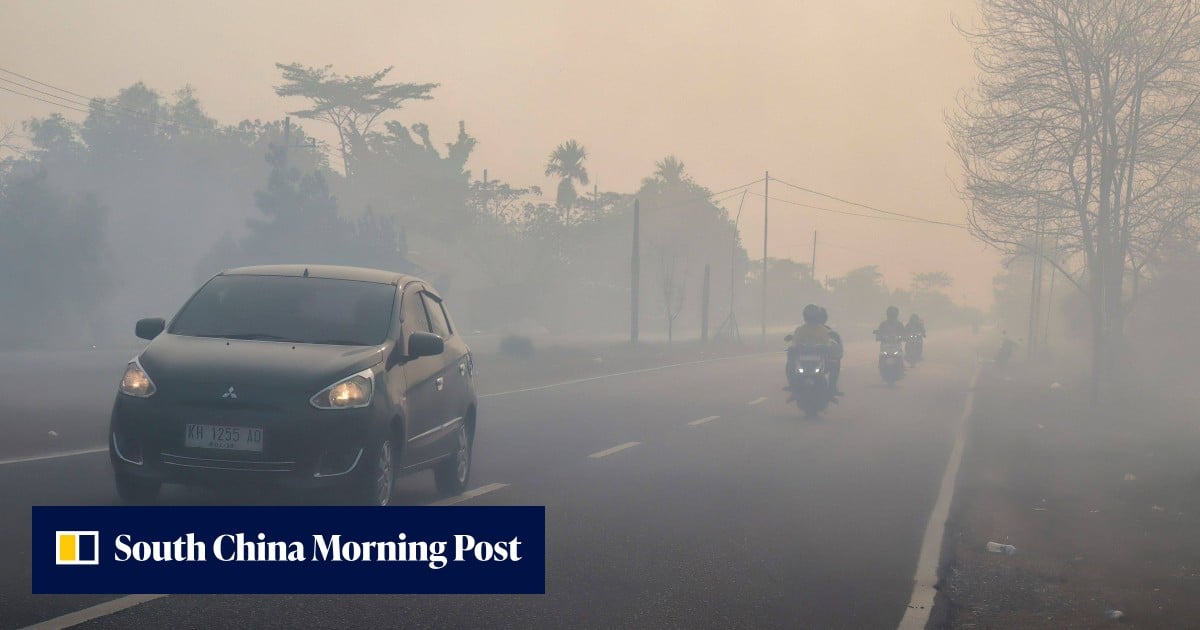
Malaysia's Sarawak region is experiencing severe air pollution, leading to widespread school closures as the haze, originating from forest and peatland fires often linked to agricultural land clearing, drifts across borders. This recurring environmental issue highlights the challenges faced by Southeast Asian nations in implementing effective regional responses.
Imagine someone burning a big pile of leaves in their backyard, but the smoke doesn't just stay there; it blows over to your house and makes it hard to breathe and see. That's what's happening in a part of Malaysia called Sarawak. Big fires, often started to clear land for farms in nearby countries, are sending lots of smoke into the air, making it so bad that almost 600 schools had to close to keep kids safe from the unhealthy air.
Analysis
The recent closure of nearly 600 schools in Malaysia's Sarawak state due to severe haze underscores the persistent environmental challenges facing Southeast Asia. This disruption, affecting almost 200,000 students, highlights the direct impact of transboundary pollution on daily life and public services. The haze, primarily caused by forest and peatland fires often linked to land clearing for agriculture and plantations, is a recurring problem during dry spells, with smoke frequently crossing national borders and affecting neighboring countries.
Sarawak
The Malaysian state of Sarawak bore the brunt of the latest haze episode, leading to the closure of 509 primary schools and 82 secondary schools. This measure was taken as air pollution levels escalated to "very unhealthy" readings on the Air Pollutant Index (API). The widespread closures demonstrate the immediate and significant disruption to education, forcing authorities to prioritize the health and safety of students and staff. The economic and social costs associated with such closures, including lost learning days and parental work disruptions, are substantial.
Serian
The district of Serian, located near the border with Indonesia's Kalimantan, recorded the highest air pollution index (API) reading, reaching a "very unhealthy" level of 239. This specific data point illustrates the severity and localized intensity of the haze, often concentrated in areas adjacent to the source fires. The proximity to Kalimantan suggests that fires in Indonesian territory are a significant contributor to the transboundary nature of the pollution, making it a complex issue requiring international cooperation rather than purely domestic solutions.
Asean
According to a climate expert cited in the article, the effectiveness of a regional response to tackle the haze is limited by Asean's consensus-based approach. This governance model, while promoting unity, can hinder swift and decisive action when member states are reluctant to implement or enforce measures that might impact their domestic economic activities. The recurring nature of the haze problem, despite years of discussions and agreements, points to a fundamental challenge in translating regional commitments into tangible, enforceable actions on the ground.
Key points
- Almost 600 schools in Malaysia's Sarawak state were shut due to "very unhealthy" haze levels.
- The closures affected nearly 200,000 pupils, disrupting education.
- The haze originates from forest and peatland fires, often linked to land clearing for agriculture and plantations.
- Serian district, near Indonesia's Kalimantan, recorded the highest air pollution index (API) at 239.
- A climate expert suggests ASEAN's consensus-based approach limits the effectiveness of a regional response to the haze.
The recurring nature of the haze could eventually compel ASEAN member states to adopt more robust and enforceable regional agreements, leading to improved monitoring, fire prevention, and sustainable land management practices. Increased public awareness and international pressure might also drive corporations and governments towards more environmentally responsible agricultural methods.
Without stronger political will and more effective enforcement mechanisms within ASEAN, the transboundary haze problem is likely to persist, leading to continued health crises, educational disruptions, and economic losses across the region. The current consensus-based approach may remain insufficient to address the root causes, perpetuating a cycle of environmental and social instability.