Man, 90, who allegedly attacked and killed wife in Bukit Panjang in 2024, found mentally unsound and unfit to stand trial
A 90-year-old man accused of fatally attacking his 74-year-old wife in their Bukit Panjang flat in June 2024 has been found by Singapore's High Court to be of unsound mind and unfit to stand trial.
Intelligence analysis by Llama
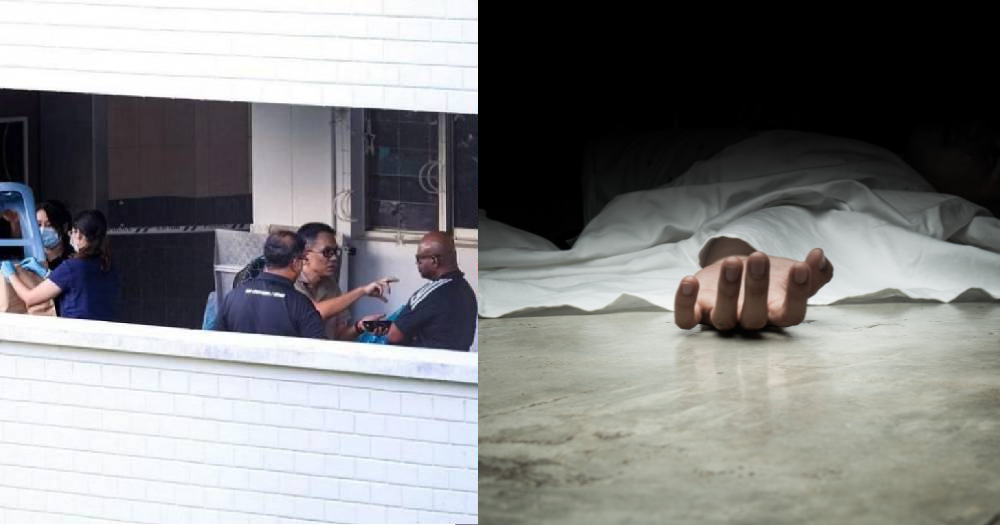
Ridawi Morsudin, who suffered from dementia, was determined to have been in a delirium when his wife was killed with scissors in their Petir Road flat. The High Court ruling marks the first case under Singapore's new regime for accused persons incapable of making their defence, which took effect in February 2025.
A 90-year-old man was told he cannot go to trial because doctors said his brain was too sick from dementia to understand what happens in court. His family had noticed he was getting confused and angry for years, and they tried to keep him safe at home. This is the first case under a new Singapore rule for people too ill to defend themselves. Now the government has to decide what happens to him.
Analysis
A First Under Singapore's New Mental Incapacity Regime
The High Court's determination on Aug. 3 marks the inaugural case processed under Singapore's new framework for accused persons who are incapable of making their defence, a regime that came into effect in February 2025. Under this system, once a court finds an accused unfit to plead, it must report the matter to the Minister of Law and specify the notional imprisonment period that would have applied had the person been convicted of the offence. An appropriate order is then taken by the minister. Prosecutors argued for a five-year notional imprisonment period, signalling how the system is intended to balance accountability with the recognition of cognitive incapacity.
A Slow Decline Documented in Police Logs
Ridawi Morsudin's cognitive collapse had been visible for years before the fatal attack. From 2022 his mental state deteriorated; he lost the ability to recognise family members, became hot-tempered and aggressive, and repeatedly wandered out of his flat unable to find his way home. Police attended to him on 10 separate occasions between January 2023 and January 2024. A hospital admission for delirium produced a diagnosis of mixed dementia, and he was enrolled at St Luke's Eldercare before being discharged after roughly a month for non-cooperation. The family locked the metal gate when the home healthcare aide was off-duty and later installed a surveillance camera with a live feed, layering informal safeguards on top of formal care.
What Now Lies Ahead for Ridawi
IMH practitioners found Ridawi in a delirium at the time of the murder due to his unsound mind and dementia, and a psychiatrist said the attack could fall within the uncommon range of delirium-related symptoms. Forensic examination found at least 34 lacerations across the victim's body and two pairs of bloodstained scissors at the scene. The certificate of cause of death was sharp force injuries to the head, neck and chest. With the High Court's finding, the file will now move to the Minister of Law, leaving Ridawi's ultimate disposition in the hands of policymakers rather than the courts. The case crystallises a difficult question for Singapore's eldercare and guardianship systems: when locked gates, professional aides, and family rosters are still not enough, what additional safeguards are owed to dementia patients and the people who live with them?
Key points
- High Court found 90-year-old Ridawi Morsudin of unsound mind and unfit to stand trial for the June 2024 killing of his wife Aminah Abdul, 74, in their Bukit Panjang flat.
- This is the first case processed under Singapore's new mental incapacity regime, which took effect in February 2025 and requires the court to report unfit-to-stand-trial accused to the Minister of Law.
- IMH practitioners attributed the attack to delirium in the context of major neurocognitive disorder due to Alzheimer's disease and vascular disease, with mixed dementia diagnosed earlier.
- Police had attended to Ridawi on 10 separate occasions between January 2023 and January 2024 after he wandered out disoriented, despite family measures including gate-locks, a healthcare aide, and CCTV.
- Two pairs of bloodstained scissors and at least 34 lacerations were documented; prosecutors argued for a five-year notional imprisonment period.
- The matter will now be reported to the Minister of Law for an appropriate order under the new framework.
The new legal framework is functioning as designed, providing a structured pathway for an accused person whose cognitive condition precludes a normal trial. The case offers an early data point that can inform how Singapore's courts, the IMH, and eldercare providers coordinate on similar matters going forward, potentially sharpening guardianship and oversight tools for dementia patients in the community.
Despite two years of escalating warning signs, formal diagnoses, and layered family safeguards, a fatal attack still occurred, exposing how thinly stretched Singapore's community-based dementia support can be. The case may also embolden scrutiny of how discharged patients, locked gates, and surveillance-only oversight fail when caregiver cooperation breaks down or dementia progresses beyond what families can manage at home.