Mani Haghighi's documentary to premiere at 64th New York Film Festival
Iranian filmmaker Mani Haghighi's 76-minute documentary about painter and archivist Nasser Bakhshi will world-premiere as part of the 32-film main slate of the 64th New York Film Festival.
Intelligence analysis by Llama
The 64th New York Film Festival has unveiled its 32-film main slate anchored by four world premieres, one of which is a new documentary by Iranian director Mani Haghighi profiling self-taught Tabriz-based artist Nasser Bakhshi and his monumental archive of collective memory.
A famous Iranian director made a movie about a painter in the mountains of northwestern Iran who collects lots of art to remember his country's stories. The movie is going to be shown for the first time at a big film festival in New York, which is a really big deal for the director and the painter.
Analysis
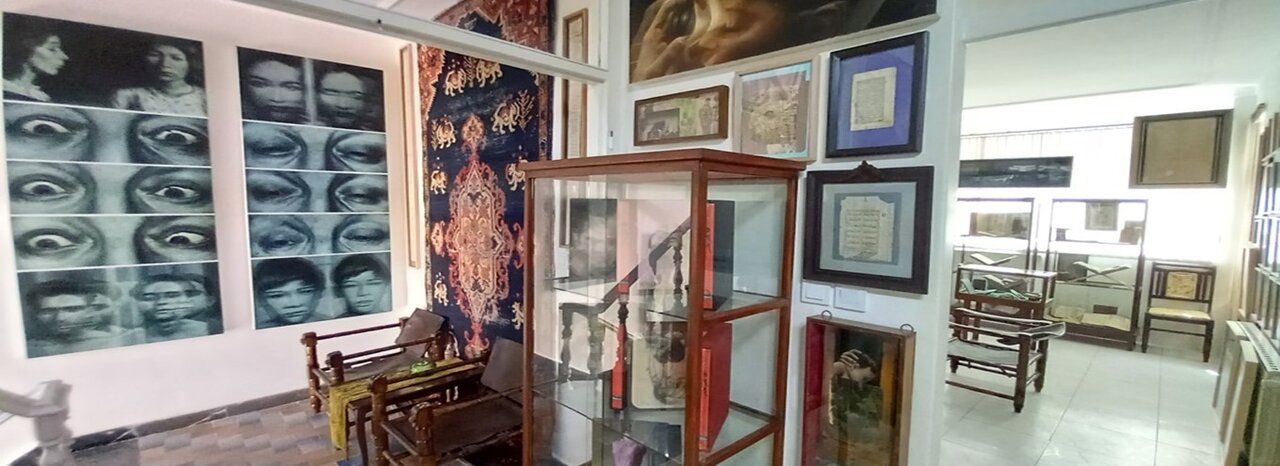
Nasser Bakhshi's Museum-Archive in Tabriz
At the heart of Haghighi's new film is not a political figure or a public intellectual, but a self-taught painter born in 1982 in Tabriz who has built what the Tehran Times describes as a "monumental archive" recording "collective memory." Bakhshi operates from the northwestern Azarbaijan region, deliberately removed from Tehran's gallery circuit, and his practice is described as revolving around "images related to time, space, and existence" through large-scale paintings and found objects. The film also gives substantial screen time to his wife, Roghayeh Najdi, whose surrealist paintings are framed as commenting on the place of women in Iranian society — a quiet but pointed choice in a country where women's artistic expression has become increasingly contested terrain. The 76-minute runtime and Haghighi's stated ambition to develop a visual language "in dialogue with filmmakers from Bergman to Parajanov" suggests the documentary is positioning Bakhshi not as a regional curiosity but as a figure whose private collecting is itself an artistic act, one that "speaks to the need for individual stories to paint the larger picture."
From "Abadan" to the 64th New York Film Festival
The premiere places Haghighi, now 57, in a rare category of Iranian directors who have sustained careers across both the domestic box office and Western festival circuits. His 2002 debut "Abadan" was the first Iranian independent feature shot on a digital camera and premiered at Tribeca; his 2016 romantic comedy "50 Kilos of Sour Cherries" became the third-highest-grossing Iranian film of its release year. That dual track — arthouse credibility via Berlin, Toronto, and Locarno alongside commercial reach inside Iran — gives this documentary a different kind of runway than a pure festival film. His prior documentaries on the late Dariush Mehrjui indicate an established interest in Iranian cinema's own self-archiving, and the choice of Bakhshi as a subject extends that project to the visual arts. NYFF's main slate is the festival's most prestigious non-competition section, and inclusion signals curatorial seriousness rather than a sidebar placement.
The 32-Film Slate and What It Signals
NYFF's announcement of a 32-film main slate anchored by four world premieres is itself a marker of the festival's scale and ambitions for its 64th edition. For Haghighi, the slot arrives after a roughly four-year gap from his last major festival outing, the 2022 Toronto Platform premiere of "Subtraction," a France-Iran coproduction. The decade bracketed by his 2016 Berlin competition entry "A Dragon Arrives!" and this 2026 NYFF premiere has been a turbulent one for Iranian filmmakers working internationally, with several directors facing renewed scrutiny at home. A documentary that profiles a painter-archivist rather than engaging overtly with political subject matter is, in that context, a strategically legible choice — it travels well, it does not invite obvious censorship confrontations, and it positions Iranian visual culture as a site of memory and continuity rather than crisis. Whether that framing will satisfy audiences expecting Haghighi's characteristic absurdist streak is the open question the festival run will begin to answer.
Key points
- Haghighi's 76-minute documentary is one of four world premieres in the 32-film main slate of the 64th New York Film Festival
- The film profiles self-taught Tabriz-based painter, collector and curator Nasser Bakhshi, born 1982, and his wife Roghayeh Najdi
- Bakhshi's practice is centered on large-scale paintings and a museum-archive in Azarbaijan that the film frames as a record of collective memory
- Haghighi, 57, has previously premiered films at Tribeca, Berlin, Locarno, Chicago and Toronto, and made two earlier documentaries about filmmaker Dariush Mehrjui
- The 2026 film is a coproduction-style release and marks Haghighi's first major festival premiere since "Subtraction" at TIFF in 2022
If the film is well received, it could broaden Western audiences' understanding of Iran's regional art scenes beyond Tehran and introduce Bakhshi to international collectors and curators, potentially elevating the visibility of self-taught Iranian artists working outside the capital. A strong festival reception could also reinforce Haghighi's standing as a director capable of operating fluently between Iranian commercial cinema and the international arthouse circuit.
The documentary's focus on a relatively niche figure and its deliberately contemplative pace may limit its appeal beyond festival programmers and dedicated cinephiles, and the absence of any overtly political subject matter — at a moment when some Western programmers actively seek Iranian work that engages with current social tensions — could mean the film underperforms expectations once it leaves the festival bubble. Domestically, the film's travel through international festivals could still draw scrutiny if Iranian authorities read the unfiltered portrait of a marginal artistic life as an implicit critique.


