MAS allows for stronger S'pore dollar for 2nd straight quarter, expects inflation to stay elevated till early 2027
The Monetary Authority of Singapore (MAS) announced that it will be increasing the rate of appreciation of the Singapore dollar due to sustained inflationary pressure. The core inflation rate came in at 1.5 per cent year-on-year in Q2 2026, up from 1.2 per cent in January…
Intelligence analysis by Llama
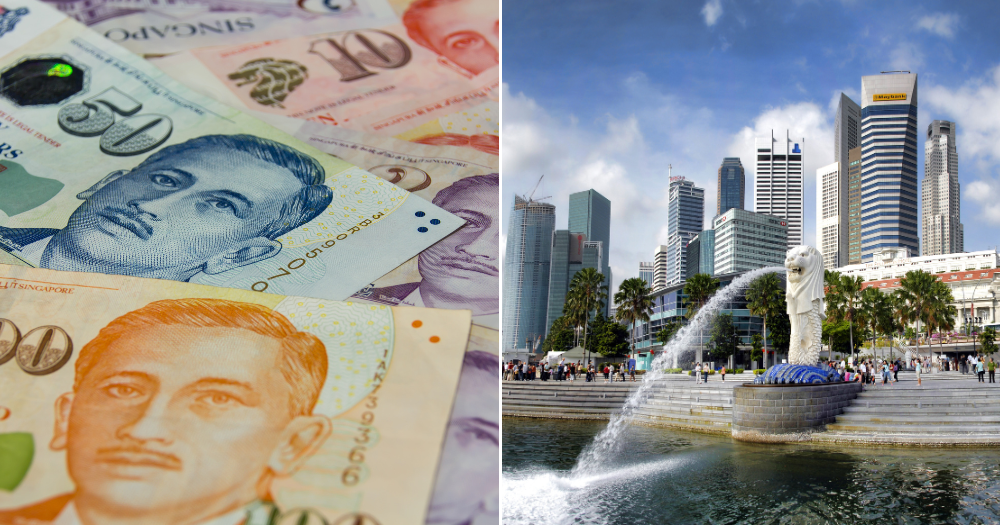
The Monetary Authority of Singapore (MAS) has tightened Singapore's monetary policy for the second consecutive quarter, citing sustained inflationary pressure. The core inflation rate has increased to 1.5 per cent year-on-year in Q2 2026, up from 1.2 per cent in January-February prior to the Middle East conflict.
The Monetary Authority of Singapore (MAS) has decided to make the Singapore dollar stronger because the country's inflation rate is going up. This means that prices for things like food, housing, and transportation might go up too. The MAS is trying to control the inflation rate so that it doesn't get too high and affect the country's economy.
Analysis
A $60B Vote of Confidence
The Monetary Authority of Singapore's (MAS) decision to tighten monetary policy for the second consecutive quarter is a significant development for the country's economy. The MAS has increased the rate of appreciation of the Singapore dollar, citing sustained inflationary pressure. The core inflation rate has increased to 1.5 per cent year-on-year in Q2 2026, up from 1.2 per cent in January-February prior to the Middle East conflict.
This decision is a vote of confidence in the Singapore economy, which has been stronger than expected. The country's economic growth in Q2 2026 was 5.7 per cent year-on-year, with the impact of the Middle East conflict discernible but contained. The MAS expects the Singapore economy to continue to grow at a firm pace in the second half of the year as global AI-related investments continue to drive activity in Singapore's technology-related sector.
However, the MAS also noted that inflation could pick up more strongly than anticipated if energy prices spike. On the flip side, if there is an unexpected pullback in AI-related investments or tightening of financial conditions, inflation could weaken and GDP growth could be affected. The MAS is well-positioned to respond effectively to any risk to medium-term price stability and will continue to closely monitor economic developments.
Why Cursor?
The MAS's decision to tighten monetary policy is a response to the sustained inflationary pressure in the economy. The core inflation rate has increased to 1.5 per cent year-on-year in Q2 2026, up from 1.2 per cent in January-February prior to the Middle East conflict. This increase in inflation is due to higher energy prices, which will contribute further to inflationary pressures worldwide.
The MAS has also noted that Singapore's imported costs are likely to rise in the quarters ahead, driven by higher fuel and electronic input costs. This will lift prices for items such as construction materials, capital equipment, and food commodities. However, the MAS expects inflation to 'ease more discernibly' in the second half of 2027 as global energy prices gradually moderate.
The Road Ahead
The MAS's decision to tighten monetary policy has significant implications for the Singapore economy. The country's economic growth is expected to continue at a firm pace in the second half of the year, driven by global AI-related investments. However, the MAS has also noted that inflation could pick up more strongly than anticipated if energy prices spike. On the flip side, if there is an unexpected pullback in AI-related investments or tightening of financial conditions, inflation could weaken and GDP growth could be affected.
The MAS is well-positioned to respond effectively to any risk to medium-term price stability and will continue to closely monitor economic developments. The country's economic growth is expected to continue at a firm pace in the second half of the year, driven by global AI-related investments.
Key points
- The Monetary Authority of Singapore (MAS) has tightened Singapore's monetary policy for the second consecutive quarter.
- The core inflation rate has increased to 1.5 per cent year-on-year in Q2 2026, up from 1.2 per cent in January-February prior to the Middle East conflict.
- The MAS expects the Singapore economy to continue to grow at a firm pace in the second half of the year as global AI-related investments continue to drive activity in Singapore's technology-related sector.
- Inflation could pick up more strongly than anticipated if energy prices spike.
- On the flip side, if there is an unexpected pullback in AI-related investments or tightening of financial conditions, inflation could weaken and GDP growth could be affected.
The Singapore economy is expected to continue growing at a firm pace in the second half of the year, driven by global AI-related investments. The country's economic growth is expected to be sustained at high levels in the near term, with a positive output gap widening slightly in 2026.
Inflation could pick up more strongly than anticipated if energy prices spike. On the flip side, if there is an unexpected pullback in AI-related investments or tightening of financial conditions, inflation could weaken and GDP growth could be affected.