Massive Attack speak about 'surreal experience' of being banned from Singapore over Palestinian flag
British band Massive Attack say being detained, questioned, and banned from Singapore after displaying a Palestinian flag at a concert was a 'surreal experience.' Singapore police issued stern warnings and barred the musicians from re-entering the country under laws prohi…
Intelligence analysis by Llama
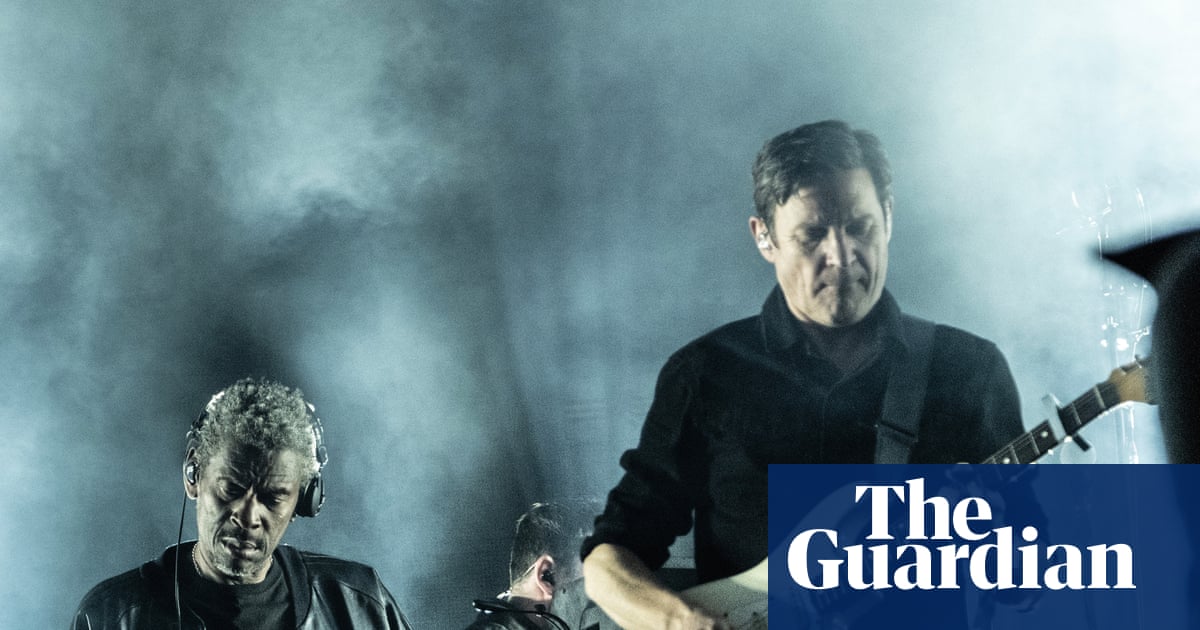
Massive Attack's Robert Del Naja and Grant Marshall were detained, searched, and banned from Singapore after unfurling a Palestinian flag at a Star Theatre show. Singapore police cited the Foreign National Emblems Act and Public Order Act, issuing stern warnings and blocking future entry. The band framed the episode as a stand for free expression, while Singapore defended its laws as …
A famous British band played a concert in Singapore and held up a Palestinian flag on stage. Singapore has a rule that says you can't show any foreign country's flag in public without permission, so the police questioned the band and told them they can never come back. The band said it felt strange but they were proud to show support for Palestine, and they wished Singapore would let people speak freely.
Analysis
A Flag, a Stage, and a Law
Massive Attack's Singapore show on 29 July at the Star Theatre turned into an international news story not because of the music but because of a single piece of cloth. According to the band's own statement, Del Naja and Marshall unfurled a Palestinian flag during the performance, after which the entire band was detained, isolated, and individually questioned by police. Some members had their hotel rooms searched and passports temporarily confiscated. Singapore's police force and the Infocomm Media Development Authority later confirmed that both men were issued stern warnings under the Foreign National Emblems (Control of Display) Act and the Public Order Act, and would be banned from re-entering Singapore, with any future performance applications refused. The Foreign National Emblems Act prohibits the display of any foreign national flag, banner, or emblem in public without a permit, and Singapore's authorities treat the law as a guardrail protecting racial and religious harmony in a multiethnic city-state. That framing — public order and social cohesion over individual symbolic speech — is central to how Singapore's government explains the ban, and the band explicitly pushed back against it.
The Band's Counter-Narrative
Rather than apologise, Massive Attack doubled down. The group said it was "proud to have made this impromptu expression with our fans in Singapore," praised the audience for chanting "Free Palestine" despite knowing the risk, and called the episode a "surreal experience" that underscored the importance of defending freedom of expression. The statement reached beyond Singapore, drawing a parallel to the UK, where Del Naja was among roughly 500 people arrested in April at a London demonstration against the proscription of Palestine Action. Notably, the band ended its statement with a direct policy challenge: a call for Singapore to ratify the UN International Covenant on Civil and Political Rights and to permit "expressions of conscience without fear of state prosecution." That framing reframes the incident from a localised law-enforcement matter into a broader argument about universal rights, and it puts Singapore's reservations on international covenants under renewed scrutiny at a moment when Western artists are facing parallel restrictions at home.
Singapore's Position and the Stakes for Live Music
Singapore's authorities were unmoved. The joint police-IMDA statement said police "take a serious view of acts which could potentially harm the racial and religious harmony in Singapore" and urged foreigners not to "import" foreign politics onto its soil. The position is consistent with how Singapore has handled previous high-profile cases involving foreign political symbolism on stage or in public spaces. The practical consequence, however, extends beyond Massive Attack: promoters, tour managers, and other Western artists now have a concrete data point about what Singapore considers a red line, and what the cost of crossing it — detention, passport seizure, permanent entry ban — looks like. For a city that markets itself as a major live-music hub in Asia, the incident creates a tension between openness to international touring acts and the strict neutrality the state demands of them once they arrive.
Key points
- Massive Attack members Robert Del Naja and Grant Marshall were detained, questioned, and banned from Singapore after displaying a Palestinian flag at a 29 July show at the Star Theatre.
- Singapore police cited the Foreign National Emblems (Control of Display) Act and the Public Order Act, issuing stern warnings and blocking future entry or performance applications.
- The band called the experience 'surreal' and said they were proud of the 'impromptu expression' with their fans, framing it as a defence of universal freedom of expression.
- Singapore's police and the Infocomm Media Development Authority defended the action as necessary to protect racial and religious harmony and prevent the 'importing of foreign politics.'
- The band urged Singapore to ratify the UN International Covenant on Civil and Political Rights, while noting that Del Naja was among hundreds arrested in London in April at a protest against the proscription of Palestine Action.
The band's statement calling on Singapore to ratify the International Covenant on Civil and Political Rights could amplify domestic and international pressure on the government to revisit its restrictions on political expression. Public debate sparked by the incident may also encourage Singaporean authorities to clarify how the Foreign National Emblems Act applies to artists on licensed stages, potentially opening the door to negotiated exceptions for future international performers.
Singapore's authorities are unlikely to soften their stance given their consistent framing of the law as essential to racial and religious harmony, and the band now joins a growing list of foreign artists effectively blacklisted over political expression. The case also risks emboldening copycat enforcement, making it harder for touring acts and visiting performers to predict where the line sits between expression and prosecution in the city-state.