Meat multinational faces legal challenge over green credentials of $6bn global expansion plan
Greenpeace petitions Dutch courts to order JBS to disclose how its aims are compatible with responsibilities to climate and human rights.
Intelligence analysis by Llama
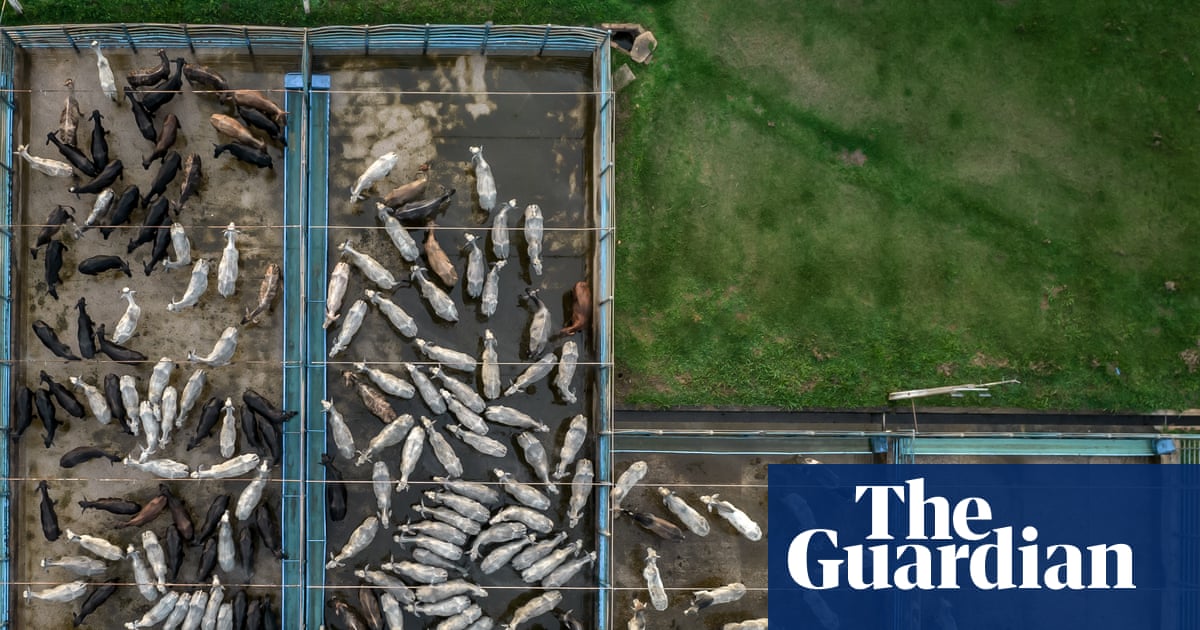
Greenpeace challenges JBS's business model and expansion plan, citing a lack of transparency over its massive expansion plans in Nigeria, which would threaten smallholder farmers, domestic food security, and land-use priorities.
A big meat company, JBS, is being challenged by Greenpeace for not being transparent about its plans to expand in Nigeria. This could harm small farmers, food security, and the environment. Greenpeace wants JBS to tell them how it will make sure its plans are good for the planet and people.
Analysis
A Global Expansion Plan Under Scrutiny
The world's biggest meat company, JBS, faces a landmark legal challenge to disclose how its $6bn global expansion plan is compatible with responsibilities to the climate, nature, and human rights. Courts in the Netherlands, where JBS is headquartered, will assess the petition filed by Greenpeace for information on whether the company is compliant with Dutch laws on 'duty of care' as well as its own publicly stated commitments.
The primary objective is to challenge JBS's business model and expansion model, said Richard Brown, legal counsel at Greenpeace International. 'We have a suspicion that they're flying blind and not pulling together the information they need to understand the impacts.'
The request for information is a preliminary stage towards filing formal litigation against the multinational meat company. Until now, similar lawsuits have only been filed against fossil fuel companies.
A Lack of Transparency in Nigeria
At the centre of the petition against JBS is a perceived lack of transparency over its massive expansion plans in Nigeria. In the coming years, the meat company plans to invest $2.5bn in six giant meat-processing plants that are seen as a bridgehead to the fast-growing African market. Civil society groups say there is scant information about whether JBS has assessed the social and environmental consequences of this plan, which would threaten smallholder farmers, domestic food security, land-use priorities, as well as locking in huge quantities of methane emissions.
Methane is one of the most climate-destabilising greenhouse gases. 'This is the biggest agriculture investment that I have heard of in Nigeria's history but there have been few details and no consultation for civil society,' said Elujulo Opeyemi, the spokesperson for Youth in Agroecology and Restoration Network. 'The information is not there. We want the Nigerian government to take a pause until we can make a concrete cost-benefit analysis. This investment will only be worthwhile if it is good for the people and planet. Otherwise it will just create more problems.'
A Global Conglomerate Under Scrutiny
To illustrate the risks, he said the Niger state government has already promised 1.2m hectares to JBS. JBS, which was founded in Brazil in 1953, moved its headquarters to the Netherlands last year as part of its strategy to list on the New York Stock Exchange. The shift allowed the company to tap international financial markets for expansion funds, and to enable the founding family's Batista brothers – Joesley and Wesley Batista – to significantly raise their ownership stake.
But the move to Europe also exposed the company to more rigorous transparency rules. 'We say that if you come to the Netherlands, you have to play by Dutch rules and be held to account to Dutch standards,' said Brown. 'Ultimately this is about a global conglomerate and how its activities should be limited within safe planetary boundaries.'
Key points
- Greenpeace petitions Dutch courts to order JBS to disclose its expansion plans in Nigeria.
- JBS plans to invest $2.5bn in six giant meat-processing plants in Nigeria.
- Civil society groups say there is scant information about the social and environmental consequences of JBS's plan.
- The case may open a new frontier in the fight against climate change.
- JBS's environmental track record is a concern, particularly in its home country, Brazil.
If JBS is forced to disclose its plans and assess the social and environmental consequences, it may lead to a more sustainable and responsible expansion plan that benefits both the company and the environment.
If JBS is not held accountable for its actions, it may continue to prioritize profits over people and the planet, leading to further environmental degradation and social injustices.