Mecca Pact: Can Turkey, Saudi Arabia, and Pakistan Form an 'Islamic NATO'?
Turkey, Saudi Arabia, and Pakistan have signed the "Mecca Pact," a defense agreement some analysts liken to an "Islamic NATO," sparking speculation about its implications for regional powers like Iran.
Intelligence analysis by Gemini 2.5 Flash
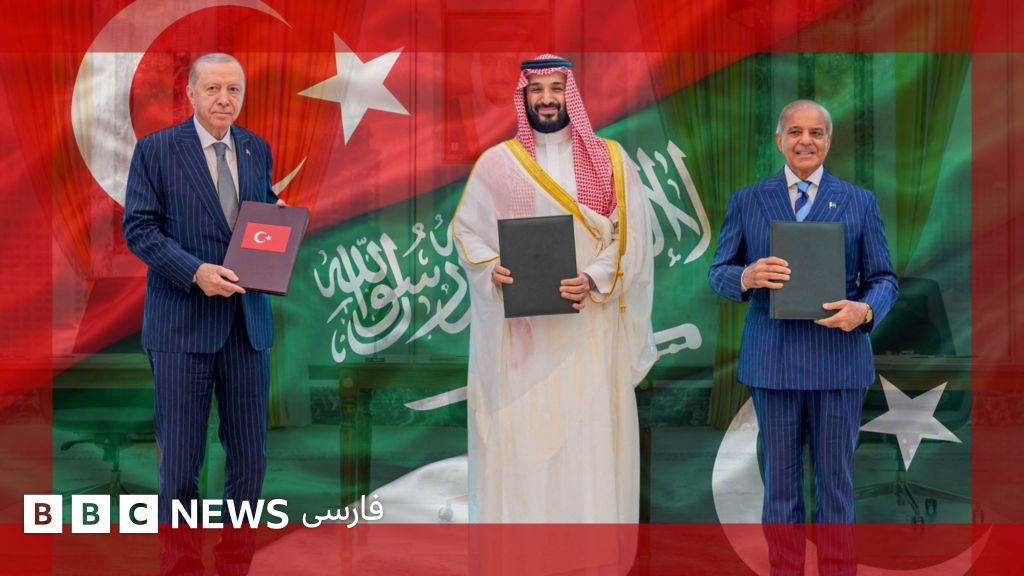
The recently signed Mecca Pact, a defense agreement between Turkey, Saudi Arabia, and Pakistan, is being scrutinized for its potential to form a "Sunni alliance" and its collective defense clause, similar to NATO's Article 5. While some view it as a strategic move against Iran, officials from the signatory nations deny this, emphasizing its aim to bolster regional security independent…
Imagine three big countries, Turkey, Saudi Arabia, and Pakistan, decided to become best friends and promise to help each other if one gets into trouble, like a superhero team. They call it the "Mecca Pact." Some people wonder if this team is meant to stand up to other countries like Iran, but the team members say it's just about helping each other be safer and not relying too much on a faraway friend like the US.
Analysis
Hakan Fidan's Statement
Turkey's Foreign Minister, Hakan Fidan, has drawn a direct parallel between the Mecca Pact's collective defense commitment and Article 5 of the NATO treaty. This comparison suggests a high level of mutual security assurance, where an attack on one signatory is considered an attack on all three. However, analysts caution that this commitment remains largely a "declaration of intent" until it is practically tested in a real-world scenario, such as a military response by Turkey and Pakistan to an attack on Saudi Arabia.
The practical implementation of such a clause is subject to the specific wording of the unreleased agreement and the political will of the member states. Unlike NATO, which has a long history of integrated command structures and US dominance, this new alliance is described as one among "peer countries." This structure implies that decisions will likely be made through extensive negotiation, with each nation prioritizing its sovereign interests, potentially leading to less unified responses during crises compared to established alliances.
Iran's Perspective
The formation of the Mecca Pact has naturally raised concerns in Iran, with some observers interpreting it as a strategic move to encircle the Islamic Republic. This perception is fueled by the inclusion of Saudi Arabia, a regional rival, and Turkey and Pakistan, two Sunni-majority nations that share borders with Iran. The timing, amidst heightened Middle Eastern tensions, further contributes to this interpretation.
However, Turkish officials assert that the agreement's genesis predates recent regional crises, with negotiations reportedly ongoing since December 2024. Pakistan's Deputy Prime Minister and Foreign Minister, Ishaq Dar, explicitly stated that the pact is not directed against any specific country. The Iranian Foreign Ministry spokesperson, Ismail Baghaei, echoed a nuanced view, suggesting that while there's no reason for Iran to worry about being targeted, the pact indicates these nations are seeking to reduce their reliance on US security guarantees.
Ricardo Gasco's Analysis
Ricardo Gasco of the Istanbul Policy Institute suggests that Saudi Arabia stands to gain the most in the short term from the Mecca Pact. Saudi Arabia, despite its vast economic power and diplomatic influence, faces significant security threats from Iranian missiles, drones, and Houthi attacks, as well as disruptions to vital maritime routes. The pact offers a potential solution by combining "Turkish technology" with "Pakistan's traditional military capabilities and strategic experience" to create a more effective deterrent.
Turkey, a NATO member with a substantial military, sees an opportunity to strengthen its role as a bridge between NATO and the Middle East, potentially boosting its defense exports and industries. Pakistan, a nuclear power, could enhance its standing in Middle Eastern geopolitics and secure greater economic and defense benefits through closer ties with Saudi Arabia. Ultimately, the collective benefit, as highlighted by Allison Miner of the Atlantic Council, lies in the ability of these three nations to project a stronger political message, increase their diplomatic leverage, and achieve broader strategic advantages.
Key points
- Turkey, Saudi Arabia, and Pakistan have signed the "Mecca Pact," a defense agreement.
- The pact includes a collective defense clause, which Turkey's Foreign Minister likened to NATO's Article 5.
- Analysts view the pact as a "declaration of intent" rather than a binding commitment until tested, citing potential differences in national interests.
- Some observers, particularly in Iran, interpret the pact as an attempt to encircle Iran, given the involvement of regional rivals.
- Officials from Turkey and Pakistan deny the pact is directed against any specific country, stating negotiations began before recent regional crises.
- Saudi Arabia is seen as benefiting most in the short term by combining Turkish technology and Pakistani military experience for deterrence.
- The long-term vision includes expanding the alliance to other regional countries, with Egypt identified as a potential future partner.
The pact could foster greater regional stability by creating a stronger, more self-reliant security framework among key Muslim-majority nations, potentially reducing their dependence on external powers. This collaboration could also lead to enhanced economic and defense cooperation, benefiting all three signatories and potentially expanding to include other regional partners like Egypt.
The pact's effectiveness remains uncertain due to the unreleased text and potential divergences in national interests among the three countries, making a unified response in crises unlikely. Its perceived anti-Iran stance could also exacerbate regional tensions, leading to further polarization and an arms race rather than promoting stability.