Meta is launching ‘VR Glasses’ next year for $1,300
Meta has announced new 'VR Glasses' set to launch in Spring 2027 for $1,299, featuring a slim 100g form factor with 5K displays and an external processing puck.
Intelligence analysis by Gemini 2.5 Flash
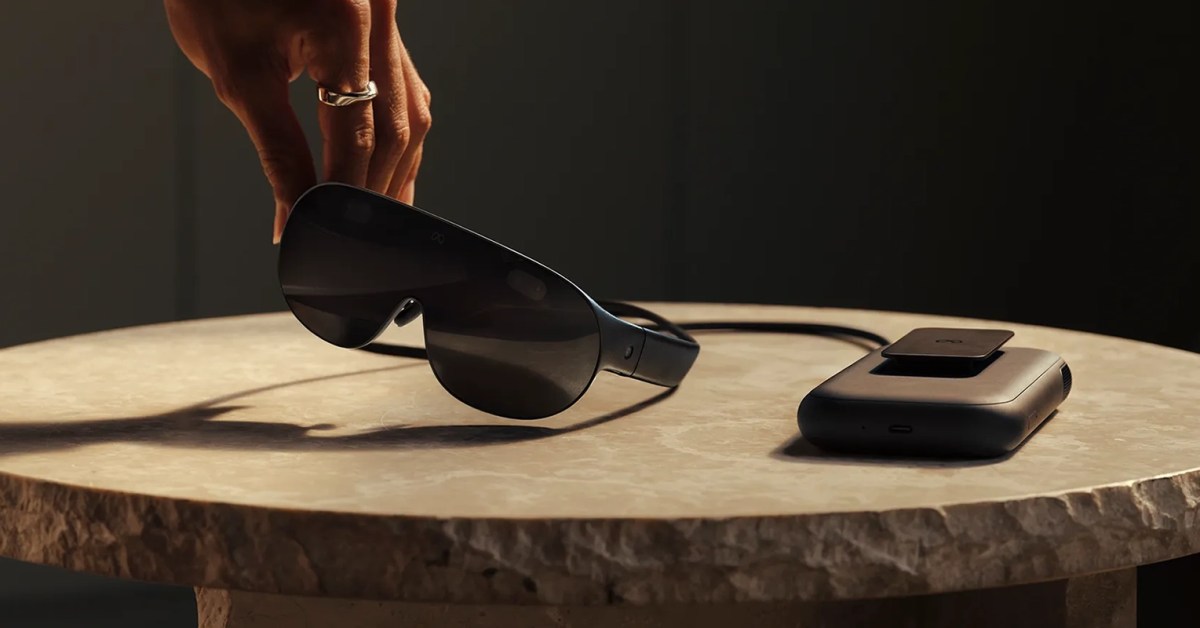
These new VR Glasses represent Meta's second attempt at a high-end virtual reality experience, moving away from bulky headsets like the Quest Pro. By offloading processing and battery to a separate puck, Meta aims to deliver a more comfortable and refined media consumption device, supporting advanced audio and video formats.
Imagine wearing really cool, lightweight sunglasses that can show you movies and games in super clear 3D, almost like you're right there! The clever part is that the heavy computer brain and battery aren't in the glasses themselves, but in a small gadget you can keep in your pocket. This makes the glasses much more comfortable, so you can watch your favorite shows from Disney+ or even live sports without feeling like you have a big box on your face. It's like having a tiny, portable movie theater just for your eyes!
Analysis
Meta's latest foray into high-end virtual reality, the 'VR Glasses,' marks a pivotal moment for the company's metaverse ambitions. Following the lukewarm reception of its Quest Pro headset, Meta is clearly recalibrating its strategy, focusing on a more consumer-friendly and media-centric approach. The decision to separate the processing unit into an external puck is a direct response to the bulk and weight issues that have plagued previous VR devices, aiming to make extended use more comfortable and less cumbersome for users.
Quest Pro
Meta's previous high-end VR offering, the Quest Pro, struggled to gain significant traction in the market, largely due to its high price point and the inherent bulkiness of an all-in-one VR headset. The Quest Pro, while technologically advanced, failed to capture a broad audience, remaining primarily a niche product for professionals and enthusiasts. This new 'VR Glasses' initiative appears to learn from those lessons, prioritizing a sleek design and user comfort over raw, untethered processing power directly on the head.
The shift in design philosophy, moving from a self-contained headset to a lighter glasses form factor with an external processing unit, suggests Meta is targeting a different user experience. Instead of a fully immersive, standalone computing device, the VR Glasses are positioned more as an advanced media consumption and light interaction tool. This strategic pivot could help Meta differentiate its product in an increasingly competitive XR landscape, appealing to users who desire high-quality virtual experiences without the physical burden of traditional VR headsets.
Qualcomm's Snapdragon Reality Elite
The technological backbone of Meta's new VR Glasses is Qualcomm's Snapdragon Reality Elite chipset, a powerful processor designed specifically for extended reality applications. This choice underscores Meta's commitment to delivering high-fidelity visual and audio experiences, capable of powering the 5K displays and supporting advanced features like hand gestures for control. The integration of such a capable chipset in the external puck ensures that despite the slimness of the glasses, computational power is not compromised.
Furthermore, the inclusion of 45W fast charging for the processing puck, promising around 3 hours of battery life for media playback, addresses a critical user concern: device longevity. While 3 hours might seem modest, it's a practical duration for watching a movie or engaging in a short VR session, and fast charging minimizes downtime. This combination of a powerful chipset and efficient power management is crucial for the VR Glasses to deliver on their promise of a premium, yet convenient, virtual experience.
Disney+
The content strategy for the Meta VR Glasses is heavily focused on media consumption, with significant partnerships already announced. The support for Dolby Vision, Dolby Atmos, and IMAX Enhanced content, coupled with Disney+ offering VR through expanded aspect ratios starting in November, highlights this direction. These collaborations are vital for attracting mainstream consumers, providing compelling reasons to invest in the new hardware beyond just gaming or niche VR applications.
Beyond Disney+, Meta has secured commitments from ESPN for 8K streaming of college football, with more content expected from NBC Sports and the MLB. This emphasis on high-quality sports and entertainment content positions the VR Glasses as a premium portable theater experience. By offering a rich ecosystem of media, Meta aims to make the VR Glasses an indispensable device for entertainment enthusiasts, potentially carving out a significant market share in the evolving landscape of personal viewing technology.
Key points
- Meta is launching new 'VR Glasses' in Spring 2027 for $1,299.
- The glasses feature a slim 100g design with 5K displays, offloading processing and battery to an external puck.
- They support Dolby Vision, Dolby Atmos, and IMAX Enhanced content, with Disney+ and ESPN offering VR experiences.
- Control is primarily via hand gestures, eliminating the need for traditional controllers.
- Powered by Qualcomm's Snapdragon Reality Elite chipset, the puck offers 3 hours of battery life for media playback with 45W fast charging.
The slim, lightweight design and focus on high-quality media consumption, supported by partnerships with major content providers like Disney+ and ESPN, could significantly broaden the appeal of VR beyond its traditional gaming niche. This approach might make virtual reality a more accessible and comfortable entertainment platform for a wider consumer base, driving adoption and establishing Meta as a leader in personal immersive media.
Despite the improved form factor, the high price point of $1,299, coupled with the previous commercial struggles of the Quest Pro, could deter mainstream consumers. The reliance on an external processing puck, while enabling a lighter design, might also introduce an additional point of friction or inconvenience for users, potentially limiting its market penetration.