Michael Marra elected Scottish Labour leader – and faces uphill battle to reverse party’s fortunes
Michael Marra has been elected as the new leader of the Scottish Labour party, winning nearly two-thirds of the vote. He faces a significant challenge to revive the party's fortunes in Scotland.
Intelligence analysis by Gemini 2.5 Flash Lite
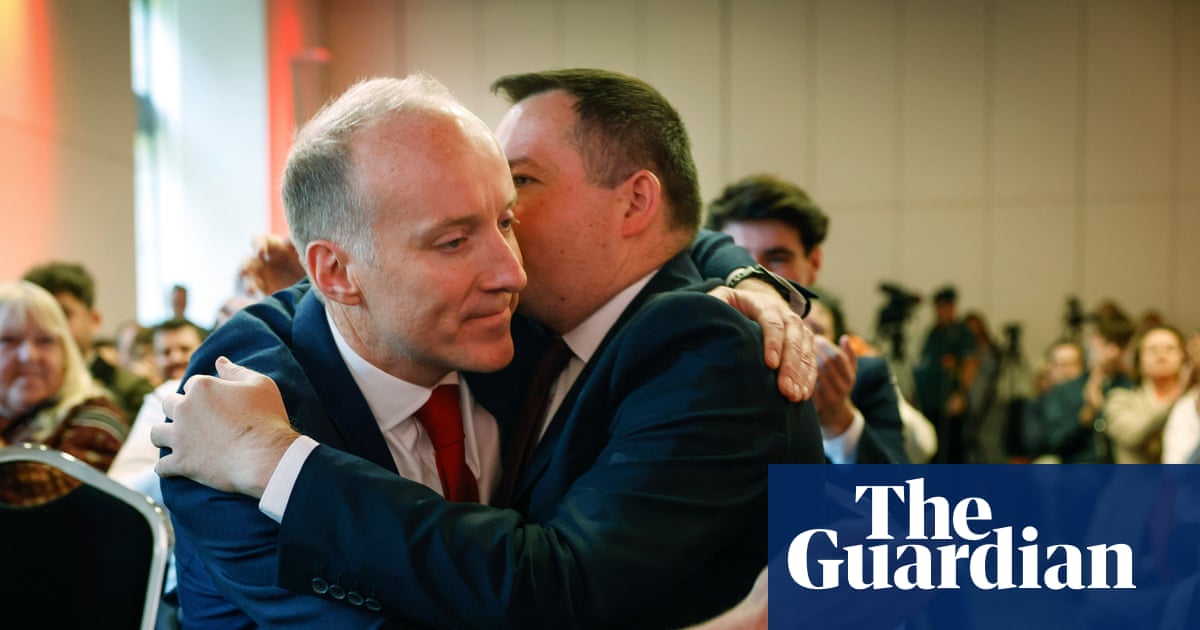
Michael Marra has been elected as the new leader of the Scottish Labour party, succeeding Anas Sarwar. Marra secured almost two-thirds of the vote in a leadership contest where policy differences between candidates were minimal. He has vowed to reconnect with Scottish voters, acknowledging the party's struggles and the need to clearly articulate its values.
Imagine a sports team that used to win a lot but now keeps losing. The team just picked a new captain, Michael Marra. He needs to figure out why they're losing and remind everyone what makes their team special so they can start winning games again.
Analysis
Michael Marra's Mandate
Michael Marra's election as the 11th leader of the Scottish Labour party marks a pivotal moment for a party that has struggled to regain its footing in Scottish politics since devolution began in 1999. Securing almost two-thirds of the vote from the party's membership, Marra's victory signals a desire for a new direction, though the campaign itself was characterized by a lack of significant policy divergence between him and his rival, Joe Fagan. This suggests that the challenges facing Scottish Labour are deeply entrenched, requiring more than just a change in leadership to address.
Marra's immediate focus, as articulated in his acceptance speech, is to 'reconnect' with the Scottish electorate. He acknowledged that while voters may feel the incumbent SNP did not deserve another term, they also struggled to identify what Scottish Labour stands for. This 'vacuum,' as Marra described it, has been exploited by other political forces, leading to a dilution of the party's core values in the public consciousness. The task ahead involves not only articulating a clear vision but also rebuilding trust and relevance with a populace that has increasingly turned away from Labour.
The Uphill Battle
The statistics paint a stark picture of the challenge Marra inherits. Scottish Labour currently holds only 17 seats in the Scottish Parliament (Holyrood), a number that places them on par with Reform and only slightly ahead of the Scottish Greens and Conservatives. This represents a significant decline from their historical dominance. The party has not won a Holyrood election since devolution began, and its worst-ever results in May underscore the depth of its current predicament. Furthermore, the article notes that Labour performed better among the professional middle class than the working class in the most recent election, indicating an erosion of its traditional base.
Adding to the complexity is the ongoing debate surrounding Scottish independence. Both Marra and Fagan were criticized during the campaign for their perceived ambiguity on the circumstances under which Scotland should be allowed a second referendum. Marra's stated support for domestic oil and gas fields like Rosebank and Jackdaw, framed as cleaner alternatives and job creators, indicates a pragmatic approach to energy policy that may seek to balance economic concerns with environmental considerations, but it also places him within a contentious policy area.
Reconnecting with Scotland
Experts like Dr. Eric Shaw from the University of Stirling highlight three core issues: the persistent salience of the independence question, the negative association with the UK Labour party in Westminster, and the erosion of Labour's historic working-class support. Dr. Ewan Gibbs of the University of Glasgow points out that despite nearly 20 years of perceived underperformance in Scottish public services and persistent inequality under SNP governments, Scottish Labour does not appear equipped to capitalize on this discontent. Marra's leadership will be tested by his ability to address these fundamental issues, redefine the party's identity, and present a compelling alternative that resonates with a broad spectrum of Scottish voters, moving beyond the current political polarization.
Key points
- Michael Marra has been elected as the new leader of the Scottish Labour party.
- He won nearly two-thirds of the vote, succeeding Anas Sarwar.
- Marra faces a significant challenge to reverse the party's declining fortunes in Scotland.
- The party has struggled electorally since devolution began in 1999, winning only 17 seats in the last Holyrood election.
- Marra has pledged to focus on reconnecting with Scottish voters and clarifying the party's values.
Michael Marra's election could signal a fresh start for Scottish Labour, potentially leading to a more unified and focused party. If he successfully reconnects with voters and articulates a clear vision, the party might begin to reverse its electoral fortunes and regain a stronger voice in Scottish politics.
The deep-seated issues plaguing Scottish Labour, including its association with Westminster and the erosion of its traditional base, may prove too difficult to overcome. Without a clear and compelling alternative to the SNP, Marra could face continued electoral decline and struggle to make a significant impact.