Microsoft says new quantum chip 1,000 times more reliable than predecessor
Microsoft says its Majorana 2 quantum chip is 1,000 times more reliable than its predecessor and could help deliver useful quantum computers by 2029.
Intelligence analysis by GPT-5.4 Mini
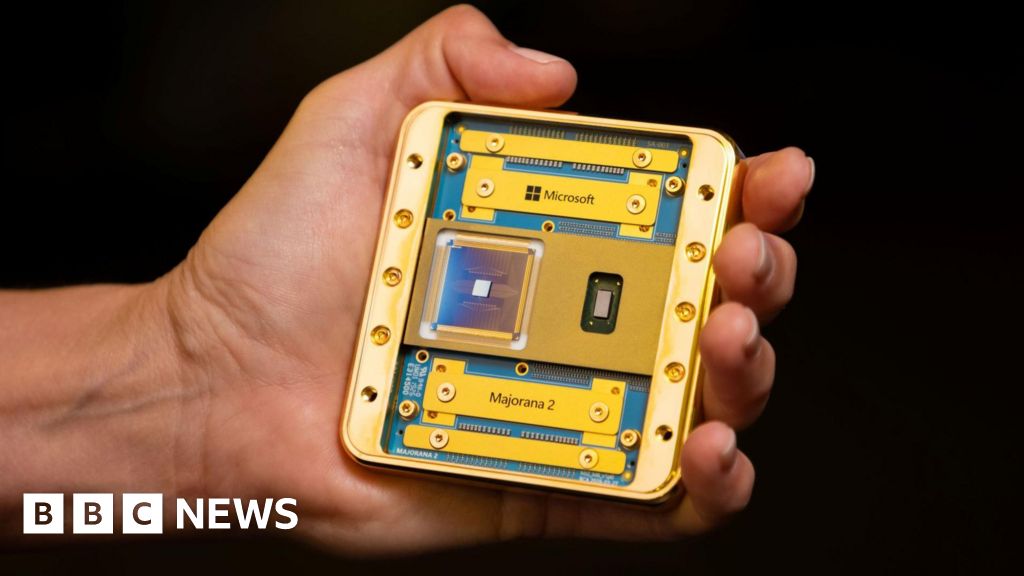
Microsoft says it has improved the stability of its quantum hardware by replacing materials in its second-generation Majorana chip, pushing qubit lifetimes from milliseconds to about 20 seconds. The company says that progress could move it toward commercially useful quantum machines, but experts still want more proof.
Microsoft says it made a tiny computer part that stays useful much longer than before. It is like swapping a weak battery for one that lasts way longer, which could help solve very hard science puzzles someday.
Analysis
What Microsoft says
Microsoft says Majorana 2, its new quantum chip, is far more reliable than the earlier version. The company says the qubits on the chip last for about 20 seconds on average, compared with milliseconds on Majorana 1, which it describes as a 1,000-fold improvement.
Why that matters
Quantum computing depends on qubits, which can potentially handle problems that are out of reach for ordinary computers, but they are fragile and hard to control. Microsoft argues that better reliability brings it closer to machines that could do useful work in the real world. One executive said the company expects a quantum machine in 2029 that can solve commercially viable problems, though he also said that would still require millions of qubits, far beyond the 12 on the current chip.
Caution around the claims
The article notes that Microsoft does not publish all of the underlying details publicly, citing commercial confidentiality, which makes independent assessment difficult. The paper released with the announcement has not been peer reviewed. That matters because Microsoft’s quantum work has drawn skepticism before: the company previously had to retract a 2018 Nature paper related to Majorana evidence, and some experts remain unconvinced.
Where it could lead
Microsoft says the second-generation chip uses the same basic approach as the first, but with a materials change: the team replaced aluminum with lead as a superconductor. The company also says it is using AI to help speed research, while stressing that the material change came from human scientists. If the approach keeps working, Microsoft could move from being a quantum hopeful to a serious contender in the race for fault-tolerant machines.
Key points
- Microsoft says Majorana 2 is 1,000 times more reliable than its predecessor, with qubits lasting about 20 seconds on average.
- The company says a commercially useful quantum machine could arrive by 2029, but that would still require millions of qubits.
- Microsoft’s approach relies on topological qubits and a materials change that replaced aluminum with lead as a superconductor.
- Scientists and outside experts remain cautious because the announcement lacks full public detail and the new paper is not peer reviewed.
- Microsoft’s quantum research has a history of controversy, including a retracted 2018 paper tied to Majorana claims.
If the reliability gains hold up, Microsoft could become a serious player in building fault-tolerant quantum machines. That could eventually help tackle problems the company points to, such as removing microplastics or improving fertilizers.
The claims are still hard to verify because Microsoft is not publishing all of the details and the new paper has not been peer reviewed. Given the company’s past quantum controversies, the timeline could slip again if the new results do not scale beyond a small chip.